concepts - Master This Word
Master this word with our 5-step learning method – Learn English in English
Train English Through Brain Routes, Not Translation.
This page helps you stop memorizing isolated translations and start understanding a word through its shared mental image, native-style thinking, and practical training steps.
Master this word with our 5-step learning method – Learn English in English
Example sentences are the start of understanding. Don't rush to memorize. First feel how the word works in a sentence.
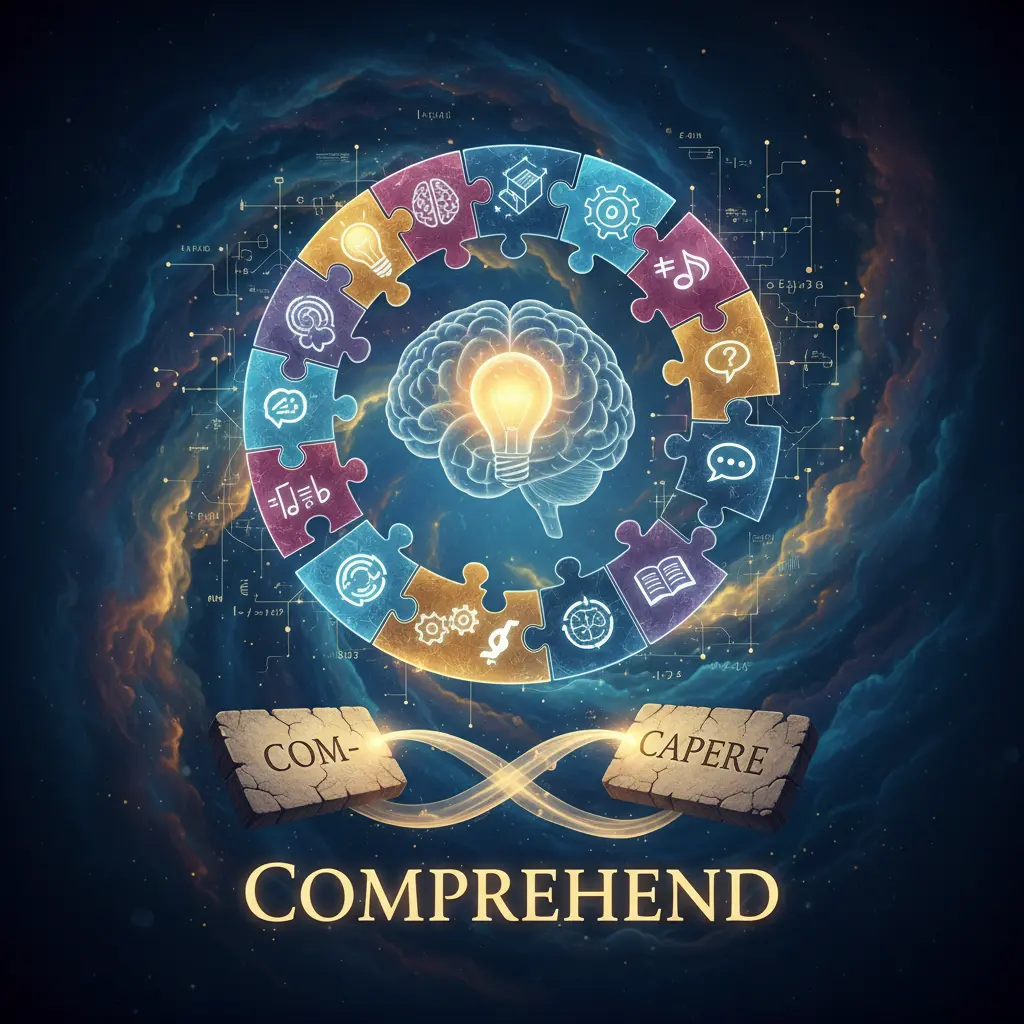
com- = together + capere = to seize. Historical origin: Latin → Old French → English. Memory image: Imagine capturing a group of ideas coming together to form a single coherent picture, like puzzle pieces fitting into place.
Note 1: These definitions and etymologies are not standard dictionary definitions, but extended explanations provided to help with memorization and understanding of the actual application of words. Through this background information, we strive to make words more vivid and easier to understand, and help you remember their meanings in real life.
Note 2: LexiTalk designs the learning flow around the linguistics principle of “Comprehensible Input.” When learners encounter material that is slightly above their level but still understandable from context, the brain naturally absorbs the language. That’s why we keep every word inside authentic contexts, using examples and associations to help you understand it and use it flexibly.
Read the FAQ explanation of Comprehensible InputI set a small object on the desk and push it a little to the right. As I move the object, the idea starts to change shape in my mind. I feel focused effort, a steady pull of attention and a slight adjustment of how I see the whole. When the pieces finally line up, the word concept clicks into place as the plan I can actually use.
Concept refers to an abstract idea or general notion that helps organize our understanding of things. It also appears in phrases like 'the concept of time' or 'a concept map' when describing plans or frameworks. In everyday use, people speak of the core concepts behind a topic, or of a design's concept as the starting point for development. Learners often confuse concepts with opinions or details, or mix up 'concept' with 'idea' or 'theory.' Mastery involves recognizing when a concept is a building block of knowledge versus when it names a complete theory. In many fields, the concept is refined through definitions, examples, and comparisons.
To English speakers, concept is a flexible, abstract noun that can refer to a building block of knowledge or a proposed plan. English uses 'concept of X' or 'the concept behind Y' widely. Learners often over- or under- specify; confuse with 'idea' or 'notion'; or misuse 'concept' with 'theory'.
What is the meaning of the word 'concepts'?
Which sentence uses the word 'concepts' correctly?
What is a synonym for 'concepts'?
What is an antonym for 'concepts'?
Can you think of a real-life situation that involves a range of concepts?
Download LexiTalk app for personalized learning experience
Download AppCookies
We use cookies for essential site functions, analytics, and ads. You can accept, reject, or manage preferences. Privacy Policy