
conciliatory - Master This Word
Master this word with our 5-step learning method – Learn English in English
Train English Through Brain Routes, Not Translation.
This page helps you stop memorizing isolated translations and start understanding a word through its shared mental image, native-style thinking, and practical training steps.
Master this word with our 5-step learning method – Learn English in English
Example sentences are the start of understanding. Don't rush to memorize. First feel how the word works in a sentence.
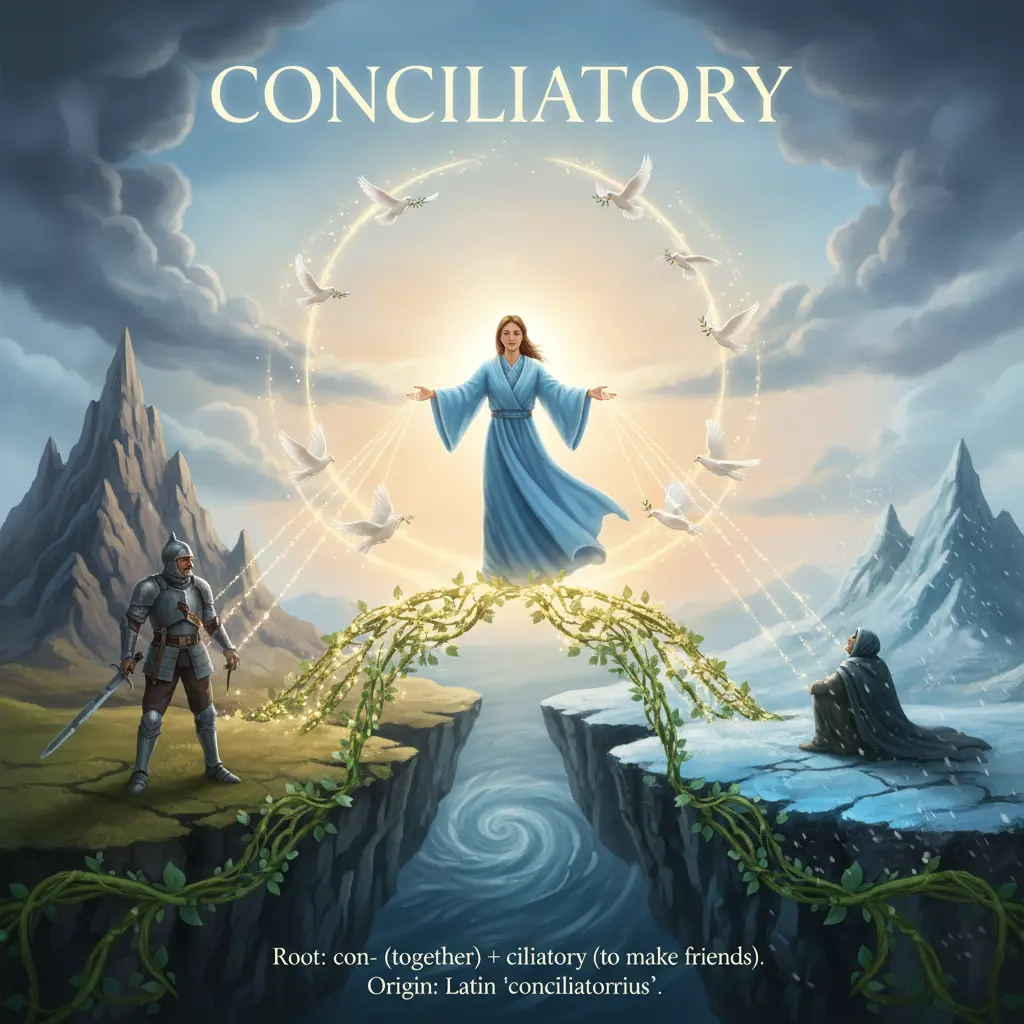
Root: ‘con- (together) + ‘ciliatory' (to make friends) from Latin. Historical origin: From Latin 'conciliatorius' which moved to Old French before English. Memory image: Imagine a peaceful mediator bringing together two opposing sides, creating a bridge of understanding.
Note 1: These definitions and etymologies are not standard dictionary definitions, but extended explanations provided to help with memorization and understanding of the actual application of words. Through this background information, we strive to make words more vivid and easier to understand, and help you remember their meanings in real life.
Note 2: LexiTalk designs the learning flow around the linguistics principle of “Comprehensible Input.” When learners encounter material that is slightly above their level but still understandable from context, the brain naturally absorbs the language. That’s why we keep every word inside authentic contexts, using examples and associations to help you understand it and use it flexibly.
Read the FAQ explanation of Comprehensible InputConciliatory describes a stance or approach aimed at reducing conflict and restoring trust by emphasizing common ground. It is often persuasive without demanding ultimatums, using listening, acknowledgment, and measured language to de‑escalate disputes. In diplomacy, a conciliatory posture may involve concessions or bridging proposals that invite mutual gains; in everyday life, a conciliatory remark or gesture can soften defenses, invite dialogue, and pave the way for a joint solution. It is not surrender of principles, but a deliberate choice to prioritize resolution and relationships. People described as conciliatory tend to ask questions, avoid accusatory phrasing, and look for win‑win outcomes rather than victory.
In English, conciliatory often stresses tone and strategy to de‑escalate while preserving core goals; beginners sometimes equate it with weak apologies or unconditional compromise, which can blur boundaries in negotiations.
What does 'conciliatory' mean?
Choose the sentence that correctly uses 'conciliatory'.
Which word is similar to 'conciliatory'?
What is the opposite of 'conciliatory'?
Can you think of a real-life context where someone might be conciliatory?
Download LexiTalk app for personalized learning experience
Download AppCookies
We use cookies for essential site functions, analytics, and ads. You can accept, reject, or manage preferences. Privacy Policy