manager - Master This Word
Master this word with our 5-step learning method – Learn English in English
Train English Through Brain Routes, Not Translation.
This page helps you stop memorizing isolated translations and start understanding a word through its shared mental image, native-style thinking, and practical training steps.
Master this word with our 5-step learning method – Learn English in English
Example sentences are the start of understanding. Don't rush to memorize. First feel how the word works in a sentence.
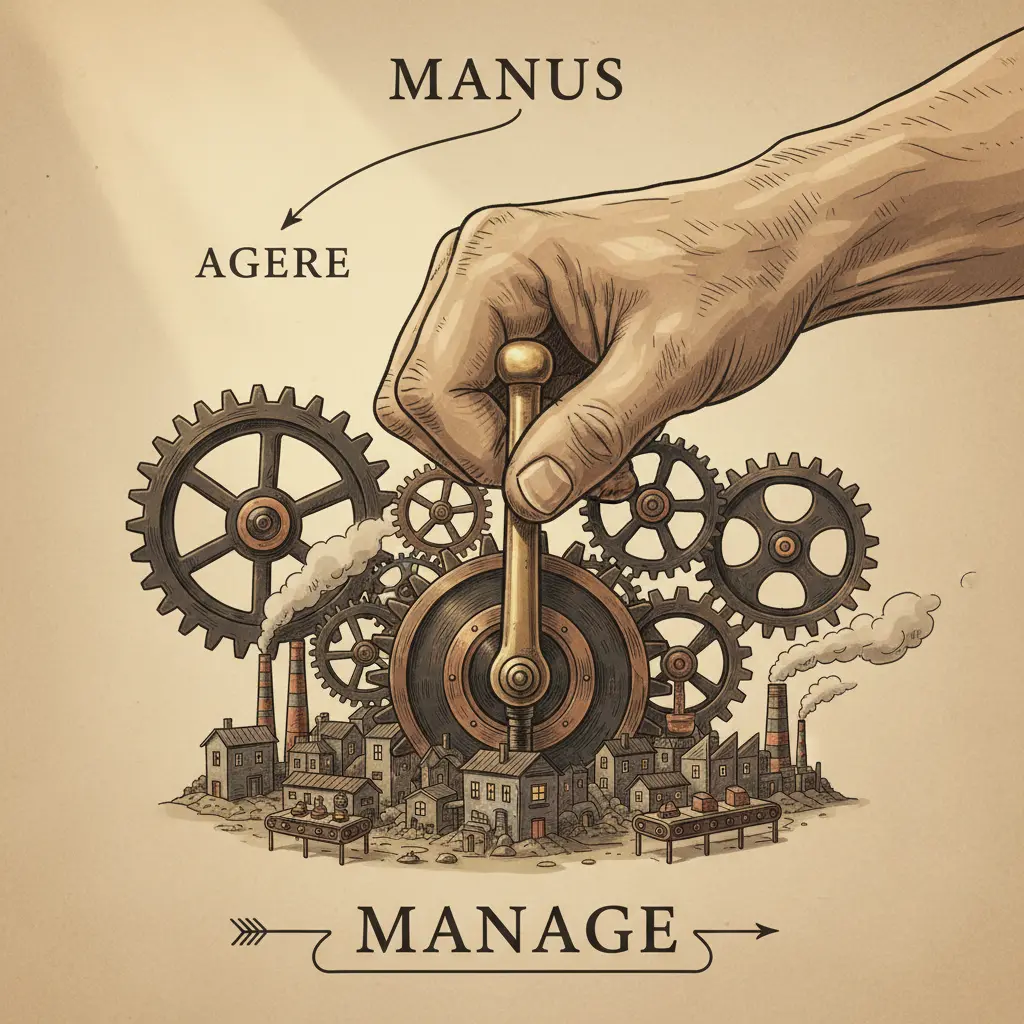
Root decomposition: man- comes from Latin manus, 'hand', plus -age and -er as agent affixes. Historical origin: from Old French manège/maner, ultimately from Latin manus 'hand' + agere 'to drive'. Memory image: a hand gripping a lever and guiding a set of gears as if directing a small factory.
Note 1: These definitions and etymologies are not standard dictionary definitions, but extended explanations provided to help with memorization and understanding of the actual application of words. Through this background information, we strive to make words more vivid and easier to understand, and help you remember their meanings in real life.
Note 2: LexiTalk designs the learning flow around the linguistics principle of “Comprehensible Input.” When learners encounter material that is slightly above their level but still understandable from context, the brain naturally absorbs the language. That’s why we keep every word inside authentic contexts, using examples and associations to help you understand it and use it flexibly.
Read the FAQ explanation of Comprehensible InputI push open the door and step into the busy office, turning toward the wall of screens. I watch what’s moving and what’s stalled, and I adjust the day, shifting tasks from one person to another. It feels like keeping a steady rhythm, a hinge of attention and choice, as I place priorities and hold the line when deadlines loom. By the end, the room hums along, and the people glimpse who’s steering and who’s making things happen.
A manager is someone who supervises a team, department, or company, making decisions, coordinating tasks, and ensuring goals are met. The term covers various levels, from store managers to hotel managers or project managers. In daily use, 'manager' refers to a person in charge of operations and people within a structured environment, not necessarily the owner. Learners often confuse 'manager' with 'boss' or 'supervisor'; 'manager' implies formal responsibility and authority within an organization. Common collocations include 'managerial skills,' 'store manager,' and 'department manager.' Understanding the role helps distinguish it from roles like 'director' or 'executive' depending on organization size.
English treats 'manager' as a formal job title within an organization, distinct from 'boss' (informal authority) and 'supervisor' (often lower-level). Learners may overgeneralize, using 'manager' where 'director' or 'executive' would be more accurate in large firms.
What is the meaning of the word 'manager'?
In which of the following scenarios would you find a manager?
Which of the following is a similar word to 'manager'?
What is the opposite of a 'manager'?
How would you describe the role of a manager in a company?
Download LexiTalk app for personalized learning experience
Download AppCookies
We use cookies for essential site functions, analytics, and ads. You can accept, reject, or manage preferences. Privacy Policy