continue - Master This Word
Master this word with our 5-step learning method – Learn English in English
Train English Through Brain Routes, Not Translation.
This page helps you stop memorizing isolated translations and start understanding a word through its shared mental image, native-style thinking, and practical training steps.
Master this word with our 5-step learning method – Learn English in English
Example sentences are the start of understanding. Don't rush to memorize. First feel how the word works in a sentence.
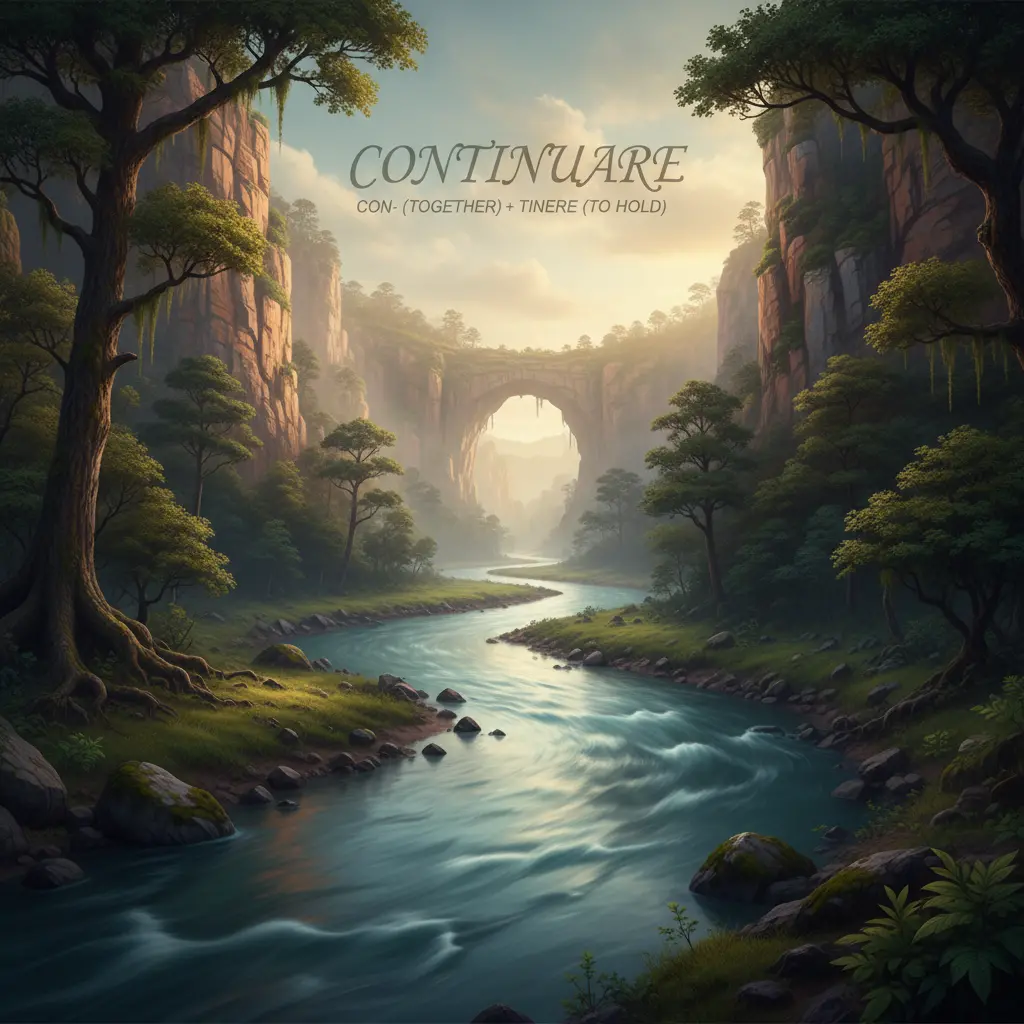
continue = con- (together) + tinere (to hold) → Latin 'continuare' which means 'to hold together'. Imagine a flowing river that holds its course without stopping, symbolizing continuity through time.
Note 1: These definitions and etymologies are not standard dictionary definitions, but extended explanations provided to help with memorization and understanding of the actual application of words. Through this background information, we strive to make words more vivid and easier to understand, and help you remember their meanings in real life.
Note 2: LexiTalk designs the learning flow around the linguistics principle of “Comprehensible Input.” When learners encounter material that is slightly above their level but still understandable from context, the brain naturally absorbs the language. That’s why we keep every word inside authentic contexts, using examples and associations to help you understand it and use it flexibly.
Read the FAQ explanation of Comprehensible InputI press a light switch and the lamp glows. I move my hand to keep the room steady, turning the dial a touch, a small push that tunes the hum into harmony. The moment feels like a rhythm I can adjust, a tiny shift that keeps the brightness right through the evening. As I keep at it, the sense grows that this action isn't a single move but a way of staying in motion—continuing, day after day, without a break.
Continue conveys the idea of moving forward without stopping. In English, it can describe actions that go on for a period, often with a sense of persistence or repetition. It can modify verbs to express ongoing behavior, such as continuing to work, continuing to rain, or continuing to study after a break. The word can imply a deliberate choice to maintain an activity over time, or simply a natural consequence of events that do not end. Etymology comes from Latin continuare 'to hold together', but in everyday use, the focus is on flow and duration rather than a single moment. Learners sometimes confuse it with 'keep on' or 'go on', which carry nuance differences.
English typically encodes duration and flow explicitly, using continue to stress ongoing time or sequence; learners may default to momentary sense or confuse with resume.
How is the word 'continue' used in a sentence?
Which of the following words is most similar to 'continue'?
What is the opposite of 'continue'?
In what real-life scenario would you need to 'continue'?
Download LexiTalk app for personalized learning experience
Download AppCookies
We use cookies for essential site functions, analytics, and ads. You can accept, reject, or manage preferences. Privacy Policy