
corn - Master This Word
Master this word with our 5-step learning method – Learn English in English
Train English Through Brain Routes, Not Translation.
This page helps you stop memorizing isolated translations and start understanding a word through its shared mental image, native-style thinking, and practical training steps.
Master this word with our 5-step learning method – Learn English in English
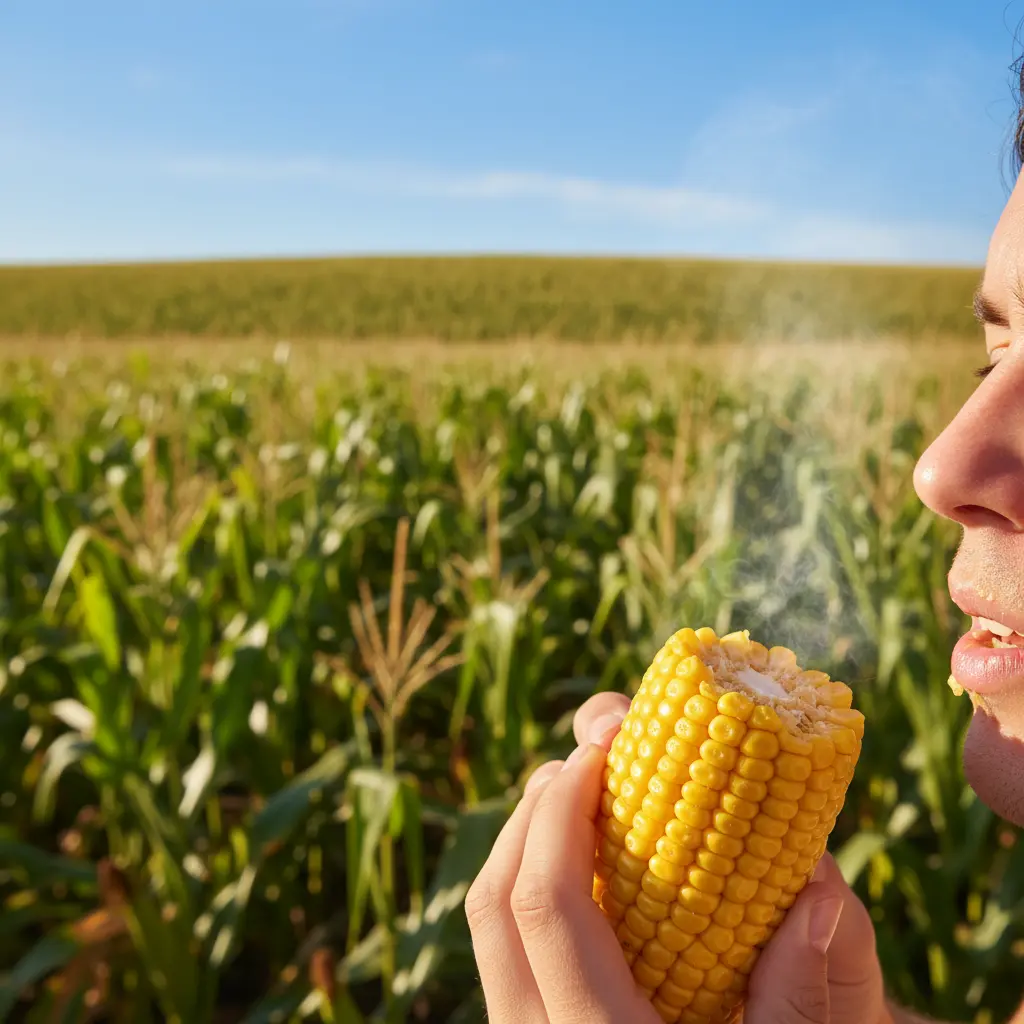
Example sentences are the start of understanding. Don't rush to memorize. First feel how the word works in a sentence.
Root decomposition: root is corn; no prefix or suffix. Historical origin: from Old English corn meaning grain or seed, related to Dutch koren and German Korn, ultimately from an Indo-European root meaning grain. Memory image: imagine a sunlit field of tall corn stalks; kernels glint like coins as you bite into a warm ear on a summer day.
Note 1: These definitions and etymologies are not standard dictionary definitions, but extended explanations provided to help with memorization and understanding of the actual application of words. Through this background information, we strive to make words more vivid and easier to understand, and help you remember their meanings in real life.
Note 2: LexiTalk designs the learning flow around the linguistics principle of “Comprehensible Input.” When learners encounter material that is slightly above their level but still understandable from context, the brain naturally absorbs the language. That’s why we keep every word inside authentic contexts, using examples and associations to help you understand it and use it flexibly.
Read the FAQ explanation of Comprehensible Inputcorn is the edible grain of maize used as food, including corn on the cob or ground into meal. In American English, corn commonly refers to maize in general and its processed forms; in British English, corn has historically been a generic term for cereals, not just maize. The kernels on a cob are called kernels, and you can talk about corn on the cob, cornmeal, or cornbread. Learners should be aware of the contrast between US usage and UK usage, and how context determines whether corn means the plant, the grain, or a finished product. You might also encounter phrases like 'corn syrup' or 'corn starch' whose meanings vary by region. The word spans agriculture, cooking, and even place names, depending on the sentence.
For native English speakers, corn is familiar but regional nuance matters: US usage leans toward maize, while UK usage has historical breadth as a cereal term; learners often assume corn always means maize or mix up corn with other cereals.
What is the meaning of the word 'corn'?
How is the word 'corn' used in a sentence?
Which of the following is a similar word to 'corn'?
What is the opposite of 'corn'?
In what real-life context would you find 'corn'?
Download LexiTalk app for personalized learning experience
Download AppCookies
We use cookies for essential site functions, analytics, and ads. You can accept, reject, or manage preferences. Privacy Policy