
cottage - Master This Word
Master this word with our 5-step learning method – Learn English in English
Train English Through Brain Routes, Not Translation.
This page helps you stop memorizing isolated translations and start understanding a word through its shared mental image, native-style thinking, and practical training steps.
Master this word with our 5-step learning method – Learn English in English
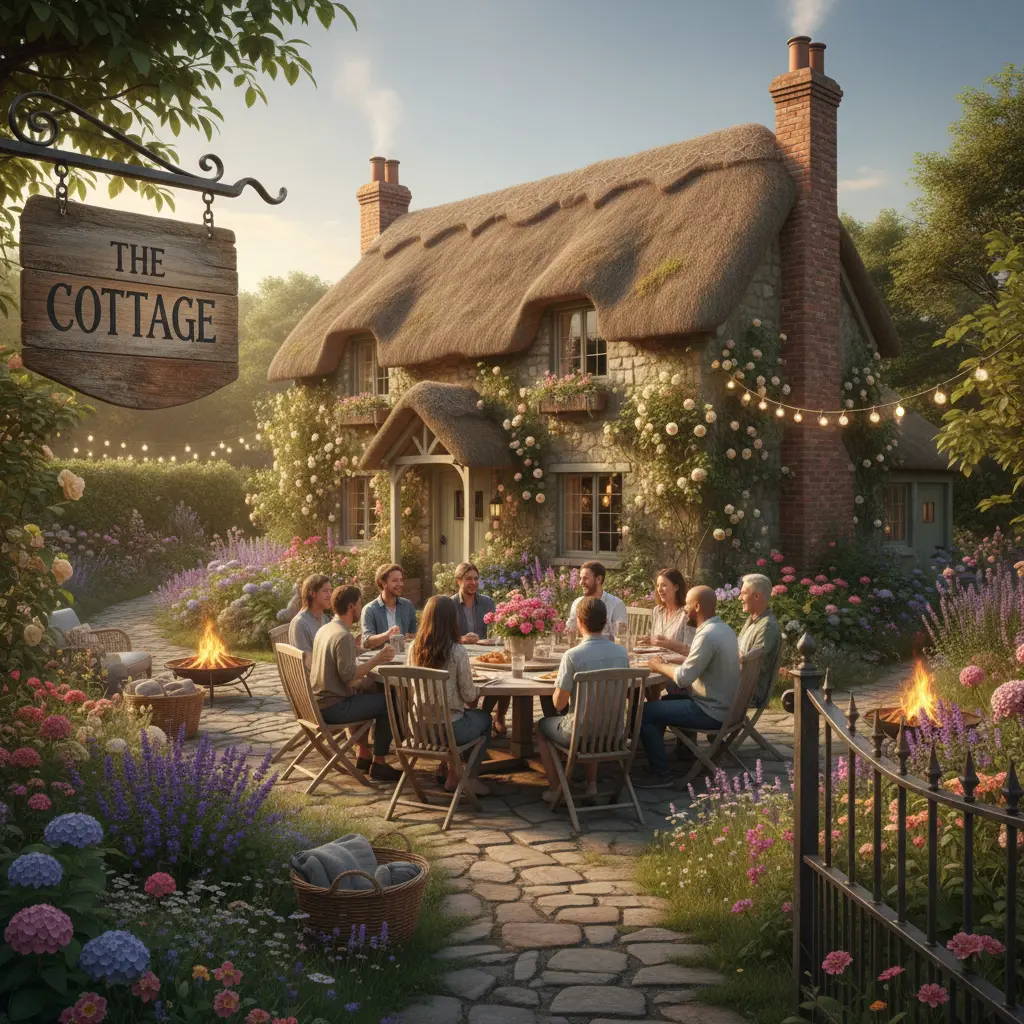
Example sentences are the start of understanding. Don't rush to memorize. First feel how the word works in a sentence.
The word 'cottage' can be broken down into the root 'cot' meaning 'small house' and the suffix '-age' which suggests a collection or state. Its historical origin traces back from Old French 'cotage' derived from 'cote' which is related to a small shelter. Picture a warm, inviting small house surrounded by a garden where people gather for cozy parties.
Note 1: These definitions and etymologies are not standard dictionary definitions, but extended explanations provided to help with memorization and understanding of the actual application of words. Through this background information, we strive to make words more vivid and easier to understand, and help you remember their meanings in real life.
Note 2: LexiTalk designs the learning flow around the linguistics principle of “Comprehensible Input.” When learners encounter material that is slightly above their level but still understandable from context, the brain naturally absorbs the language. That’s why we keep every word inside authentic contexts, using examples and associations to help you understand it and use it flexibly.
Read the FAQ explanation of Comprehensible InputI push open the creaky gate and move along the gravel path toward a small cottage in the fields. I turn the latch and step inside, letting the door settle behind me as the room fills with warm light. The air shifts to wood-scented and quiet, and I hold still for a breath before I adjust to the coziness. In that moment, the scene feels like a little shelter you can set your mind in, a place that keeps you safe and present.
Cottage denotes a small, usually rural dwelling that feels intimate and cozy. In everyday English, it contrasts with larger urban houses and with vacation cabins, emphasizing a simple, homey charm rather than grandeur. The word carries warmth, garden boundaries, and a sense of community or retreat. When learners see 'cottage' in phrases like cottage cheese or cottage industry, they should note that some compounds are set phrases with historical ties, while others refer to different ideas entirely. Native speakers often use cottage to describe a characterful, older-styled home rather than a modern apartment. Remember that a cottage can be occupied year-round or seasonally, depending on context.
In English, cottage emphasizes coziness and rural charm rather than size or luxury; learners should note the distinction from terms like villa, cabin, or chalet to avoid overestimating grandeur.
What is the meaning of the word 'cottage'?
In which sentence is the word 'cottage' used correctly?
Which word is a synonym of 'cottage'?
What is the opposite of 'cottage'?
How would you describe a cottage in a real-life context?
Download LexiTalk app for personalized learning experience
Download AppCookies
We use cookies for essential site functions, analytics, and ads. You can accept, reject, or manage preferences. Privacy Policy