cultivated - Master This Word
Master this word with our 5-step learning method – Learn English in English
Train English Through Brain Routes, Not Translation.
This page helps you stop memorizing isolated translations and start understanding a word through its shared mental image, native-style thinking, and practical training steps.
Master this word with our 5-step learning method – Learn English in English
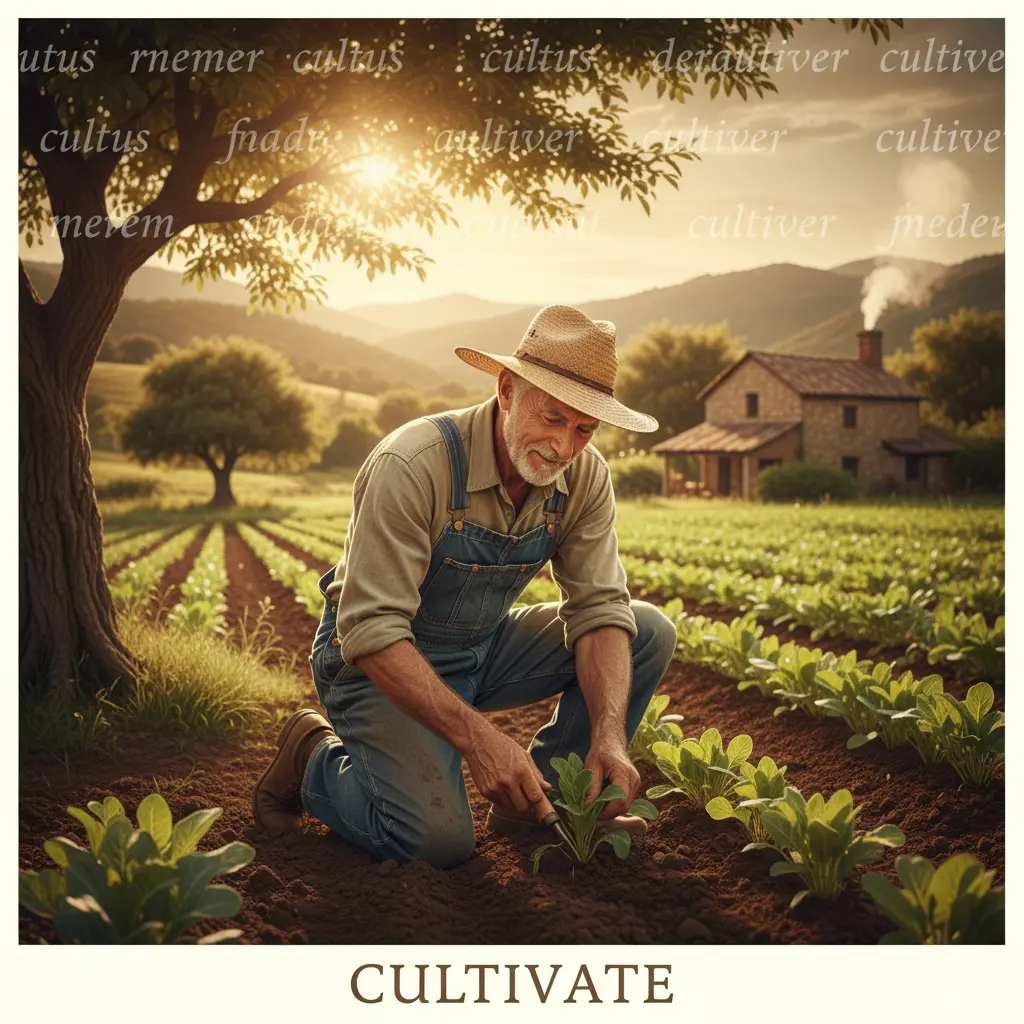
Example sentences are the start of understanding. Don't rush to memorize. First feel how the word works in a sentence.
Root: cult- (to till) + -ivate (to make/create). Historical origin: Latin cultus → Old French cultiver → English cultivate. Memory image: Imagine a farmer lovingly nurturing a plant to grow, symbolizing the care given to both crops and personal skills.
Note 1: These definitions and etymologies are not standard dictionary definitions, but extended explanations provided to help with memorization and understanding of the actual application of words. Through this background information, we strive to make words more vivid and easier to understand, and help you remember their meanings in real life.
Note 2: LexiTalk designs the learning flow around the linguistics principle of “Comprehensible Input.” When learners encounter material that is slightly above their level but still understandable from context, the brain naturally absorbs the language. That’s why we keep every word inside authentic contexts, using examples and associations to help you understand it and use it flexibly.
Read the FAQ explanation of Comprehensible InputFirst I move the spade into the soil, pushing and turning a neat furrow. The earth gives under my hands, and I adjust my stance, keeping the grip steady as the bed changes with each breath. I feel the effort rise, a small push and release, and I keep guiding it toward even rows, toward a space where seeds might sleep. That same rhythm shows up when I learn a new skill—pulling ideas together, setting aside doubt, and letting practice take root.
To cultivate means to prepare and use land for crops, typically by tilling, planting, and tending. It also describes nurturing growth in living things, including plants, animals, and people, by encouraging favorable conditions, time, and care. In a figurative sense, it refers to developing skills, habits, or qualities through deliberate effort, practice, and experience. Native speakers often use phrases like cultivate crops, cultivate a garden, cultivate a relationship, or cultivate a talent. The word emphasizes ongoing effort, patience, and stewardship rather than quick results. In everyday speech, keep it for situations with long-term growth, shared benefit, and responsibility.
English often emphasizes a deliberate, long-term process and broad collocations; learners should notice which contexts are concrete (farming) vs figurative (skills, relationships).
What is the meaning of the word 'cultivated'?
Which sentence uses 'cultivated' correctly?
Choose the synonym for 'cultivated':
Choose the opposite of 'cultivated':
In what real-life context would someone be described as 'cultivated'?
Download LexiTalk app for personalized learning experience
Download AppCookies
We use cookies for essential site functions, analytics, and ads. You can accept, reject, or manage preferences. Privacy Policy