cultural - Master This Word
Master this word with our 5-step learning method – Learn English in English
Train English Through Brain Routes, Not Translation.
This page helps you stop memorizing isolated translations and start understanding a word through its shared mental image, native-style thinking, and practical training steps.
Master this word with our 5-step learning method – Learn English in English
Example sentences are the start of understanding. Don't rush to memorize. First feel how the word works in a sentence.
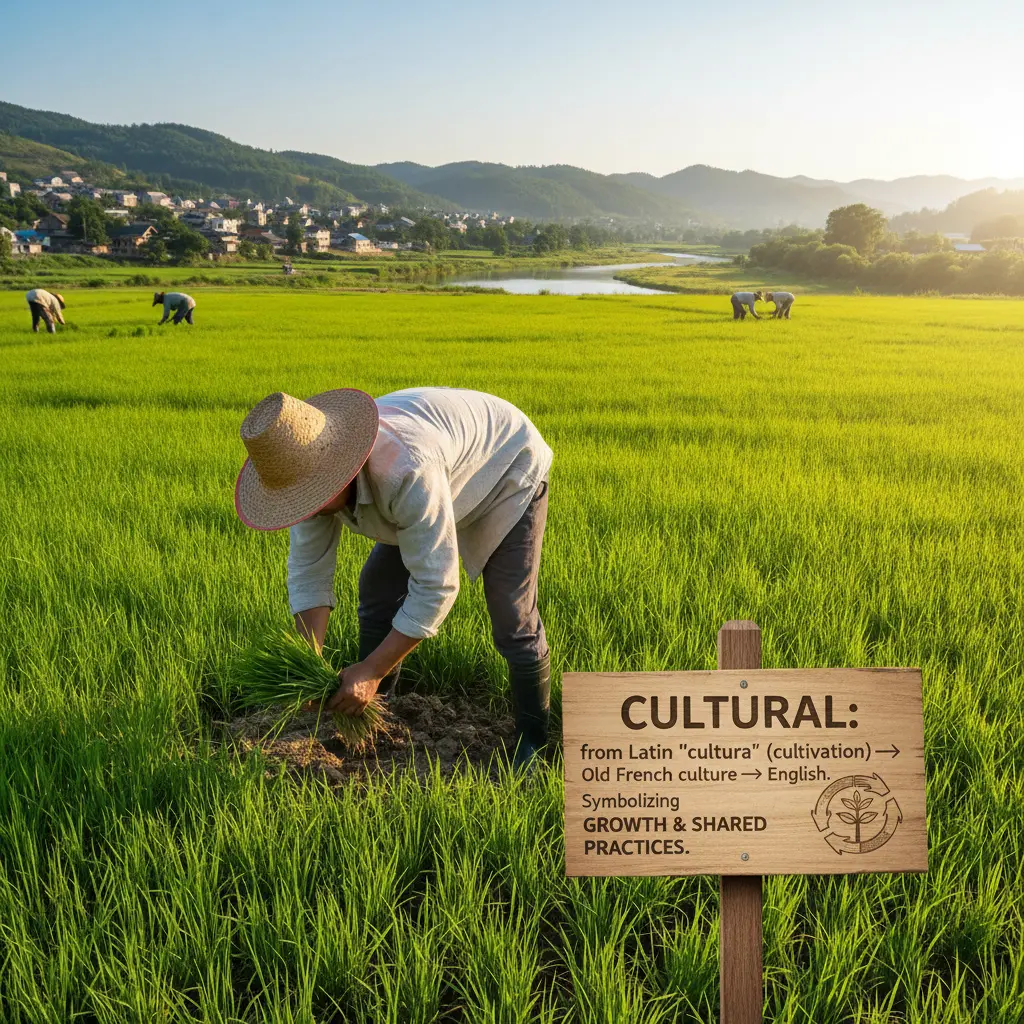
cultural = culture + -al; from Latin 'cultura' meaning 'cultivation' → Old French 'culture' → English. Imagine a farmer tending to crops, cultivating the land, symbolizing growth and shared practices.
Note 1: These definitions and etymologies are not standard dictionary definitions, but extended explanations provided to help with memorization and understanding of the actual application of words. Through this background information, we strive to make words more vivid and easier to understand, and help you remember their meanings in real life.
Note 2: LexiTalk designs the learning flow around the linguistics principle of “Comprehensible Input.” When learners encounter material that is slightly above their level but still understandable from context, the brain naturally absorbs the language. That’s why we keep every word inside authentic contexts, using examples and associations to help you understand it and use it flexibly.
Read the FAQ explanation of Comprehensible InputI pause at the doorway and move into the room, letting my steps shift to the rhythm of the crowd. I watch the faces and hear the voices, and feel my own ideas change as I notice how people greet each other and share stories. The moment pushes me to adjust my pace and the words I choose, holding steady as the vibe guides my actions. By the end, the scene carries a cultural texture—the shared arts and everyday practices that a group uses—and I keep that awareness as I speak or participate.
Cultural is an adjective used to describe things connected with the ideas, customs, arts, and social behavior of a society. It can refer to cultural traditions, institutions, and practices that shape everyday life; for example, cultural heritage, cultural events, or cultural norms. The word often distinguishes learned, shared patterns from biological traits, emphasizing human creativity and collective memory. It appears in phrases like cultural differences, cultural identity, or cultural upbringing. While it can describe art and intellectual achievement, it primarily points to the learned aspects of a group. Its root is culture plus -al, from Latin cultura meaning cultivation.
Explain to an English speaker: cultural describes shared learned patterns of a group, often tied to traditions, arts, and norms; it’s not about people’s biology or IQ. Learners may confuse cultural with ethnic identity or assume it implies superiority.
What does the word 'cultural' mean?
Which of the following sentences uses 'cultural' correctly?
Which word is a synonym of 'cultural'?
In what context would you use the word 'cultural'?
Can you provide an example of something 'cultural'?
Download LexiTalk app for personalized learning experience
Download AppCookies
We use cookies for essential site functions, analytics, and ads. You can accept, reject, or manage preferences. Privacy Policy