differences - Master This Word
Master this word with our 5-step learning method – Learn English in English
Train English Through Brain Routes, Not Translation.
This page helps you stop memorizing isolated translations and start understanding a word through its shared mental image, native-style thinking, and practical training steps.
Master this word with our 5-step learning method – Learn English in English
Example sentences are the start of understanding. Don't rush to memorize. First feel how the word works in a sentence.
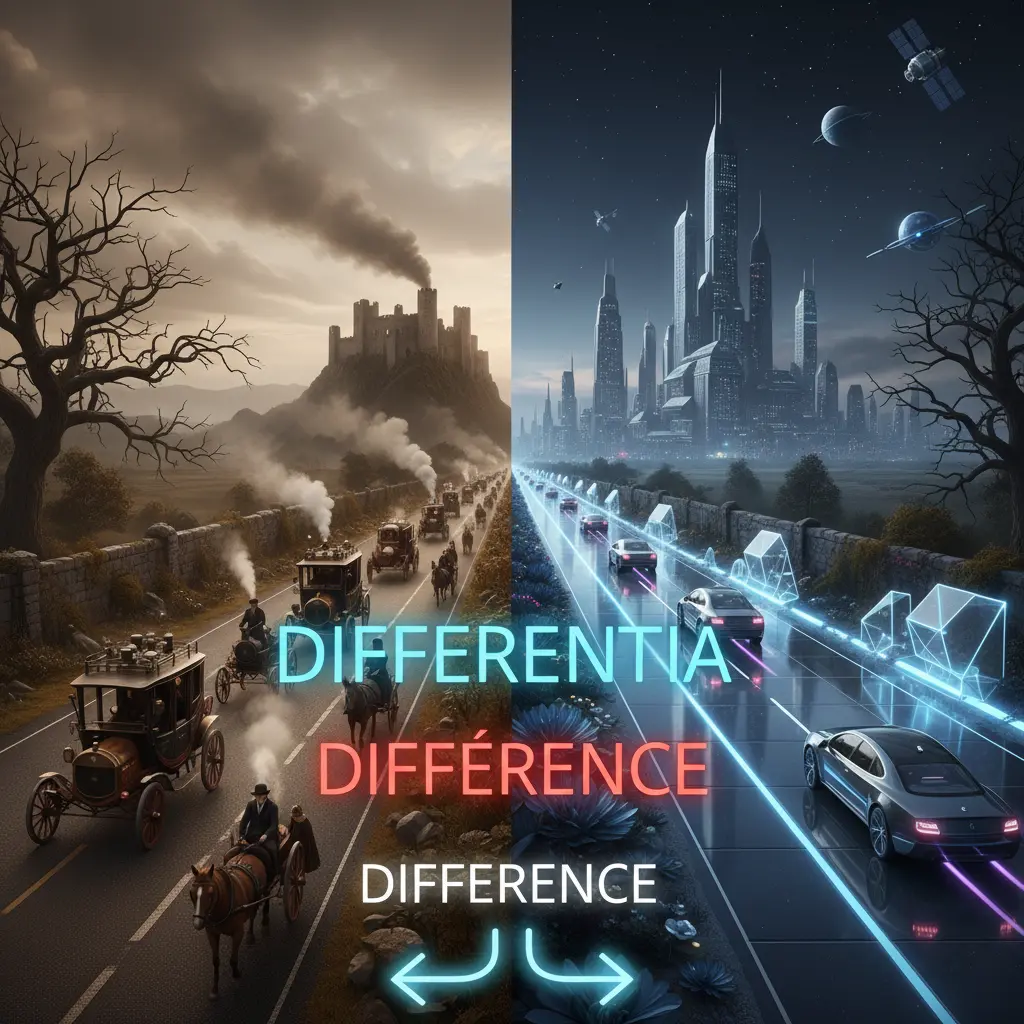
Difference = dis- (apart) + ferre (to carry) → Latin 'differentia' → Old French 'difference' → English. Imagine two roads diverging as they carry distinct stories, showing how they are apart.
Note 1: These definitions and etymologies are not standard dictionary definitions, but extended explanations provided to help with memorization and understanding of the actual application of words. Through this background information, we strive to make words more vivid and easier to understand, and help you remember their meanings in real life.
Note 2: LexiTalk designs the learning flow around the linguistics principle of “Comprehensible Input.” When learners encounter material that is slightly above their level but still understandable from context, the brain naturally absorbs the language. That’s why we keep every word inside authentic contexts, using examples and associations to help you understand it and use it flexibly.
Read the FAQ explanation of Comprehensible InputI reach for two mugs, move one aside and place them side by side. I notice the weight, color, and shape, and a tiny shift in my view makes me see they are not identical. I hold the moment, adjust my grip and let my gaze drift until the sense of difference settles into a simple thought. That difference then becomes a quiet nudge guiding which mug I’ll pick, a small decision I carry forward.
Difference marks how two or more things are not the same. It can describe ordinary contrasts, such as the difference between a red apple and a green apple, or refer to disagreements in opinions or variations in arguments. In math and science, difference measures how much one value differs from another. The word also signals significant changes or distinctions over time, for example the difference between a young professor and an experienced researcher. Learners often confuse difference with words like discrepancy or distinction, so pay attention to context: do you mean a contrast, a disagreement, or a meaningful change?
Explain to an English speaker how English uses difference for contrasts, disagreements, or changes, and common traps (like assuming all differences are numerical).
What does the word 'differences' mean?
Choose the sentence that uses 'differences' correctly.
Which word is most similar to 'differences'?
What is the opposite of 'differences'?
Can you describe a situation where you notice variations among items?
Download LexiTalk app for personalized learning experience
Download AppCookies
We use cookies for essential site functions, analytics, and ads. You can accept, reject, or manage preferences. Privacy Policy