damaged - Master This Word
Master this word with our 5-step learning method – Learn English in English
Train English Through Brain Routes, Not Translation.
This page helps you stop memorizing isolated translations and start understanding a word through its shared mental image, native-style thinking, and practical training steps.
Master this word with our 5-step learning method – Learn English in English
Example sentences are the start of understanding. Don't rush to memorize. First feel how the word works in a sentence.
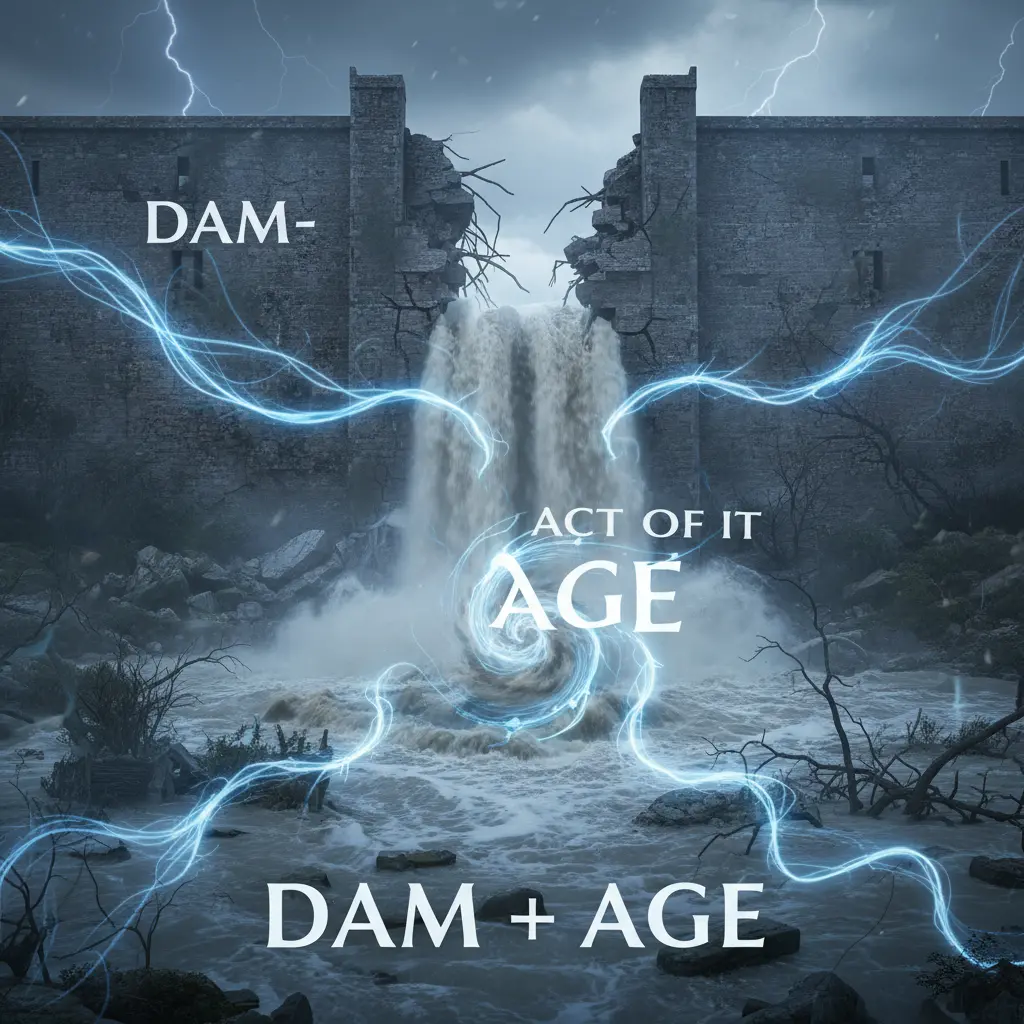
Root decomposition: dam- = to subdue, age = act of. Historical origin: Old French 'damage' → Middle English. Memory image: Imagine a broken wall (dam) causing a flood, the act of it (age) provides a vivid picture of the harm.
Note 1: These definitions and etymologies are not standard dictionary definitions, but extended explanations provided to help with memorization and understanding of the actual application of words. Through this background information, we strive to make words more vivid and easier to understand, and help you remember their meanings in real life.
Note 2: LexiTalk designs the learning flow around the linguistics principle of “Comprehensible Input.” When learners encounter material that is slightly above their level but still understandable from context, the brain naturally absorbs the language. That’s why we keep every word inside authentic contexts, using examples and associations to help you understand it and use it flexibly.
Read the FAQ explanation of Comprehensible InputFirst I grip the dusty window frame and set my elbow, then I push the sash up a little and pull it back when it sticks. I shift my weight and hold the edge as it rattles, feeling the tension rise. If I push again, I might damage the frame, so I ease off, adjust my grip, and keep a careful pace. The moment teaches me where to stop, let the rhythm settle, and show me how far I can go.
“Damage” is a flexible English word that can function as both a noun and a verb. As a noun it refers to harm, injury, or loss affecting an object or person, for example, “The storm caused damage to the roof.” As a verb, to damage means to harm or spoil something, as in “Carelessness can damage furniture.” In legal contexts, “damages” denotes monetary compensation for harm rather than physical injury. A handy memory cue is imagining a dam causing a flood—that “dam-age” image captures the core idea. Learners often stumble over countability, such as when to use “damage” vs “damages” and when the word is pluralized or not.
Native English speakers tend to treat damage as a concrete, countable noun in some contexts and as an abstract uncoun table concept in others; learners often overpluralize or misapply it in legal phrases.
What does the word 'damaged' mean?
Choose the sentence where 'damaged' is used correctly:
Which word is an antonym of 'damaged'?
In what real-life context would you use the word 'damaged'?
Reflect on the importance of fixing 'damaged' items around your home.
Download LexiTalk app for personalized learning experience
Download AppCookies
We use cookies for essential site functions, analytics, and ads. You can accept, reject, or manage preferences. Privacy Policy