dazzling - Master This Word
Master this word with our 5-step learning method – Learn English in English
Train English Through Brain Routes, Not Translation.
This page helps you stop memorizing isolated translations and start understanding a word through its shared mental image, native-style thinking, and practical training steps.
Master this word with our 5-step learning method – Learn English in English
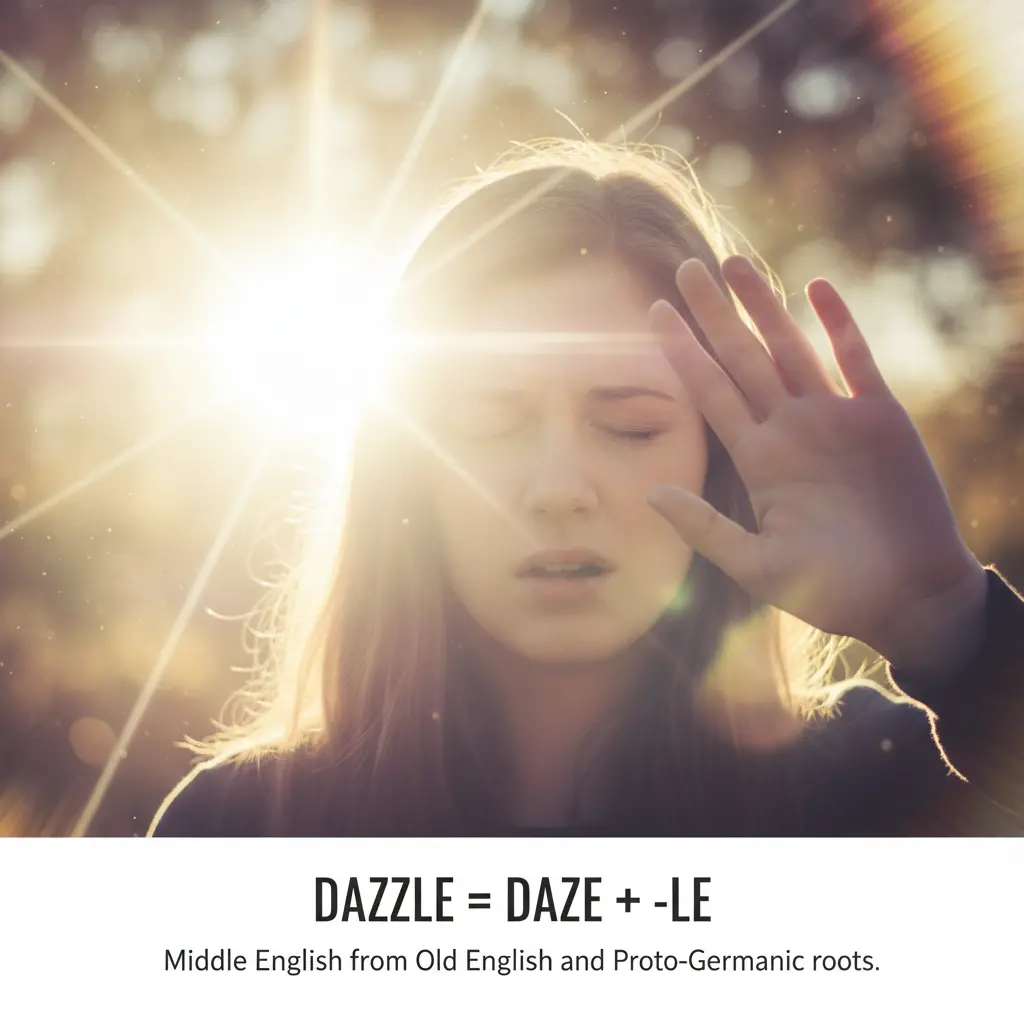
Example sentences are the start of understanding. Don't rush to memorize. First feel how the word works in a sentence.
dazzle = daze + -le (suffix indicating action); Middle English from Old English and Proto-Germanic roots. Imagine a bright flash of light that makes you squint and lose sight momentarily, as if you were blinded by the brilliance.
Note 1: These definitions and etymologies are not standard dictionary definitions, but extended explanations provided to help with memorization and understanding of the actual application of words. Through this background information, we strive to make words more vivid and easier to understand, and help you remember their meanings in real life.
Note 2: LexiTalk designs the learning flow around the linguistics principle of “Comprehensible Input.” When learners encounter material that is slightly above their level but still understandable from context, the brain naturally absorbs the language. That’s why we keep every word inside authentic contexts, using examples and associations to help you understand it and use it flexibly.
Read the FAQ explanation of Comprehensible InputDazzle is a versatile verb meaning to shine or perform in a way that overwhelms with brightness, as when fireworks dazzle the crowd, or when a performer dazzles an audience with skill. It can also describe something so impressive that it leaves people amazed, often followed by with or by. The related adjective dazzling describes visuals or performances that are bright, eye catching, or extremely impressive. Learners tend to confuse dazzle with daze, as both involve strong sensory impact, but dazzle is about producing admiration, not confusion. Dazzle can be transitive and used in phrases like dazzle someone with brilliance or dazzle the eye.
Dazzle for English speakers often centers on producing admiration through brightness or skill, with a strong emphasis on transitive actions like dazzle someone with brilliance. Learners should distinguish it from daze, which conveys confusion or stun rather than admiration. English frequently uses the noun form in reviews and headlines, while the adjective dazzling is common in descriptions of visuals.
What is the meaning of 'dazzling'?
In which sentence is 'dazzling' used correctly?
Which word is a synonym of 'dazzling'?
Which word is an antonym of 'dazzling'?
In what real-life context would you use the word 'dazzling'?
English Learning Listening Content
Listen NowDownload LexiTalk app for personalized learning experience
Download AppCookies
We use cookies for essential site functions, analytics, and ads. You can accept, reject, or manage preferences. Privacy Policy