
disaffected - Master This Word
Master this word with our 5-step learning method – Learn English in English
Train English Through Brain Routes, Not Translation.
This page helps you stop memorizing isolated translations and start understanding a word through its shared mental image, native-style thinking, and practical training steps.
Master this word with our 5-step learning method – Learn English in English
Example sentences are the start of understanding. Don't rush to memorize. First feel how the word works in a sentence.
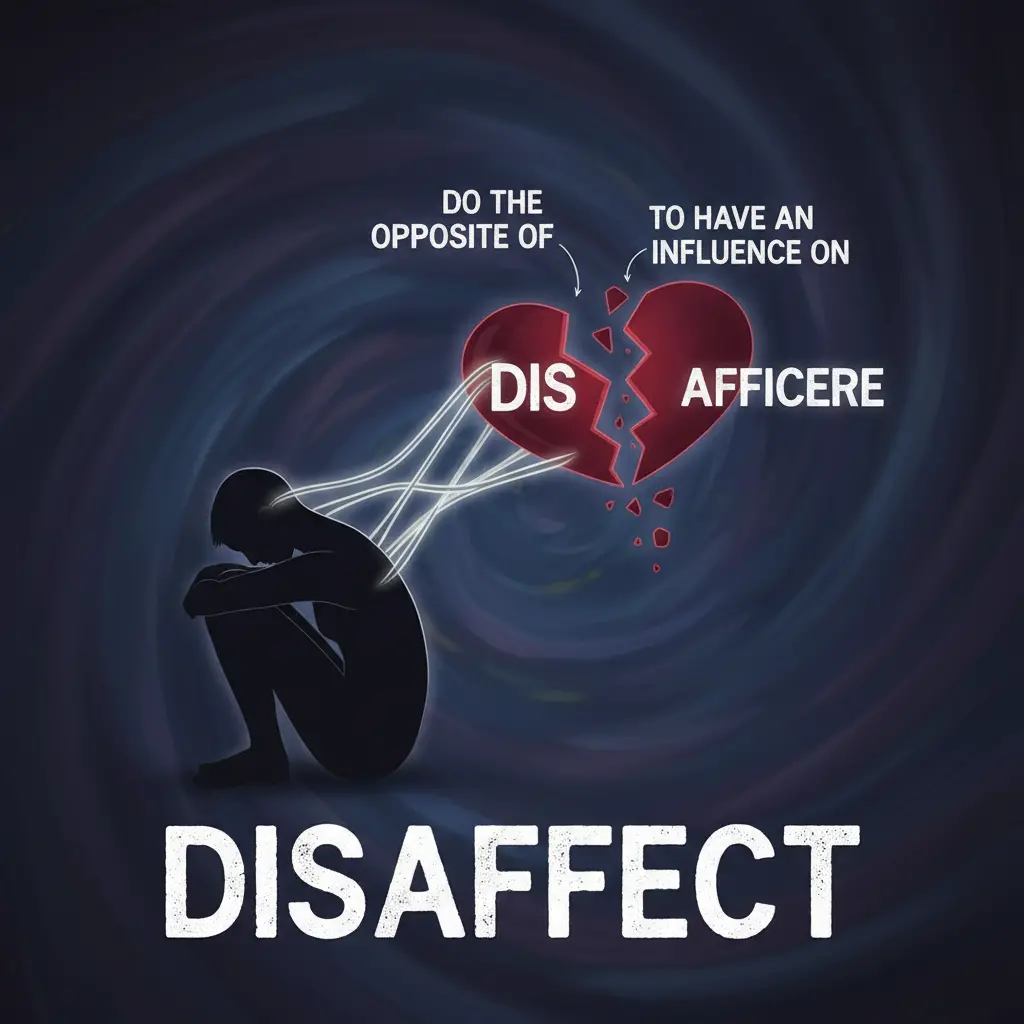
disaffect = dis- (do the opposite of) + affect (to have an influence on) Originated from Latin 'dis' meaning 'apart' + 'afficere' meaning 'to influence'. Memory image: Picture a broken heart symbolizing lost affection, where the heart is being pulled apart from a person.
Note 1: These definitions and etymologies are not standard dictionary definitions, but extended explanations provided to help with memorization and understanding of the actual application of words. Through this background information, we strive to make words more vivid and easier to understand, and help you remember their meanings in real life.
Note 2: LexiTalk designs the learning flow around the linguistics principle of “Comprehensible Input.” When learners encounter material that is slightly above their level but still understandable from context, the brain naturally absorbs the language. That’s why we keep every word inside authentic contexts, using examples and associations to help you understand it and use it flexibly.
Read the FAQ explanation of Comprehensible InputDisaffect is a verb meaning to cause someone to lose affection or loyalty, or to alienate someone emotionally. It is often used in political or organizational contexts, where authorities fear that harsh policies or punitive actions could disaffect a group rather than win support. The word implies a deliberate action aimed at breaking trust, not a passive change of feeling. In practice you might say that reforms have disaffected the public, or that a sharp accusation disaffected a former ally. The noun form is disaffection, referring to a general mood of emotional distance or reduced loyalty toward a person, institution, or leader.
Disaffect signals a formal, sometimes old-fashioned sense of deliberate harm to loyalty; learners often confuse it with general dissatisfaction and apply it too loosely to everyday annoyances.
Download LexiTalk app for personalized learning experience
Download AppCookies
We use cookies for essential site functions, analytics, and ads. You can accept, reject, or manage preferences. Privacy Policy