disaster - Master This Word
Master this word with our 5-step learning method – Learn English in English
Train English Through Brain Routes, Not Translation.
This page helps you stop memorizing isolated translations and start understanding a word through its shared mental image, native-style thinking, and practical training steps.
Master this word with our 5-step learning method – Learn English in English
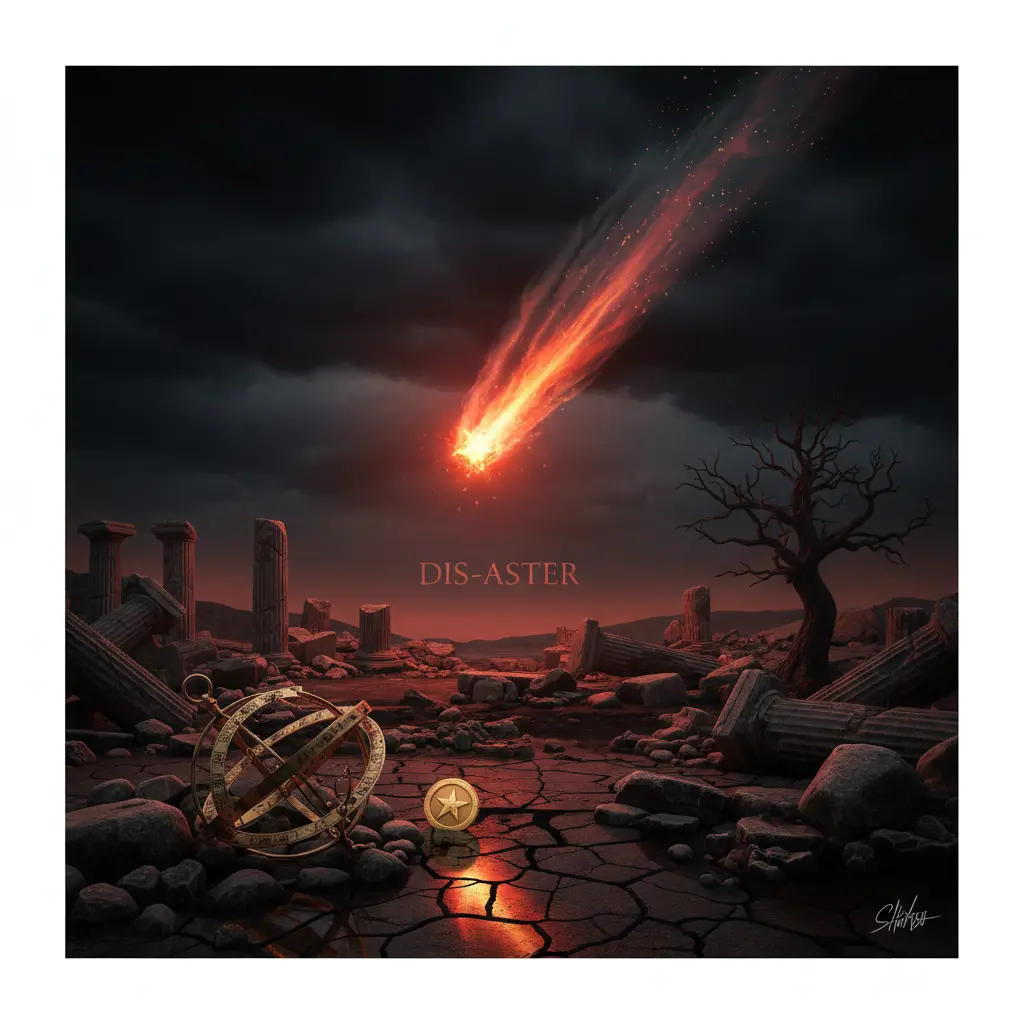
Example sentences are the start of understanding. Don't rush to memorize. First feel how the word works in a sentence.
disaster = dis- (bad) + aster (star), originating from Latin through Old French, relating to the idea of a star influencing fate negatively; imagine a star falling from the sky, representing bad fortune.
Note 1: These definitions and etymologies are not standard dictionary definitions, but extended explanations provided to help with memorization and understanding of the actual application of words. Through this background information, we strive to make words more vivid and easier to understand, and help you remember their meanings in real life.
Note 2: LexiTalk designs the learning flow around the linguistics principle of “Comprehensible Input.” When learners encounter material that is slightly above their level but still understandable from context, the brain naturally absorbs the language. That’s why we keep every word inside authentic contexts, using examples and associations to help you understand it and use it flexibly.
Read the FAQ explanation of Comprehensible InputI tighten my grip on the door frame and shift my weight toward the door, moving my feet as the room trembles. Lights flicker, a crack in the wall, and a shout from outside push the scene into chaos. I adjust my breathing, find a safe path, and keep my pace toward the exit. In this moment, the word disaster feels real, a sudden change that tests every decision.
Disaster is a noun that refers to a sudden event that causes great damage, hardship, or disruption. It covers both natural events such as floods and earthquakes and human-made failures like industrial accidents. In everyday English we talk about a disaster as a large, often unexpected misfortune, not just a temporary setback. Common collocations include natural disaster, fire disaster, disaster relief, and disaster strikes. The word carries strong emotional weight and is often used with modifiers like major, serious, or total. While a calamity and a disaster are similar, disaster emphasizes scale and impact, sometimes more than the underlying cause.
English frames disaster as a large, impactful event with strong emotional charge, making learners wary of using it for minor problems.
Which of the following is a correct usage of 'disaster'?
Which word is a synonym of 'disaster'?
In what situation would 'disaster' most likely be used?
Can you think of a real-life context where 'disaster' would be appropriate?
Download LexiTalk app for personalized learning experience
Download AppCookies
We use cookies for essential site functions, analytics, and ads. You can accept, reject, or manage preferences. Privacy Policy