discourage - Master This Word
Master this word with our 5-step learning method – Learn English in English
Train English Through Brain Routes, Not Translation.
This page helps you stop memorizing isolated translations and start understanding a word through its shared mental image, native-style thinking, and practical training steps.
Master this word with our 5-step learning method – Learn English in English
Example sentences are the start of understanding. Don't rush to memorize. First feel how the word works in a sentence.
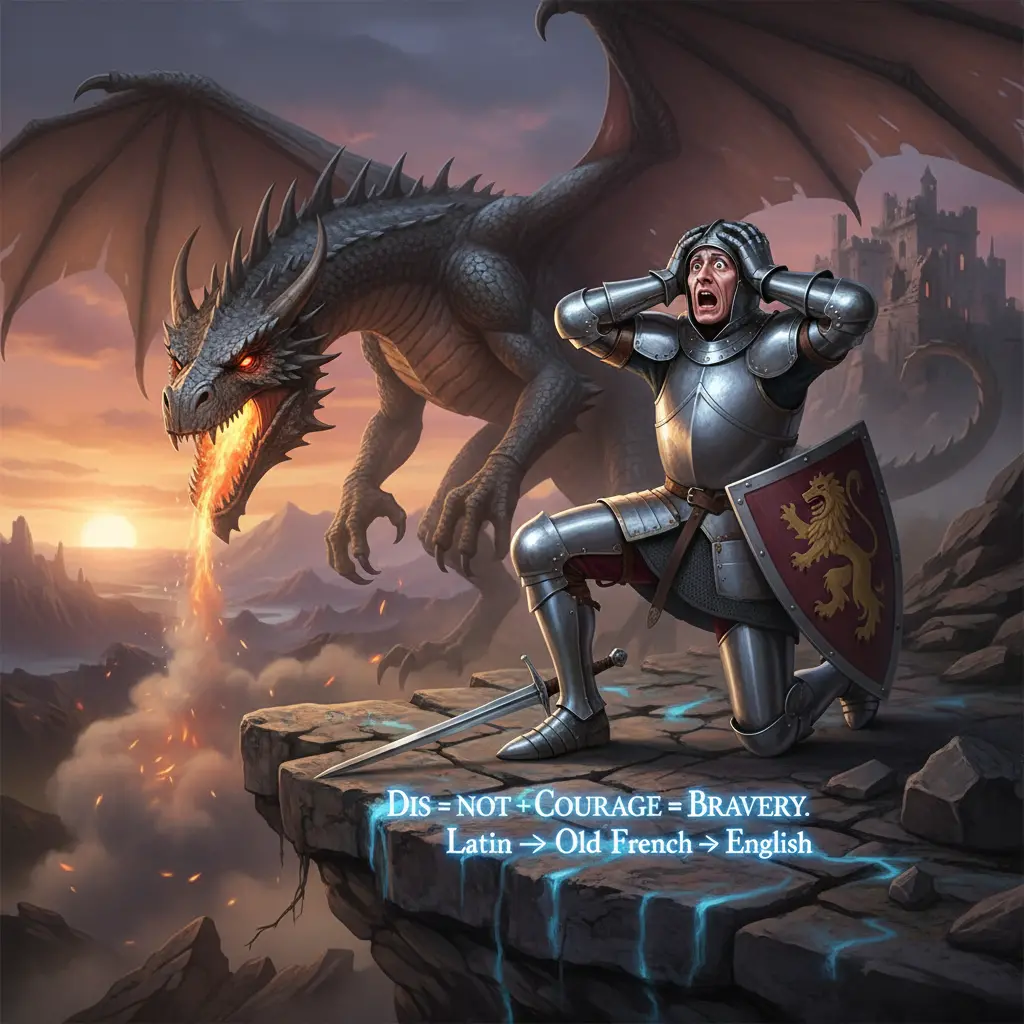
dis- = not + courage = bravery; historical origin: Latin → Old French → English. Imagine a brave knight who loses his courage when faced with a dragon, representing the idea of discouragement.
Note 1: These definitions and etymologies are not standard dictionary definitions, but extended explanations provided to help with memorization and understanding of the actual application of words. Through this background information, we strive to make words more vivid and easier to understand, and help you remember their meanings in real life.
Note 2: LexiTalk designs the learning flow around the linguistics principle of “Comprehensible Input.” When learners encounter material that is slightly above their level but still understandable from context, the brain naturally absorbs the language. That’s why we keep every word inside authentic contexts, using examples and associations to help you understand it and use it flexibly.
Read the FAQ explanation of Comprehensible InputI set my coffee cup on the table, take a deep breath, and watch my hand move toward it. A friend's comment cuts through the room, and I adjust my stance, hold my tongue, and let the idea change course inside me. I pull back a little, push away the urge to agree, and the moment turns quieter as pressure shifts. What remains is a small discipline I keep, a way to discourage a rush and give space to a better choice.
Discourage means to make someone less confident, to deter someone from an action, or to dissuade someone. In English we use it when advice, warnings, or criticism sap a person’s enthusiasm or courage, or when someone tries to prevent a risk or a poor choice. The word comes from dis- meaning not and courage, with a mental image of a knight who loses his bravery when faced with a dragon. You might hear: The coach discouraged the team from continuing after the injury; a mentor discouraged a risky project; or a friend discouraged you from taking the trip. It can feel stronger than simply suggesting not to do something, especially when it affects mood or motivation.
English learners often notice discourage conveys emotional impact or confidence issues, unlike simply stopping an action. Some confuse it with deter or dissuade. Keep in mind the target is often mood, not just move.
What does 'discourage' mean?
Which of the following sentences uses 'discourage' correctly?
Which word is an antonym of 'discourage'?
In what real-life situation might someone feel discouraged?
Can you provide a sentence using the word 'discourage'?
Download LexiTalk app for personalized learning experience
Download AppCookies
We use cookies for essential site functions, analytics, and ads. You can accept, reject, or manage preferences. Privacy Policy