
disinfect - Master This Word
Master this word with our 5-step learning method – Learn English in English
Train English Through Brain Routes, Not Translation.
This page helps you stop memorizing isolated translations and start understanding a word through its shared mental image, native-style thinking, and practical training steps.
Master this word with our 5-step learning method – Learn English in English
Example sentences are the start of understanding. Don't rush to memorize. First feel how the word works in a sentence.
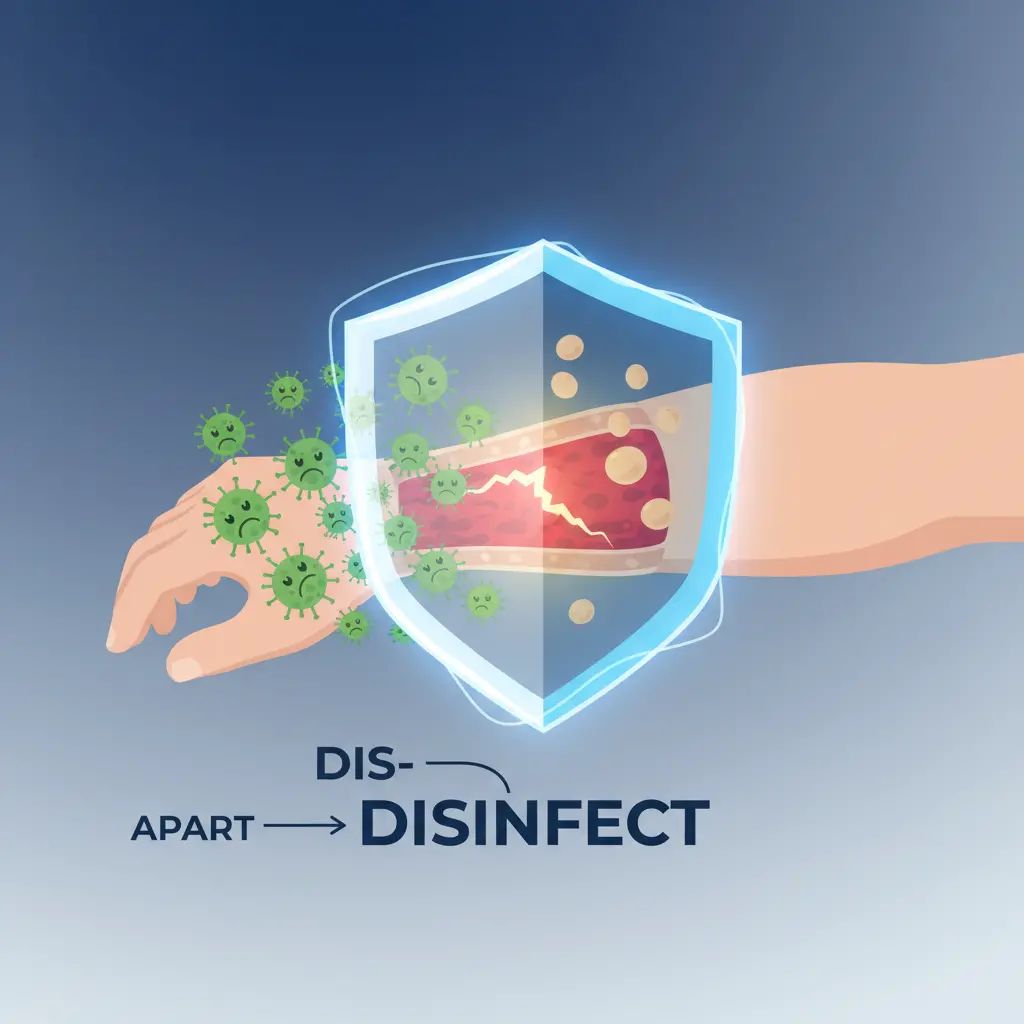
dis- (apart) + infect (to contaminate) from Latin 'infectus'. The image of disinfecting is akin to a shield that protects a wound from germs, illustrating how separating the infection keeps us safe.
Note 1: These definitions and etymologies are not standard dictionary definitions, but extended explanations provided to help with memorization and understanding of the actual application of words. Through this background information, we strive to make words more vivid and easier to understand, and help you remember their meanings in real life.
Note 2: LexiTalk designs the learning flow around the linguistics principle of “Comprehensible Input.” When learners encounter material that is slightly above their level but still understandable from context, the brain naturally absorbs the language. That’s why we keep every word inside authentic contexts, using examples and associations to help you understand it and use it flexibly.
Read the FAQ explanation of Comprehensible InputDisinfect means to kill germs on surfaces and objects, not merely to clean away dirt. It is a stronger, purpose-driven action aimed at removing pathogens to prevent illness. People disinfect countertops, cutting boards, doorknobs, and medical instruments, often using chemical disinfectants or heat. In healthcare settings, disinfection is a critical step between patients to reduce infection risk. It is different from cleaning: cleaning removes visible grime, while disinfection targets microscopic organisms. Always follow product labels and safety instructions, use gloves if advised, and ensure proper contact time for the disinfectant. Remember that disinfection reduces but does not guarantee absolute sterility.
For English speakers, disinfection is often framed in technical or infection-control contexts. Learners should note the noun forms: disinfection and disinfectant, and keep 'disinfect' for surfaces or objects, not people. Many confuse disinfection with sanitizing; cuisine and hospital lingo often use precise terms.
What does the word 'disinfect' mean?
Which of the following sentences uses 'disinfect' correctly?
Which of the following words is similar to 'disinfect'?
What is the opposite of 'disinfect'?
Can you think of a real-life scenario where something needs cleaning?
Download LexiTalk app for personalized learning experience
Download AppCookies
We use cookies for essential site functions, analytics, and ads. You can accept, reject, or manage preferences. Privacy Policy