disorder - Master This Word
Master this word with our 5-step learning method – Learn English in English
Train English Through Brain Routes, Not Translation.
This page helps you stop memorizing isolated translations and start understanding a word through its shared mental image, native-style thinking, and practical training steps.
Master this word with our 5-step learning method – Learn English in English
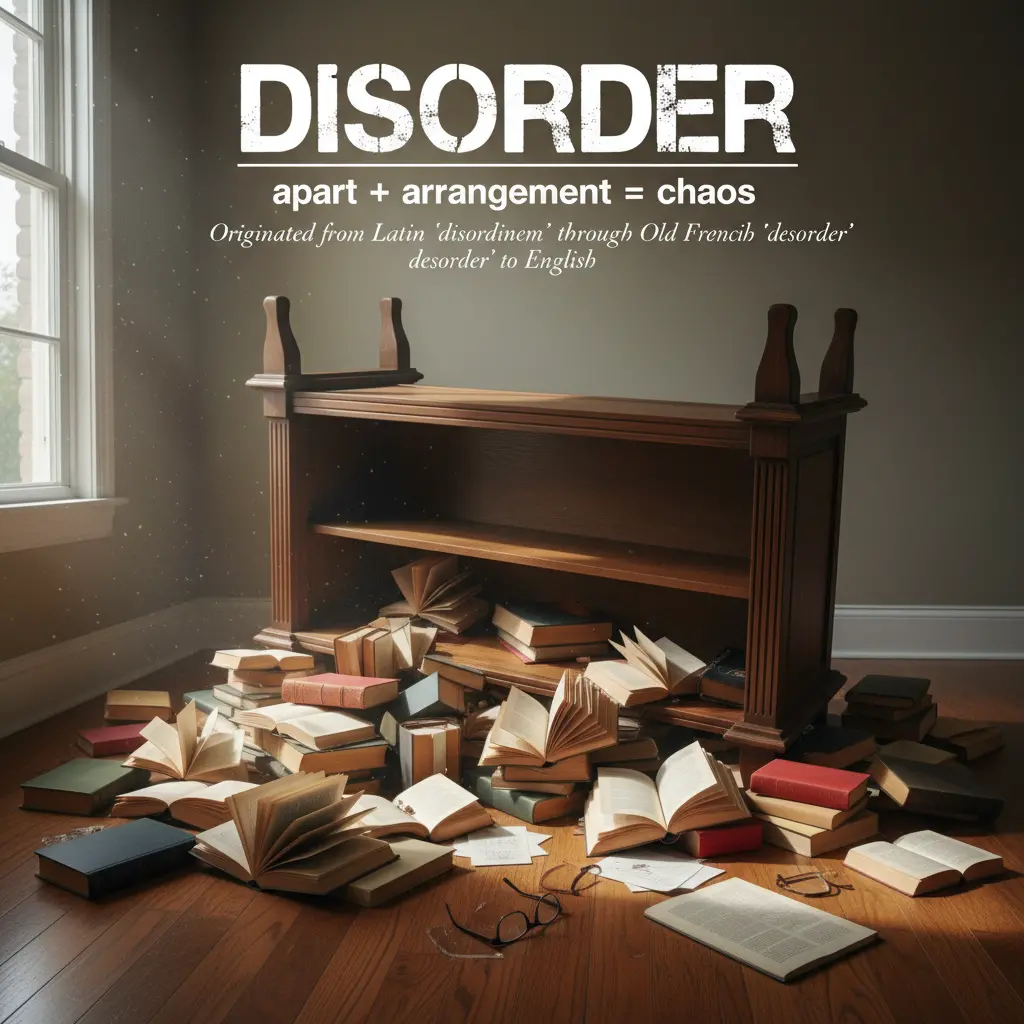
Example sentences are the start of understanding. Don't rush to memorize. First feel how the word works in a sentence.
dis- = apart + order = arrangement. Originated from Latin 'disordinem' through Old French 'desorder' to English. Imagine a neatly arranged bookshelf suddenly turned upside down, with books scattered everywhere, symbolizing disorder.
Note 1: These definitions and etymologies are not standard dictionary definitions, but extended explanations provided to help with memorization and understanding of the actual application of words. Through this background information, we strive to make words more vivid and easier to understand, and help you remember their meanings in real life.
Note 2: LexiTalk designs the learning flow around the linguistics principle of “Comprehensible Input.” When learners encounter material that is slightly above their level but still understandable from context, the brain naturally absorbs the language. That’s why we keep every word inside authentic contexts, using examples and associations to help you understand it and use it flexibly.
Read the FAQ explanation of Comprehensible InputI grab a mug at the edge of the desk and push it forward, watching the line of objects loosen into a loose stretch. Papers shift, a calendar turns, and I lean in, hands adjusting to hold a thread of order. The effort tightens in my forearms as I set things back one by one and feel the rhythm return. When the room feels off and plans wobble, I keep moving, guiding the space back into place.
Disorder can describe a lack of order in a room or system, a medical condition that affects normal functioning, or the act of disturbing something’s arrangement. In daily use it usually means mess or confusion: a cluttered desk shows disorder. In medicine, disorder names a condition that disrupts how the body or mind works, such as sleep disorder or anxiety disorder. As a verb, to disorder something means to disturb its order or organization, which often implies carelessness or interference. The word carries a neutral to formal tone; in casual talk you would substitute words like mess or chaos, while medical contexts keep the formal sense.
Disorder is used in both everyday and medical contexts; learners often mix it with mess or chaos and forget that to disorder as a verb is uncommon.
What is the meaning of the word 'disorder'?
In which of the following sentences is 'disorder' used correctly?
Which word is similar to 'disorder'?
What is the opposite of 'disorder'?
In what context might you encounter the word 'disorder'?
Download LexiTalk app for personalized learning experience
Download AppCookies
We use cookies for essential site functions, analytics, and ads. You can accept, reject, or manage preferences. Privacy Policy