dots - Master This Word
Master this word with our 5-step learning method – Learn English in English
Train English Through Brain Routes, Not Translation.
This page helps you stop memorizing isolated translations and start understanding a word through its shared mental image, native-style thinking, and practical training steps.
Master this word with our 5-step learning method – Learn English in English
Example sentences are the start of understanding. Don't rush to memorize. First feel how the word works in a sentence.
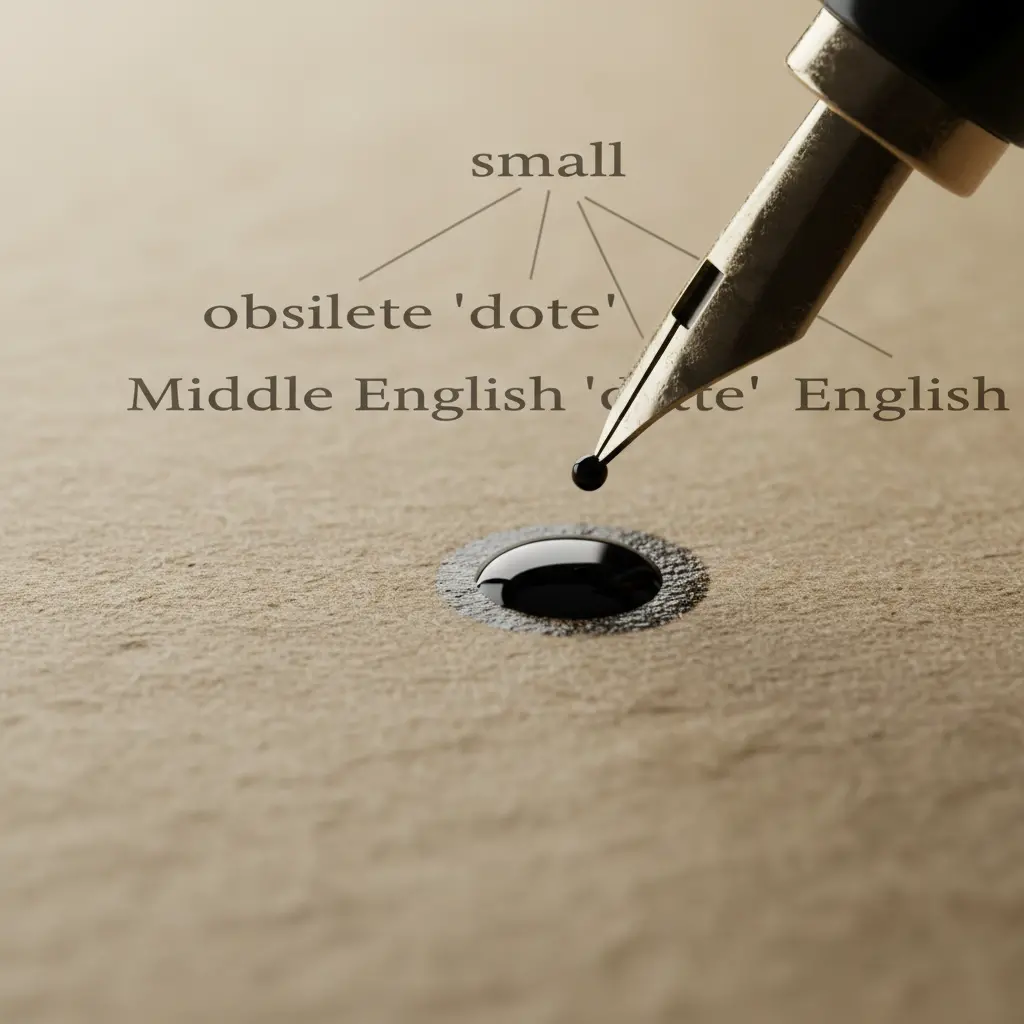
dot = small (a diminutive form) + obsolete 'dote' -> Middle English 'dotte' -> English. Imagine a tiny bead of ink dropping on a paper, leaving a small, round mark.
Note 1: These definitions and etymologies are not standard dictionary definitions, but extended explanations provided to help with memorization and understanding of the actual application of words. Through this background information, we strive to make words more vivid and easier to understand, and help you remember their meanings in real life.
Note 2: LexiTalk designs the learning flow around the linguistics principle of “Comprehensible Input.” When learners encounter material that is slightly above their level but still understandable from context, the brain naturally absorbs the language. That’s why we keep every word inside authentic contexts, using examples and associations to help you understand it and use it flexibly.
Read the FAQ explanation of Comprehensible InputI place my hand on the page and move a pencil toward a blank spot. I press gently, pull back, and set a single dot where I want it. I shift my grip, adjust my aim, and feel a small spark of control as the mark sits there. The dot becomes a cue, guiding the next move and shaping what I will do next.
Dot is a small round mark or spot, and it can also describe a point in space. It is used as a punctuation mark (a period) in American English or a full stop elsewhere, and as a simple mark in drawings or patterns. As a verb, to dot means to mark with small circular marks, such as letters dotted with i's and j's, or to place many dots to create a pattern. Etymology notes that dot comes from a diminutive form related to dote, via Middle English dotte, and you can imagine a tiny bead of ink dropping on paper leaving a round mark. This shows how a tiny thing becomes a symbol.
Explains dot as a tiny symbol that conveys both concrete marks and abstract points, common in maps and patterns.
Download LexiTalk app for personalized learning experience
Download AppCookies
We use cookies for essential site functions, analytics, and ads. You can accept, reject, or manage preferences. Privacy Policy