drown - Master This Word
Master this word with our 5-step learning method – Learn English in English
Train English Through Brain Routes, Not Translation.
This page helps you stop memorizing isolated translations and start understanding a word through its shared mental image, native-style thinking, and practical training steps.
Master this word with our 5-step learning method – Learn English in English
Example sentences are the start of understanding. Don't rush to memorize. First feel how the word works in a sentence.
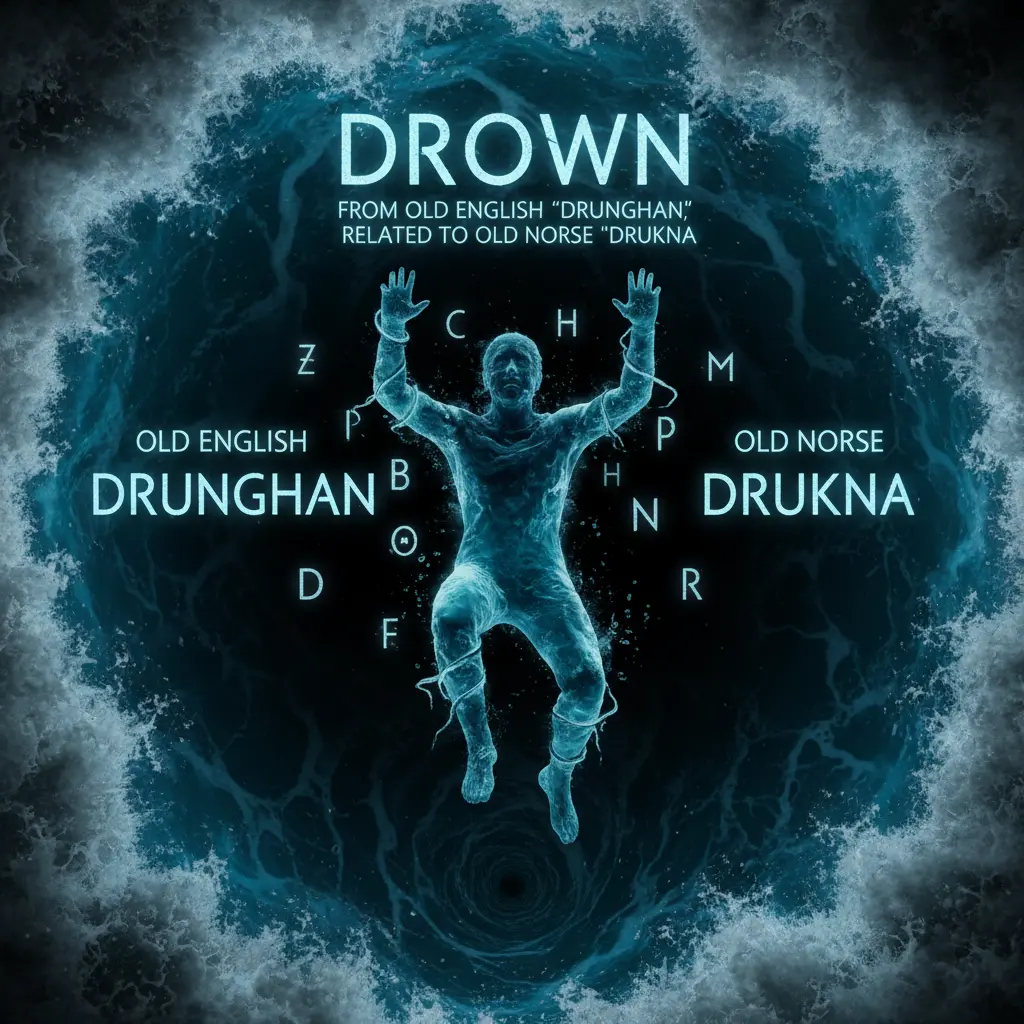
drown: from Old English 'drunghan' (to drown), related to Old Norse 'drukna'. Memory image: envisioning someone sinking beneath the waves, unable to surface, overwhelmed by water.
Note 1: These definitions and etymologies are not standard dictionary definitions, but extended explanations provided to help with memorization and understanding of the actual application of words. Through this background information, we strive to make words more vivid and easier to understand, and help you remember their meanings in real life.
Note 2: LexiTalk designs the learning flow around the linguistics principle of “Comprehensible Input.” When learners encounter material that is slightly above their level but still understandable from context, the brain naturally absorbs the language. That’s why we keep every word inside authentic contexts, using examples and associations to help you understand it and use it flexibly.
Read the FAQ explanation of Comprehensible InputI bend closer to the water and move my body along the edge, hands gripping the side to keep control. Water pushes against my face as I push with my legs, trying to rise above the surface. I adjust my stance, hold my breath, and keep my gaze up, listening to the surface sigh. The pressure grows from a splash to a heavy sense of being overwhelmed, and the moment carries the meaning of drowning in a bigger sense.
To drown means to be submerged in water and unable to breathe, and it can also describe dying by suffocation in water. Beyond the literal sense, drown is commonly used figuratively to mean being overwhelmed or flooded by something, such as work, debt, or noise, leaving no mental or physical space to recover. In everyday speech, people say someone drowns in chores or drowns out the sound with music. Important nuance: drown implies complete immersion and loss of surface, not merely getting wet. For learners, note that drown is not used for situations where water only covers a part of the body; there must be risk of suffocation or no surface to reach.
English tends to treat drown as both literal and strong figurative immersion; learners often mix it with phrases about getting wet or confuse it with sink and flood.
What does the word 'drown' mean?
Which sentence uses 'drown' correctly?
Which word is most similar to 'drown'?
What is the opposite of 'drown'?
Can you think of a real-life scenario that involves the word 'drown'?
Download LexiTalk app for personalized learning experience
Download AppCookies
We use cookies for essential site functions, analytics, and ads. You can accept, reject, or manage preferences. Privacy Policy