
editorial - Master This Word
Master this word with our 5-step learning method – Learn English in English
Train English Through Brain Routes, Not Translation.
This page helps you stop memorizing isolated translations and start understanding a word through its shared mental image, native-style thinking, and practical training steps.
Master this word with our 5-step learning method – Learn English in English
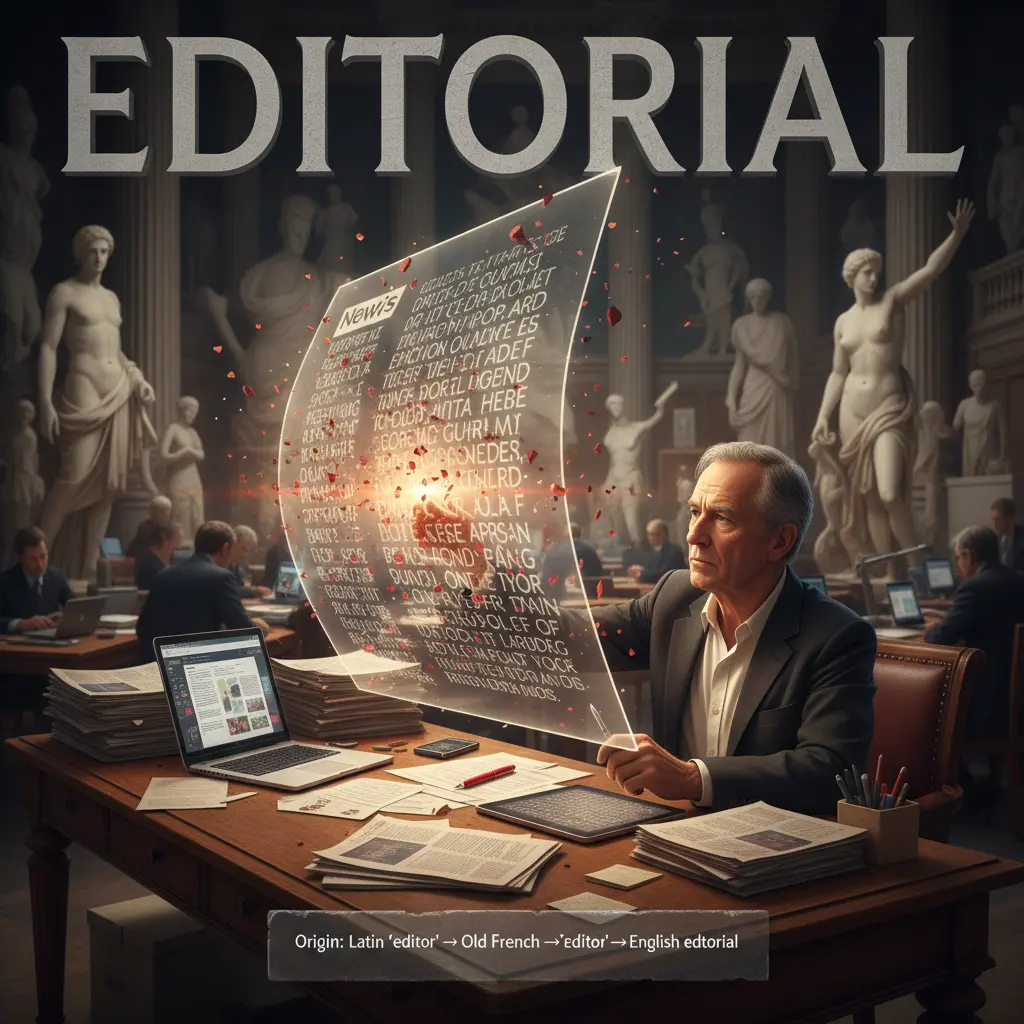
Example sentences are the start of understanding. Don't rush to memorize. First feel how the word works in a sentence.
editorial: 'editor' (edit + or) + 'ial', meaning 'related to editing'. Origin: Latin 'editor' → Old French 'editor' → English 'editorial'. Memory: Picture an editor reviewing articles with a critical eye, highlighting changes like a sculptor chipping away at stone.
Note 1: These definitions and etymologies are not standard dictionary definitions, but extended explanations provided to help with memorization and understanding of the actual application of words. Through this background information, we strive to make words more vivid and easier to understand, and help you remember their meanings in real life.
Note 2: LexiTalk designs the learning flow around the linguistics principle of “Comprehensible Input.” When learners encounter material that is slightly above their level but still understandable from context, the brain naturally absorbs the language. That’s why we keep every word inside authentic contexts, using examples and associations to help you understand it and use it flexibly.
Read the FAQ explanation of Comprehensible InputI push back from the desk, then move my eyes over the blank page, coffee set beside my notes. I shift the layout with a finger on the margins, pulling the paragraph closer, adjusting the rhythm until the voice feels right. I hold a line and let the tone rise, deciding what to let go and what to keep as the piece moves from idea to stance. In the end I place a final sentence and push the idea of publication in my mind, feeling that the editorial is about guiding the reader through a point of view.
Editorial describes material related to editing and publication, and the noun refers to an article expressing opinions or perspectives from a newspaper or magazine’s editors; the adjective form pertains to editing, editorial policy, or the editor’s work. In publishing, an editorial often explains a stance on a current issue, while editorial work involves selecting, revising, and shaping content for clarity and consistency. The memory hint imagines an editor reviewing drafts with a critical eye, suggesting changes and framing arguments much like a sculptor refining a statue.
For English speakers, editorial often carries a sense of formal opinion from an institution; learners may mix up with 'edit' or 'editor' or assume it only appears in newspapers.
What is the meaning of the word 'editorial'?
Which sentence uses 'editorial' correctly?
Which word is most similar to 'editorial'?
What is the opposite of 'editorial'?
Can you think of a real-life context for 'editorial'?
Download LexiTalk app for personalized learning experience
Download AppCookies
We use cookies for essential site functions, analytics, and ads. You can accept, reject, or manage preferences. Privacy Policy