climate - Master This Word
Master this word with our 5-step learning method – Learn English in English
Train English Through Brain Routes, Not Translation.
This page helps you stop memorizing isolated translations and start understanding a word through its shared mental image, native-style thinking, and practical training steps.
Master this word with our 5-step learning method – Learn English in English
Example sentences are the start of understanding. Don't rush to memorize. First feel how the word works in a sentence.
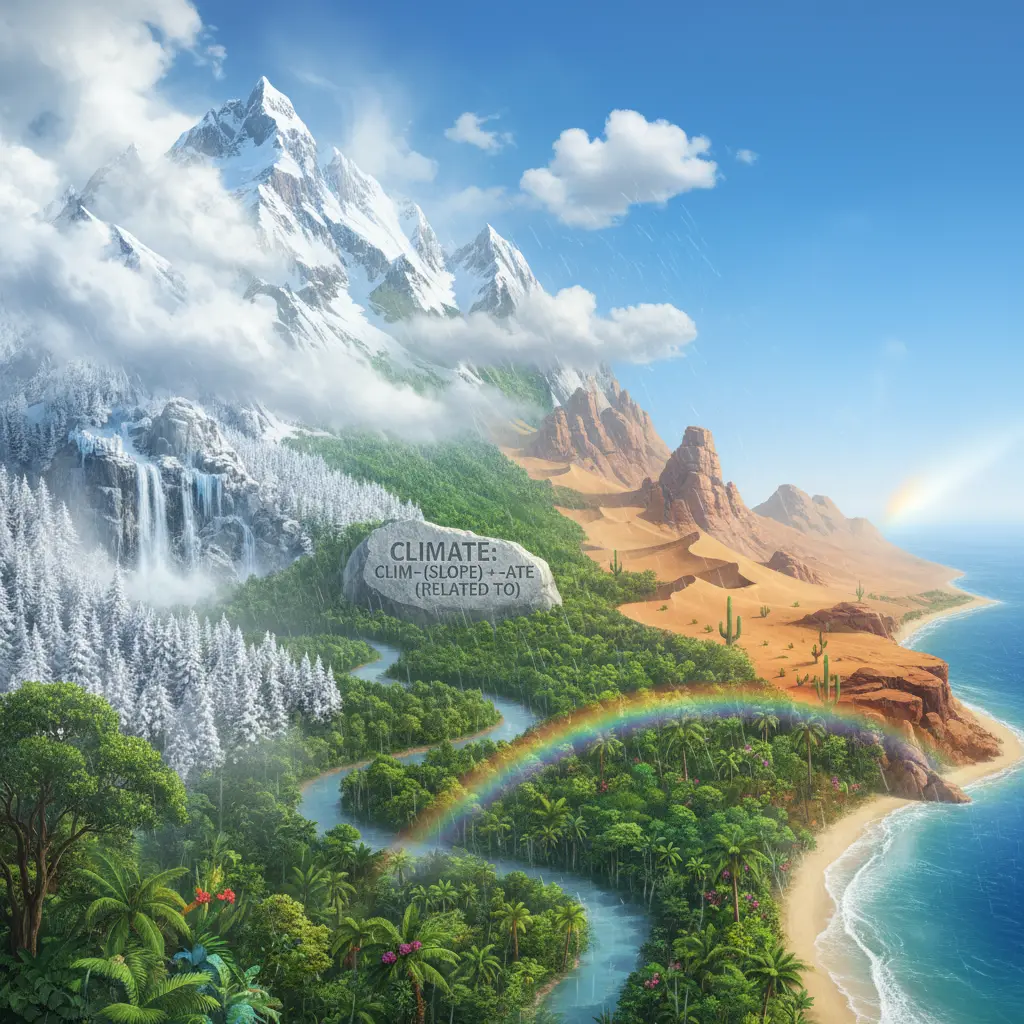
climate = clim- (slope) + -ate (related to), from Greek klima (region/zone related to altitude) → Latin clima → Old French climat → English. Imagine a mountain slope where different weather patterns meet, illustrating the varied climates of the world.
Note 1: These definitions and etymologies are not standard dictionary definitions, but extended explanations provided to help with memorization and understanding of the actual application of words. Through this background information, we strive to make words more vivid and easier to understand, and help you remember their meanings in real life.
Note 2: LexiTalk designs the learning flow around the linguistics principle of “Comprehensible Input.” When learners encounter material that is slightly above their level but still understandable from context, the brain naturally absorbs the language. That’s why we keep every word inside authentic contexts, using examples and associations to help you understand it and use it flexibly.
Read the FAQ explanation of Comprehensible InputI pull the door closed and step into the street. The wind moves across my skin as I adjust my jacket to hold in warmth. I sense the climate of this street can change with the hour. I keep moving through the blocks, letting the day tell me what to do next.
Climate means the long-term pattern of weather in a place, including averages and variability, which shapes what plants can grow, what buildings are like, and how people live. It also extends figuratively to describe the general mood or atmosphere of a group, event, or time period. When scientists discuss climate change, they refer to shifts in averages and extremes that unfold over decades rather than a single day. People talk about the climate of a city, a region, or a country, noting whether summers are hot or mild, winters harsh or mild, and how rainfall or drought affects daily life. The word arises from Greek klima, through Latin clima and Old French climat, tied to a region or slope.
English learners often separate climate (long-term patterns) from weather (short-term) clearly; misunderstandings come from thinking climate equals today’s temperature or from confusing metaphorical uses with literal facts.
What is the meaning of the word 'climate'?
How can the word 'climate' be used in a sentence?
Which of the following words is most similar to 'climate'?
What is the opposite meaning of 'climate'?
In what real-life context would you hear the word 'climate'?
English Learning Listening Content
Listen NowDownload LexiTalk app for personalized learning experience
Download AppCookies
We use cookies for essential site functions, analytics, and ads. You can accept, reject, or manage preferences. Privacy Policy