
elementary - Master This Word
Master this word with our 5-step learning method – Learn English in English
Train English Through Brain Routes, Not Translation.
This page helps you stop memorizing isolated translations and start understanding a word through its shared mental image, native-style thinking, and practical training steps.
Master this word with our 5-step learning method – Learn English in English
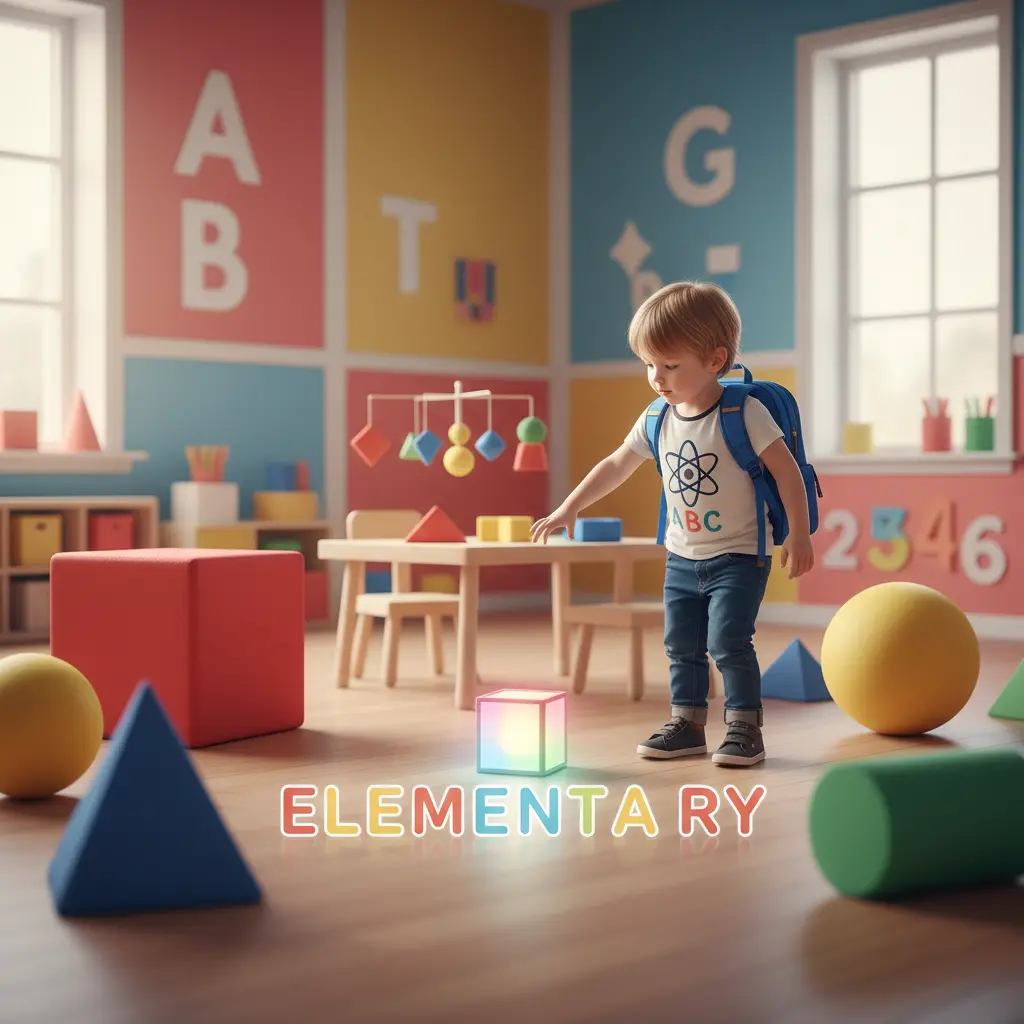
Example sentences are the start of understanding. Don't rush to memorize. First feel how the word works in a sentence.
elementary = element + -ary (pertaining to). Originated from Latin 'elementarius' which means 'pertaining to elements', derived from 'elementum'. Picture a child's first step into a classroom, surrounded by simple shapes and colors, representing the basic building blocks of knowledge.
Note 1: These definitions and etymologies are not standard dictionary definitions, but extended explanations provided to help with memorization and understanding of the actual application of words. Through this background information, we strive to make words more vivid and easier to understand, and help you remember their meanings in real life.
Note 2: LexiTalk designs the learning flow around the linguistics principle of “Comprehensible Input.” When learners encounter material that is slightly above their level but still understandable from context, the brain naturally absorbs the language. That’s why we keep every word inside authentic contexts, using examples and associations to help you understand it and use it flexibly.
Read the FAQ explanation of Comprehensible InputI move a simple block across the desk, watching it settle in a neat line. I turn away the flashy tools and keep the basics in sight, a quiet shift toward what’s elementary. I adjust my grip, set the next piece, and feel a small sense of control growing. As the simple line forms, the word elementary starts to feel like a way to describe things that are basic and clear.
Elementary describes something that is basic, simple, or at the earliest stage of learning. It can refer to the fundamental parts or principles of a subject, or to the elementary level of education such as primary school. In everyday use it signals that a topic is approachable and not advanced, and that instructions are designed for beginners. In education, you will see phrases like elementary principles, elementary math, or elementary school. Be careful not to confuse it with its noun form element or with elementary particle, which refer to different ideas. The word often carries a foundation-oriented sense, highlighting clarity and accessibility rather than complexity.
For English speakers, elementary is often framed as the starting point or foundation of a topic, and learners should recognize its positive, approachable tone rather than a negative sense of 'easy' only.
What is the meaning of the word 'elementary'?
In which of the following sentences is 'elementary' used correctly?
Which word is similar to 'elementary'?
What is the opposite of 'elementary'?
In which context is 'elementary' commonly used?
Download LexiTalk app for personalized learning experience
Download AppCookies
We use cookies for essential site functions, analytics, and ads. You can accept, reject, or manage preferences. Privacy Policy