environment - Master This Word
Master this word with our 5-step learning method – Learn English in English
Train English Through Brain Routes, Not Translation.
This page helps you stop memorizing isolated translations and start understanding a word through its shared mental image, native-style thinking, and practical training steps.
Master this word with our 5-step learning method – Learn English in English
Example sentences are the start of understanding. Don't rush to memorize. First feel how the word works in a sentence.
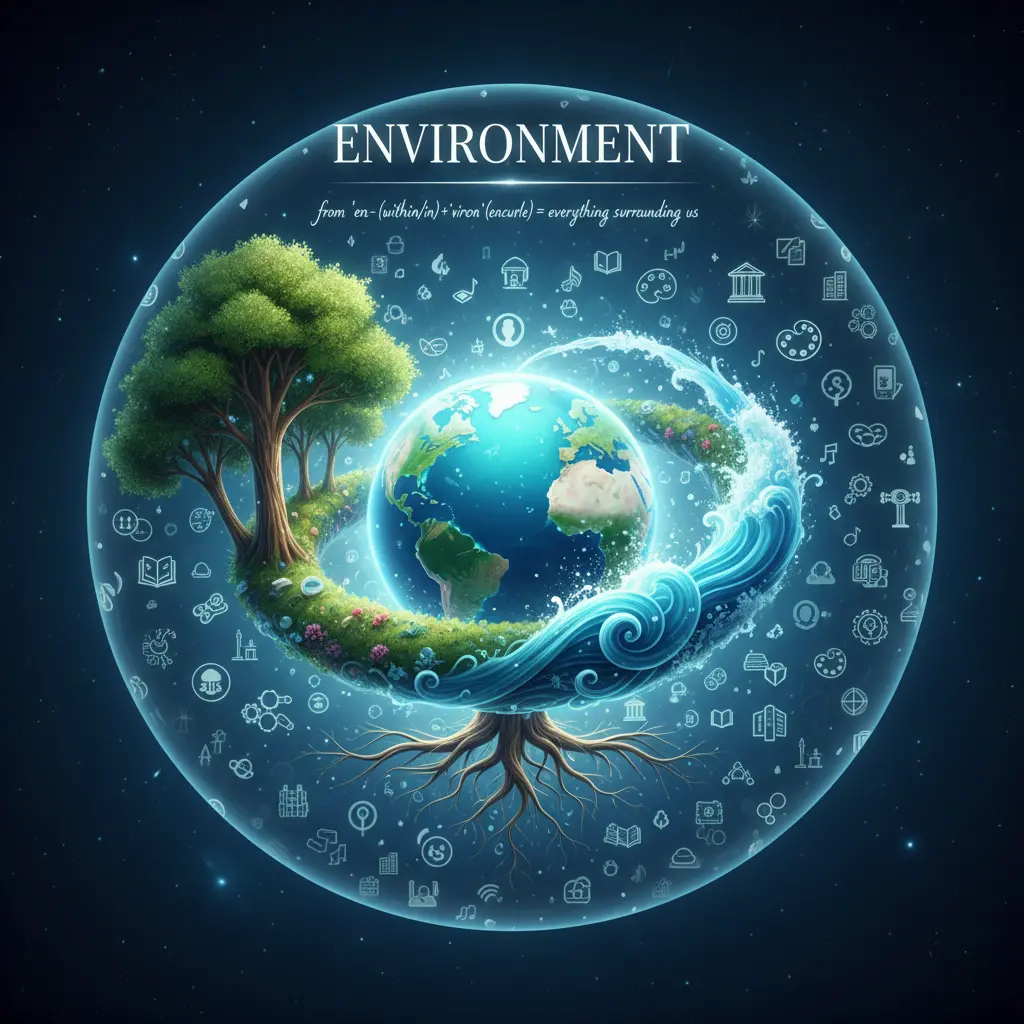
From 'en-' = within or in, and 'viron' = encircle, forming the term that describes everything surrounding us. Picture a globe encircled by trees and oceans, representing life itself. Extend to cultural contexts where the word represents societal elements that shape our experience.
Note 1: These definitions and etymologies are not standard dictionary definitions, but extended explanations provided to help with memorization and understanding of the actual application of words. Through this background information, we strive to make words more vivid and easier to understand, and help you remember their meanings in real life.
Note 2: LexiTalk designs the learning flow around the linguistics principle of “Comprehensible Input.” When learners encounter material that is slightly above their level but still understandable from context, the brain naturally absorbs the language. That’s why we keep every word inside authentic contexts, using examples and associations to help you understand it and use it flexibly.
Read the FAQ explanation of Comprehensible InputI push the window latch and let the breeze slip in. The air shifts and light spills across the room as I adjust the blinds. I move a chair to a new place, set my feet, and feel the space respond to my small changes. In this moment, the environment ceases to be a backdrop and becomes something I tune with my choices.
Environment can mean the surroundings in which a person, animal, or plant lives, including air, water, soil, and climate. It also refers to the natural world as a whole, with its ecosystems, species, and resources that sustain life. More broadly, environment can denote the cultural or social setting in which events occur, shaping attitudes, behavior, and opportunities. When we study environment, we examine issues like sustainability, pollution, and human impacts on habitats, as well as the ways communities create safe, healthy, and resilient places to live, work, and learn. Understanding environment helps us consider responsibility and design better policies.
Environment in English spans natural surroundings and social or institutional context; learners should note phrases like 'environment of a city' or 'environmental policy'.
What is the meaning of the word 'environment'?
How is the word 'environment' used in a sentence?
Which word is similar to 'environment'?
Which word is the opposite of 'environment'?
In what real-life context would you hear the word 'environment'?
Environment & Pollution
Listen NowDownload LexiTalk app for personalized learning experience
Download AppCookies
We use cookies for essential site functions, analytics, and ads. You can accept, reject, or manage preferences. Privacy Policy