
erupted - Master This Word
Master this word with our 5-step learning method – Learn English in English
Train English Through Brain Routes, Not Translation.
This page helps you stop memorizing isolated translations and start understanding a word through its shared mental image, native-style thinking, and practical training steps.
Master this word with our 5-step learning method – Learn English in English
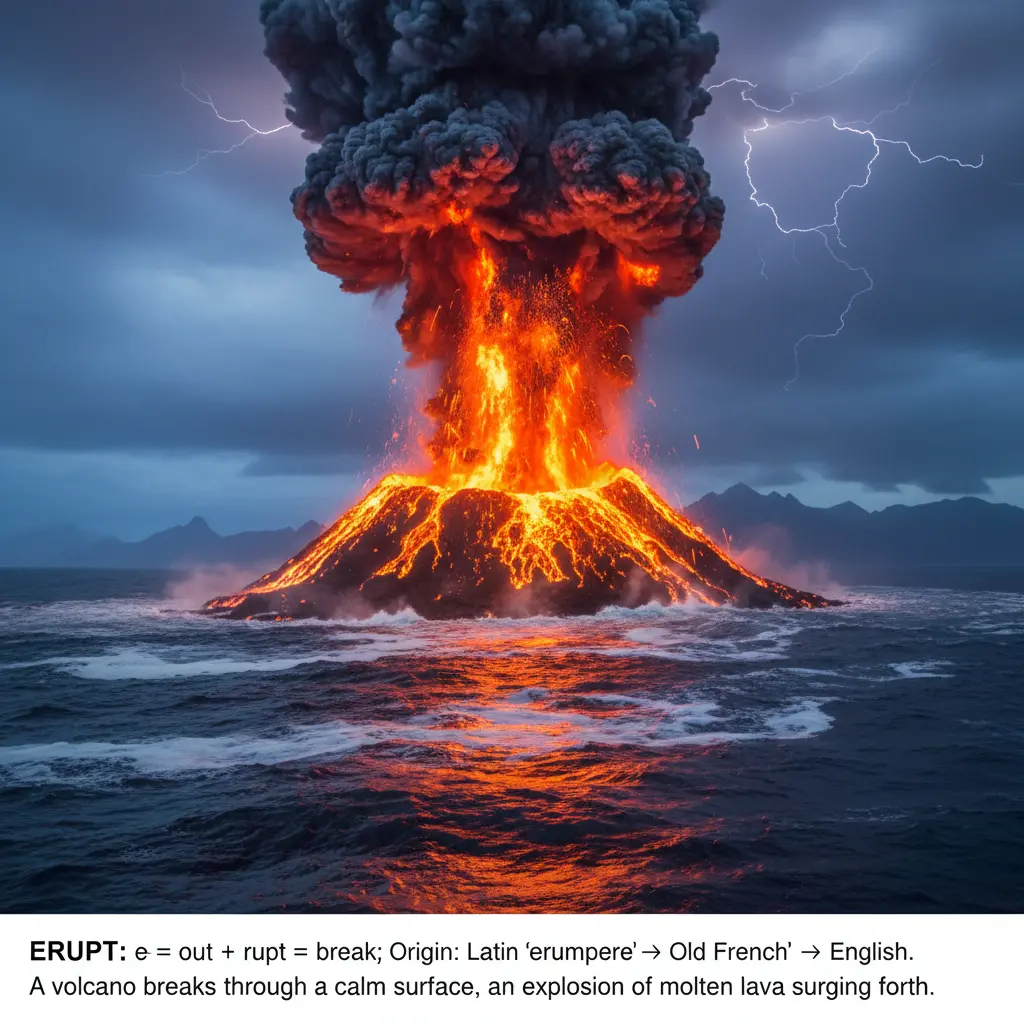
Example sentences are the start of understanding. Don't rush to memorize. First feel how the word works in a sentence.
e- = out + rupt = break; Origin: Latin ‘erumpere’ → Old French ‘erupter’ → English. Imagine a volcano breaking through a calm surface, an explosion of molten lava surging forth.
Note 1: These definitions and etymologies are not standard dictionary definitions, but extended explanations provided to help with memorization and understanding of the actual application of words. Through this background information, we strive to make words more vivid and easier to understand, and help you remember their meanings in real life.
Note 2: LexiTalk designs the learning flow around the linguistics principle of “Comprehensible Input.” When learners encounter material that is slightly above their level but still understandable from context, the brain naturally absorbs the language. That’s why we keep every word inside authentic contexts, using examples and associations to help you understand it and use it flexibly.
Read the FAQ explanation of Comprehensible InputI grip the kettle handle and twist the knob, watching steam curl up. The pressure builds, the lid shifts and suddenly it erupts with a loud hiss. My arms tense, I adjust my stance, and I keep control as the burst of steam fills the air. That moment of eruption shows up in everyday tasks, when something hidden finally breaks through.
Erupt describes a sudden burst outward of something, most often a volcano, but also emotions or conflicts. It implies force and speed, a break from restraint. A volcano erupts, lava surges forth with heat and smoke. A crowd can erupt into cheers, a rumor can cause an argument to erupt. The verb is intransitive: the subject performs the eruption—the volcano erupts; you can say 'The crowd erupted in laughter' or 'anger erupted from him' though latter may sound dramatic. For everyday speech, use erupt when you want a strong, vivid image, but for gradual changes or quiet growth, choose other verbs like begin, rise, or increase.
English often frames eruption as a vivid, forceful event with a strong visual image; learners may overuse erupt in contexts where a milder verb would suffice or misplace the preposition with emotions.
Download LexiTalk app for personalized learning experience
Download AppCookies
We use cookies for essential site functions, analytics, and ads. You can accept, reject, or manage preferences. Privacy Policy