
if - Master This Word
Master this word with our 5-step learning method – Learn English in English
Train English Through Brain Routes, Not Translation.
This page helps you stop memorizing isolated translations and start understanding a word through its shared mental image, native-style thinking, and practical training steps.
Master this word with our 5-step learning method – Learn English in English
Example sentences are the start of understanding. Don't rush to memorize. First feel how the word works in a sentence.
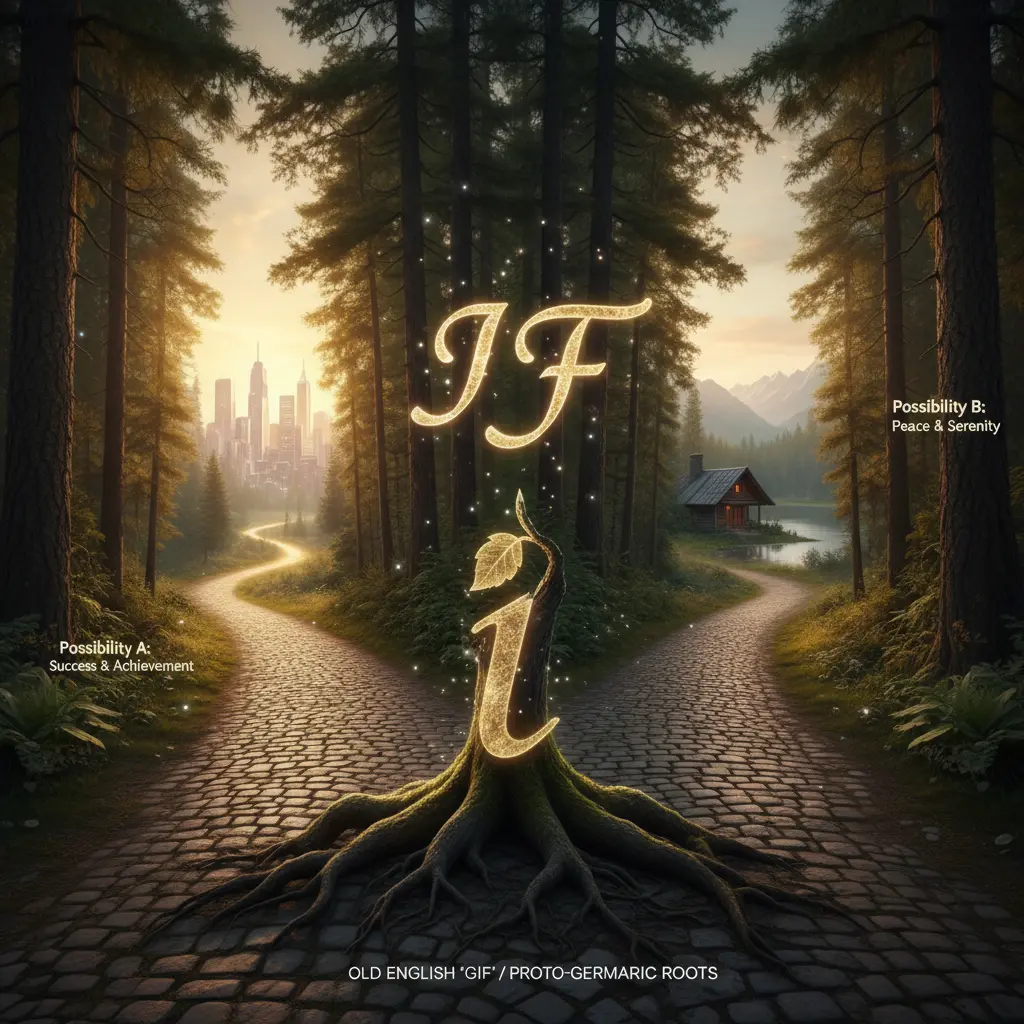
Root: 'if' is a conjunction used in English since the Old English 'gif', which comes from Proto-Germanic roots. Memory image: Imagine a fork in the road where 'if' allows you to choose between paths, representing choices in life.
Note 1: These definitions and etymologies are not standard dictionary definitions, but extended explanations provided to help with memorization and understanding of the actual application of words. Through this background information, we strive to make words more vivid and easier to understand, and help you remember their meanings in real life.
Note 2: LexiTalk designs the learning flow around the linguistics principle of “Comprehensible Input.” When learners encounter material that is slightly above their level but still understandable from context, the brain naturally absorbs the language. That’s why we keep every word inside authentic contexts, using examples and associations to help you understand it and use it flexibly.
Read the FAQ explanation of Comprehensible InputI grip the door handle, turn it, and feel the latch yield a fraction. If it sticks, I push a little harder and listen for the soft click. The door moves, my breath steadies, and I adjust my plan for what comes next. That moment of testing a possibility stays with me, showing how if is used to decide the next move in everyday actions.
If is the English conjunction used to introduce conditional clauses, and it also marks possibility or doubt in indirect questions. In conditional clauses, 'if' usually pairs with the present tense in the if-clause and with future forms in the main clause for real conditions (If it rains, we will cancel the picnic). It can also combine with other tenses to express hypothetical outcomes or mixed conditionals. In indirect questions, we use 'if' to report a question without quoting it directly (I wonder if she is coming). Learners often confuse 'if' with 'whether' in indirect questions or mix up tense after 'if' in the conditional clause. Remember that 'if' introduces a condition or possibility, not a request or command.
In English, if-clauses often hinge on real versus hypothetical timeframes, with tense shifts guiding meaning. Many languages encode conditionals through different words or word order, so learners may overgeneralize present tense in the conditional or misuse whether in indirect questions.
What is the meaning of 'if'?
Which sentence uses 'if' correctly?
What word is most similar to 'if'?
What is the opposite of 'if'?
Can you give an example of a real-life scenario of 'if'?
Download LexiTalk app for personalized learning experience
Download AppCookies
We use cookies for essential site functions, analytics, and ads. You can accept, reject, or manage preferences. Privacy Policy