expense - Master This Word
Master this word with our 5-step learning method – Learn English in English
Train English Through Brain Routes, Not Translation.
This page helps you stop memorizing isolated translations and start understanding a word through its shared mental image, native-style thinking, and practical training steps.
Master this word with our 5-step learning method – Learn English in English
Example sentences are the start of understanding. Don't rush to memorize. First feel how the word works in a sentence.
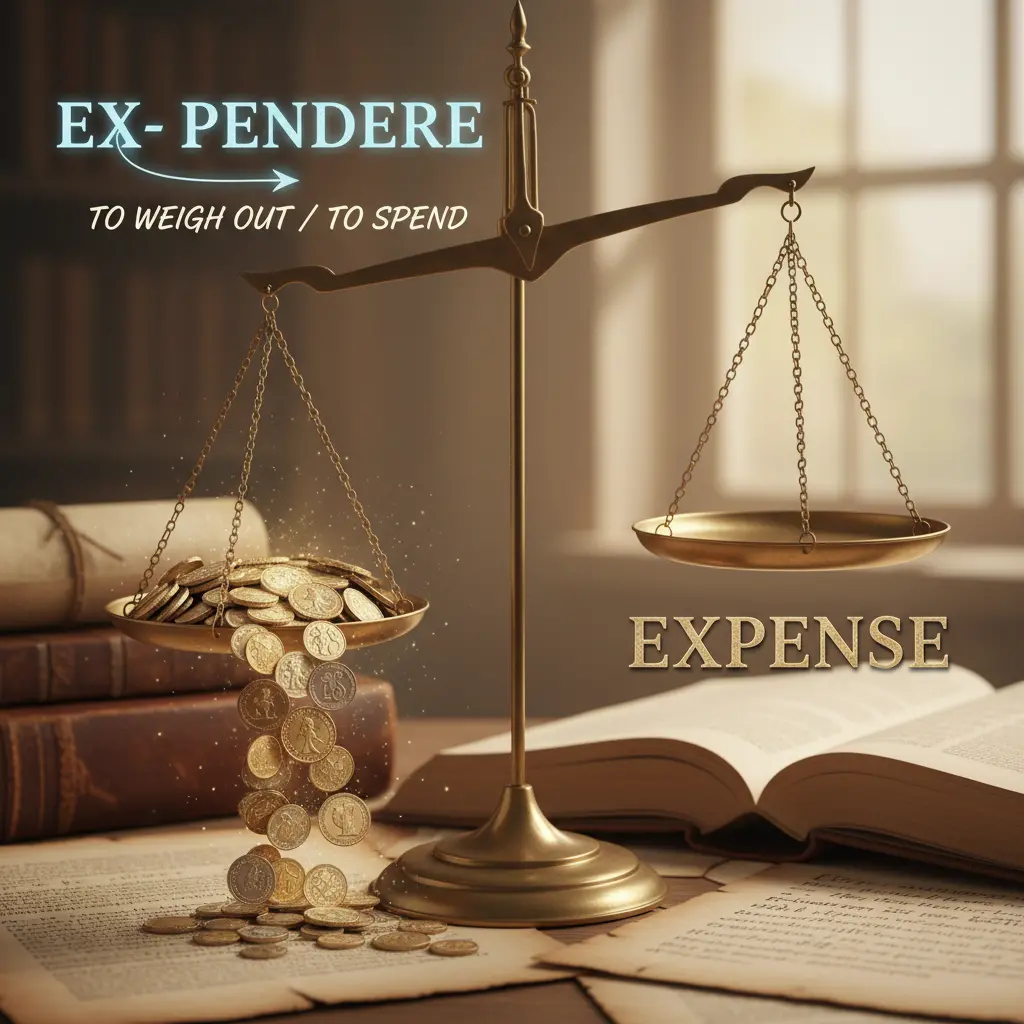
Expense is derived from 'expendere' (Latin: ex- 'out' + pendere 'to weigh') meaning 'to weigh out' or 'to spend'. It traveled from Latin to Old French before entering Middle English. Imagine a scale tipping as you weigh coins, representing money being spent.
Note 1: These definitions and etymologies are not standard dictionary definitions, but extended explanations provided to help with memorization and understanding of the actual application of words. Through this background information, we strive to make words more vivid and easier to understand, and help you remember their meanings in real life.
Note 2: LexiTalk designs the learning flow around the linguistics principle of “Comprehensible Input.” When learners encounter material that is slightly above their level but still understandable from context, the brain naturally absorbs the language. That’s why we keep every word inside authentic contexts, using examples and associations to help you understand it and use it flexibly.
Read the FAQ explanation of Comprehensible InputI reach into my wallet and move a card across the counter, the price lighting up on the screen. The total sits there, and I set my jaw, counting coins in my head as a small weight slides out of my hand. I adjust my plan, deciding what to keep and what to set aside, letting the expense settle in my thoughts like a decision I must own. Walking away, I carry the feeling of choosing value, the money I spent becoming a map of my week and how I spend.
Expense is a basic noun for money spent on goods or services, and it can refer to a single cost or to the act of spending itself. In business English you often encounter expense as part of phrases like expense report, expense policy, and reimbursable expense. People sometimes confuse expense with cost or price, and they may say expense of something in ways that sound formal or archaic. Typical collocations include expense account, travel expense, personal expense, and record an expense. The context matters: personal budgeting uses expense in everyday language, while corporate accounting uses it in policy and reimbursement discussions. Understanding when to use expense versus other synonyms helps you sound natural.
Expense is a neutral accounting term used in both personal budgeting and business settings; learners often think it only means cost, or that it is interchangeable with cost in all cases. Focus on collocations like expense report and reimbursable expense to sound natural.
What is the definition of the word 'expense'?
Which sentence uses 'expense' correctly?
Which word is most similar to 'expense'?
What is the opposite of 'expense'?
Can you think of a real-life context where you might talk about money leaving your budget?
Download LexiTalk app for personalized learning experience
Download AppCookies
We use cookies for essential site functions, analytics, and ads. You can accept, reject, or manage preferences. Privacy Policy