
externalities - Master This Word
Master this word with our 5-step learning method – Learn English in English
Train English Through Brain Routes, Not Translation.
This page helps you stop memorizing isolated translations and start understanding a word through its shared mental image, native-style thinking, and practical training steps.
Master this word with our 5-step learning method – Learn English in English
Example sentences are the start of understanding. Don't rush to memorize. First feel how the word works in a sentence.
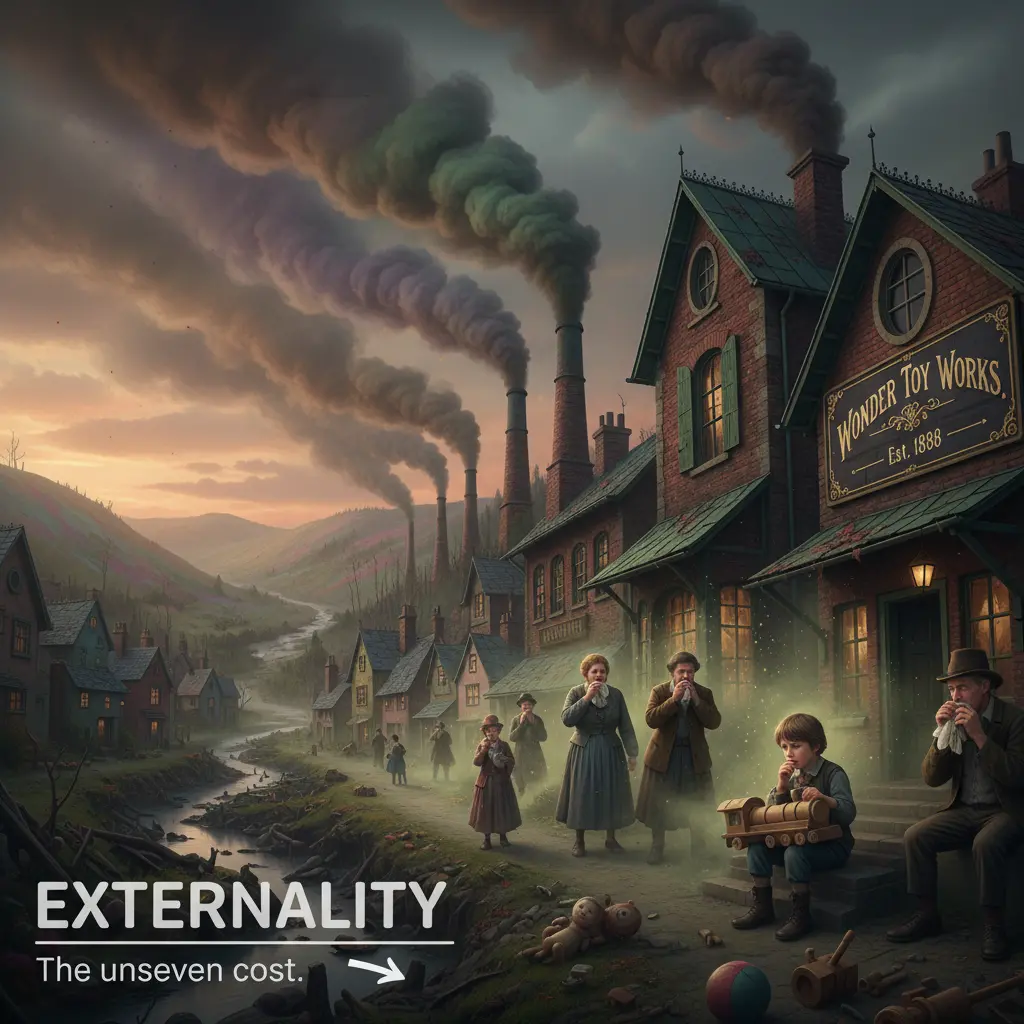
Root decomposition: external (outside) + -ity (quality of). Historical origin: Latin 'externus' → Old French 'external' → English. Memory image: Imagine a factory that makes toys, but the pollution it generates affects the people living nearby—those are the externalities of its production.
Note 1: These definitions and etymologies are not standard dictionary definitions, but extended explanations provided to help with memorization and understanding of the actual application of words. Through this background information, we strive to make words more vivid and easier to understand, and help you remember their meanings in real life.
Note 2: LexiTalk designs the learning flow around the linguistics principle of “Comprehensible Input.” When learners encounter material that is slightly above their level but still understandable from context, the brain naturally absorbs the language. That’s why we keep every word inside authentic contexts, using examples and associations to help you understand it and use it flexibly.
Read the FAQ explanation of Comprehensible InputAn externality is a consequence of an economic activity that affects people who are not directly involved in the activity, and it is not reflected in market prices. Positive externalities occur when third parties gain a benefit from someone’s action, such as a well‑maintained garden boosting nearby property values. Negative externalities are costs imposed on others, like a factory’s pollution harming local residents. Because markets typically ignore externalities, production or consumption can be higher or lower than what would be socially optimal. Public policy often tries to internalize these spillover effects through taxes, subsidies, or regulations to align private incentives with social welfare.
English speakers often frame externalities as spillover costs or benefits that lie outside a market price; learners should avoid equating externalities with public goods and focus on effects accruing to nonparticipants.
Download LexiTalk app for personalized learning experience
Download AppCookies
We use cookies for essential site functions, analytics, and ads. You can accept, reject, or manage preferences. Privacy Policy