faces - Master This Word
Master this word with our 5-step learning method – Learn English in English
Train English Through Brain Routes, Not Translation.
This page helps you stop memorizing isolated translations and start understanding a word through its shared mental image, native-style thinking, and practical training steps.
Master this word with our 5-step learning method – Learn English in English
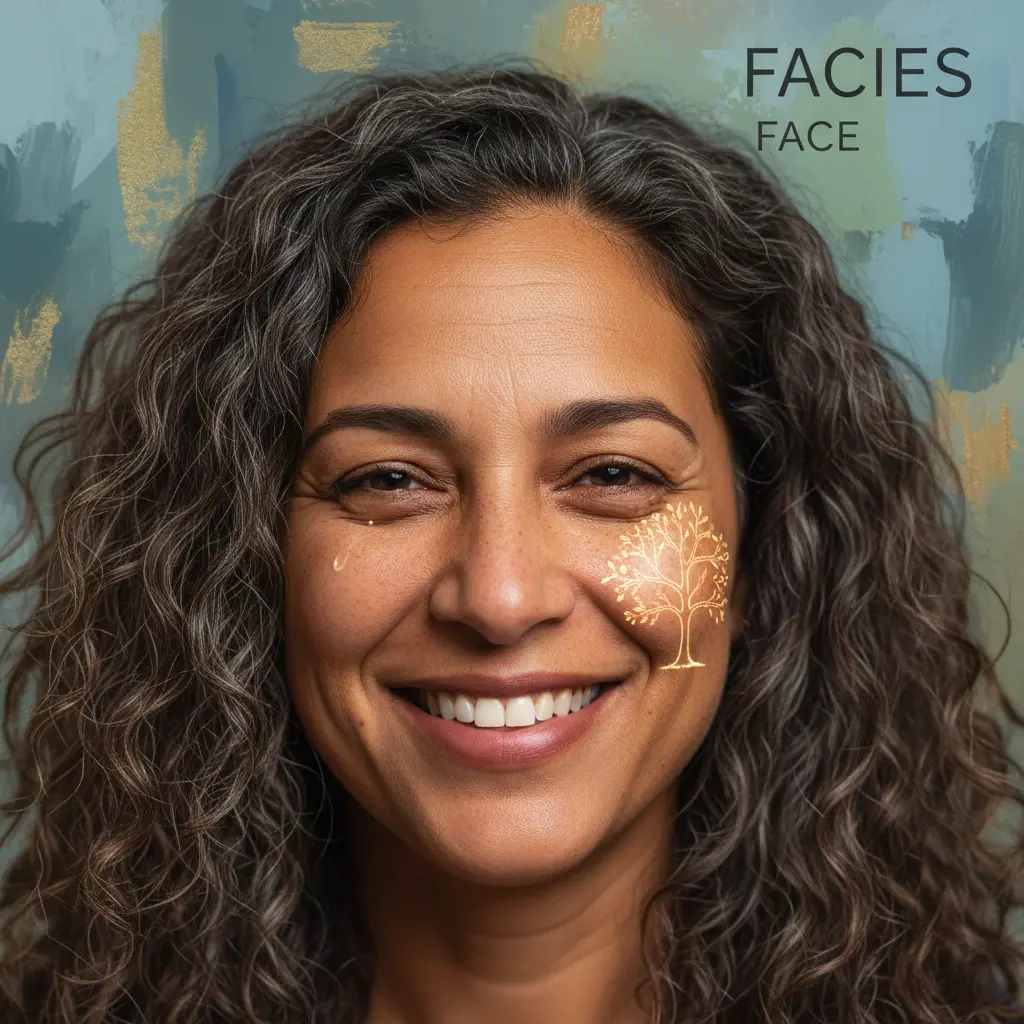
Example sentences are the start of understanding. Don't rush to memorize. First feel how the word works in a sentence.
Face = 'face' from Latin 'facies' (appearance) → Old French 'face' → English. Imagine a smiling face that captures emotions, representing one's identity and expressions.
Note 1: These definitions and etymologies are not standard dictionary definitions, but extended explanations provided to help with memorization and understanding of the actual application of words. Through this background information, we strive to make words more vivid and easier to understand, and help you remember their meanings in real life.
Note 2: LexiTalk designs the learning flow around the linguistics principle of “Comprehensible Input.” When learners encounter material that is slightly above their level but still understandable from context, the brain naturally absorbs the language. That’s why we keep every word inside authentic contexts, using examples and associations to help you understand it and use it flexibly.
Read the FAQ explanation of Comprehensible InputI lean forward, then turn my head to face the person across the table. I adjust my posture, hold my gaze, and set my shoulders so the talk starts smoothly. The minutes move as I study the face of the clock and the expression I am making, feeling a subtle push and pull inside me. I let the conversation steer me, and the moment changes from hesitation to clarity as I keep facing what’s in front.
Face has several related senses in English: the front part of a person’s head, the surface of an object, and a verb meaning to confront or deal with something. This makes it a true polyseme that shows up in many idioms and set phrases, such as face the future, face the music, or the face of a coin. Learners often mix up faces with metaphorical uses like lose face or fail to distinguish physical face from facing a problem or a surface. Understanding the surrounding verbs and nouns helps choose the right meaning and natural phrasing in context.
For English learners, face often requires distinguishing between physical face, facing a problem, and the surface sense; learners may default to facial appearance or literal surface in every context, missing idioms and geometric usage.
What is the meaning of the word 'faces'?
Which sentence correctly uses the word 'faces'?
Which word is most similar to 'faces'?
What is the opposite of 'faces'?
Can you think of a real-life context where one has to deal with challenges?
Banking Basics
Listen NowDownload LexiTalk app for personalized learning experience
Download AppCookies
We use cookies for essential site functions, analytics, and ads. You can accept, reject, or manage preferences. Privacy Policy