famine - Master This Word
Master this word with our 5-step learning method – Learn English in English
Train English Through Brain Routes, Not Translation.
This page helps you stop memorizing isolated translations and start understanding a word through its shared mental image, native-style thinking, and practical training steps.
Master this word with our 5-step learning method – Learn English in English
Example sentences are the start of understanding. Don't rush to memorize. First feel how the word works in a sentence.
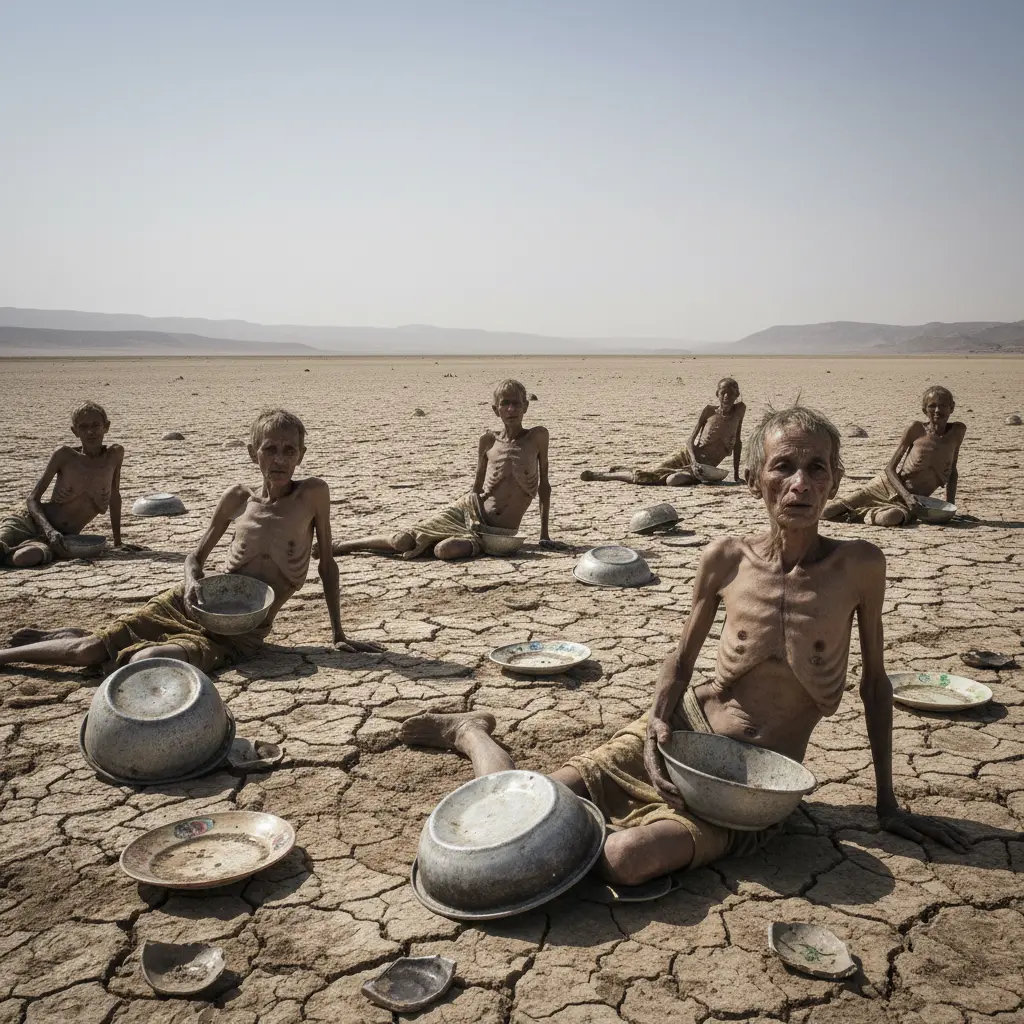
famine = fam- (from 'fame', meaning 'to hunger') + -ine (forming nouns) -> Latin 'fames' (hunger) → Old French 'famine' → English. Imagine a barren landscape with empty bowls and hollow stomachs, representing the emptiness of hunger.
Note 1: These definitions and etymologies are not standard dictionary definitions, but extended explanations provided to help with memorization and understanding of the actual application of words. Through this background information, we strive to make words more vivid and easier to understand, and help you remember their meanings in real life.
Note 2: LexiTalk designs the learning flow around the linguistics principle of “Comprehensible Input.” When learners encounter material that is slightly above their level but still understandable from context, the brain naturally absorbs the language. That’s why we keep every word inside authentic contexts, using examples and associations to help you understand it and use it flexibly.
Read the FAQ explanation of Comprehensible InputFamine is the extreme scarcity of food that affects a large population, usually resulting from a combination of drought, war, failed harvests, and economic or political instability. It goes beyond ordinary hunger, causing widespread malnutrition, illness, displacement, and death. In history, famines have reshaped societies, from the Irish famine to the Ethiopian crisis. Today the word is used for long lasting, severe shortages rather than a single family skipping a meal. In common usage, you might hear about famine-stricken regions, famine relief efforts, or international responses to alleviate such catastrophes. Remember that famine emphasizes scale and duration, not just a lack of a single meal.
Famine is a term used for large-scale, long-lasting food crises. Learners often confuse it with mere hunger or with temporary shortages of a specific item. Focus on context cues like region, duration, and humanitarian response.
What is the meaning of the word 'famine'?
In which of the following sentences is 'famine' used correctly?
Which of the following is an antonym of 'famine'?
How does the word 'famine' apply in real-world situations?
Reflect on the importance and severity of 'famine' in society.
Download LexiTalk app for personalized learning experience
Download AppCookies
We use cookies for essential site functions, analytics, and ads. You can accept, reject, or manage preferences. Privacy Policy