fantasy - Master This Word
Master this word with our 5-step learning method – Learn English in English
Train English Through Brain Routes, Not Translation.
This page helps you stop memorizing isolated translations and start understanding a word through its shared mental image, native-style thinking, and practical training steps.
Master this word with our 5-step learning method – Learn English in English
Example sentences are the start of understanding. Don't rush to memorize. First feel how the word works in a sentence.
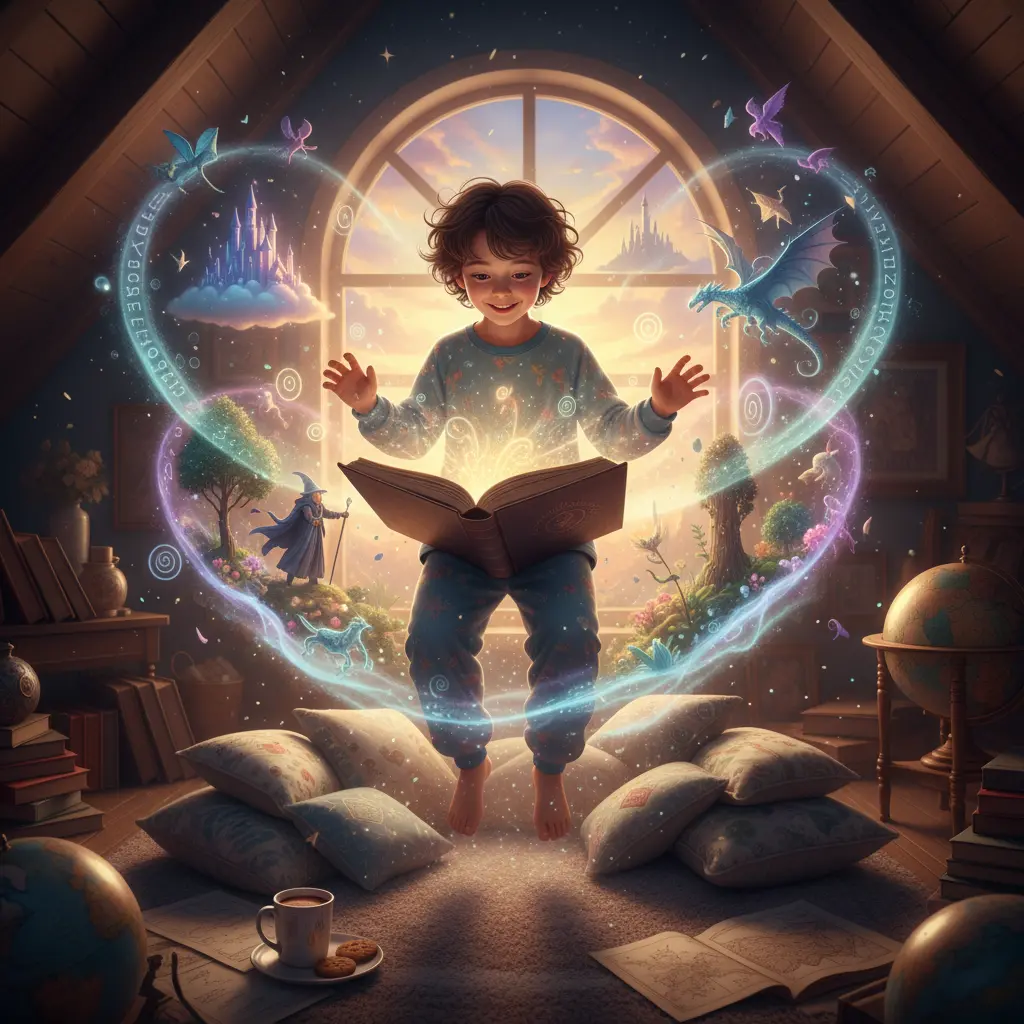
Fantasy comes from Greek 'phantasia' (appearance) + Latin 'fantasia' (imagination). It entered Middle English from Old French. Imagine a child lost in a book, almost levitating with wonder, breathing in the magic of an imagined world.
Note 1: These definitions and etymologies are not standard dictionary definitions, but extended explanations provided to help with memorization and understanding of the actual application of words. Through this background information, we strive to make words more vivid and easier to understand, and help you remember their meanings in real life.
Note 2: LexiTalk designs the learning flow around the linguistics principle of “Comprehensible Input.” When learners encounter material that is slightly above their level but still understandable from context, the brain naturally absorbs the language. That’s why we keep every word inside authentic contexts, using examples and associations to help you understand it and use it flexibly.
Read the FAQ explanation of Comprehensible InputI close my eyes and move my thoughts to a quiet corner of the mind. A tiny scene shifts into view, like a soft glow you can cradle in your hands, and I set it in motion with a slow breath. The image feels light and warm, something I can hold for a moment before letting it drift again, and I adjust it with a gentle tilt of the head or a shift of the gaze. This little drift becomes a map you can take anywhere, a private fantasy you can slip into when the day is loud.
Fantasy can refer to a vivid mental image or daydream, the branch of imaginative fiction that uses magical or supernatural elements, and a lingering, often unattainable dream. In everyday speech, people describe fantasies as wishes that could never become reality, while in literature fantasy distinguishes itself from science fiction by focusing on magic, mythical creatures, and alternate worlds rather than plausible futures. The word carries whimsy and escape: a child lost in a book imagining dragons, a writer building sprawling kingdoms, or someone clinging to an unrealizable dream despite evidence to the contrary. Understanding the range helps you choose the right sense from context and avoid conflating fantasy with mere wishful thinking.
Children and adults in English-speaking cultures often use fantasy as a broad escape or creative fuel, while the everyday use can blur with wishes that could come true in theory but not in practice. Learners might over-literalize fantasy as a plan or confuse it with dreams that are achievable, which can lead to misusing phrases like 'fantasy of starting a business' instead of 'fantasy about starting a business.'
What is the meaning of the word 'fantasy'?
In which sentence is the word 'fantasy' used correctly?
Which word is a synonym of 'fantasy'?
Which word is an antonym of 'fantasy'?
How can the concept of 'fantasy' be applied in real life?
Download LexiTalk app for personalized learning experience
Download AppCookies
We use cookies for essential site functions, analytics, and ads. You can accept, reject, or manage preferences. Privacy Policy