
farcical - Master This Word
Master this word with our 5-step learning method – Learn English in English
Train English Through Brain Routes, Not Translation.
This page helps you stop memorizing isolated translations and start understanding a word through its shared mental image, native-style thinking, and practical training steps.
Master this word with our 5-step learning method – Learn English in English
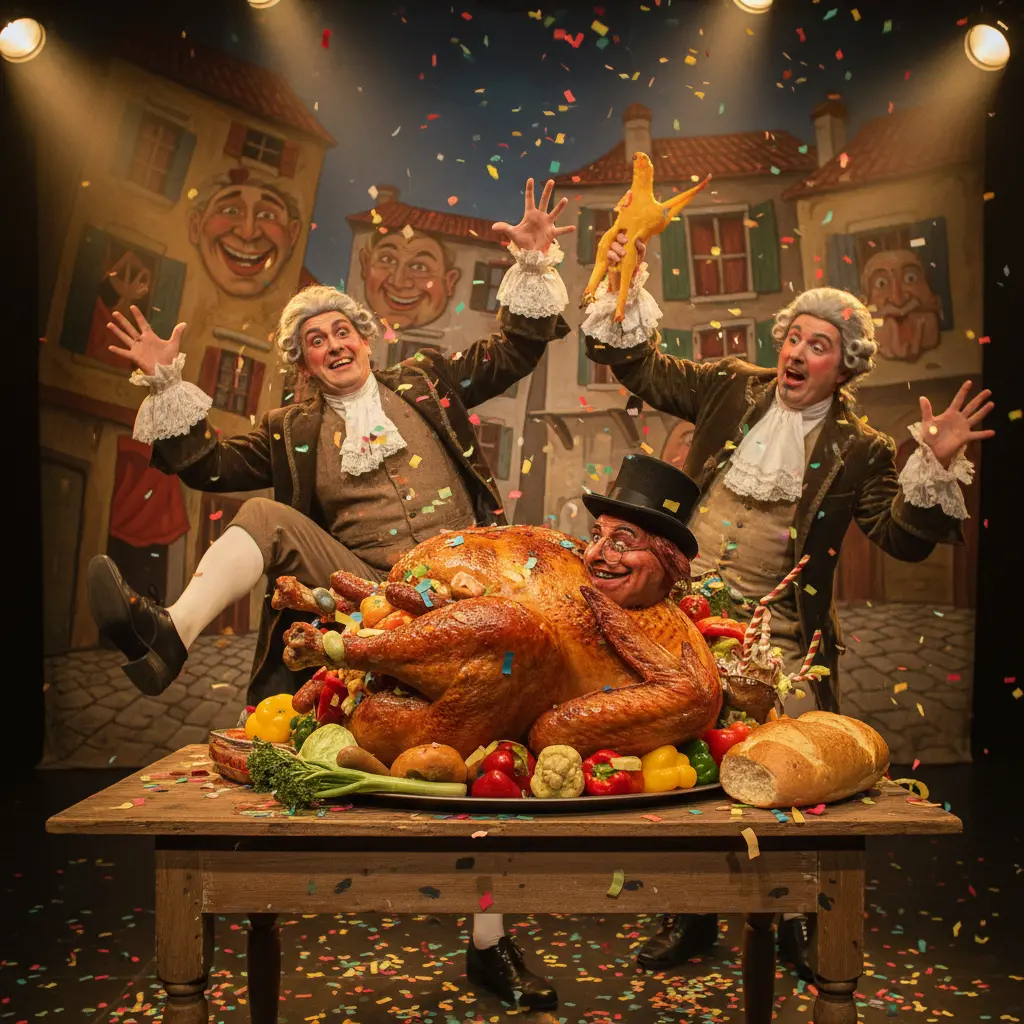
Example sentences are the start of understanding. Don't rush to memorize. First feel how the word works in a sentence.
Root decomposition: Latin 'farcire' (to stuff) + suffix '-cal'. Historical origin: Latin → Old French 'farcical' → English. Memory image: Imagine a stuffed turkey at a comical play, representing the absurdity and exaggeration of life.
Note 1: These definitions and etymologies are not standard dictionary definitions, but extended explanations provided to help with memorization and understanding of the actual application of words. Through this background information, we strive to make words more vivid and easier to understand, and help you remember their meanings in real life.
Note 2: LexiTalk designs the learning flow around the linguistics principle of “Comprehensible Input.” When learners encounter material that is slightly above their level but still understandable from context, the brain naturally absorbs the language. That’s why we keep every word inside authentic contexts, using examples and associations to help you understand it and use it flexibly.
Read the FAQ explanation of Comprehensible InputFarcical describes something that is ridiculously exaggerated, improbable, or absurd in a way that evokes a farce—a comic play built on misunderstandings, mistaken identities, and slapstick. When a situation becomes farcical, it feels like the plot has veered into theater, with overblown characters and improbable twists that stretch credulity yet entertain. It’s a sharper word than merely funny, signaling not just humor but a sense that life has tipped into a controlled, unreal spectacle. Use farcical for scenes or events that aim to shock with absurdity, rather than for ordinary jokes or light-hearted fun.
In English, farcical emphasizes exaggerated absurdity with a theatrical vibe; learners often mistake it for simple 'funny' and miss the crafted, satirical edge. It pairs naturally with scenes, plots, and performances, not people.
What does the word 'farcical' mean?
Which sentence uses 'farcical' correctly?
Which word is most similar to 'farcical'?
What is the opposite of 'farcical'?
Can you think of a real-life scenario of something that appeared absurd in its execution?
Download LexiTalk app for personalized learning experience
Download AppCookies
We use cookies for essential site functions, analytics, and ads. You can accept, reject, or manage preferences. Privacy Policy