
feral - Master This Word
Master this word with our 5-step learning method – Learn English in English
Train English Through Brain Routes, Not Translation.
This page helps you stop memorizing isolated translations and start understanding a word through its shared mental image, native-style thinking, and practical training steps.
Master this word with our 5-step learning method – Learn English in English
Example sentences are the start of understanding. Don't rush to memorize. First feel how the word works in a sentence.
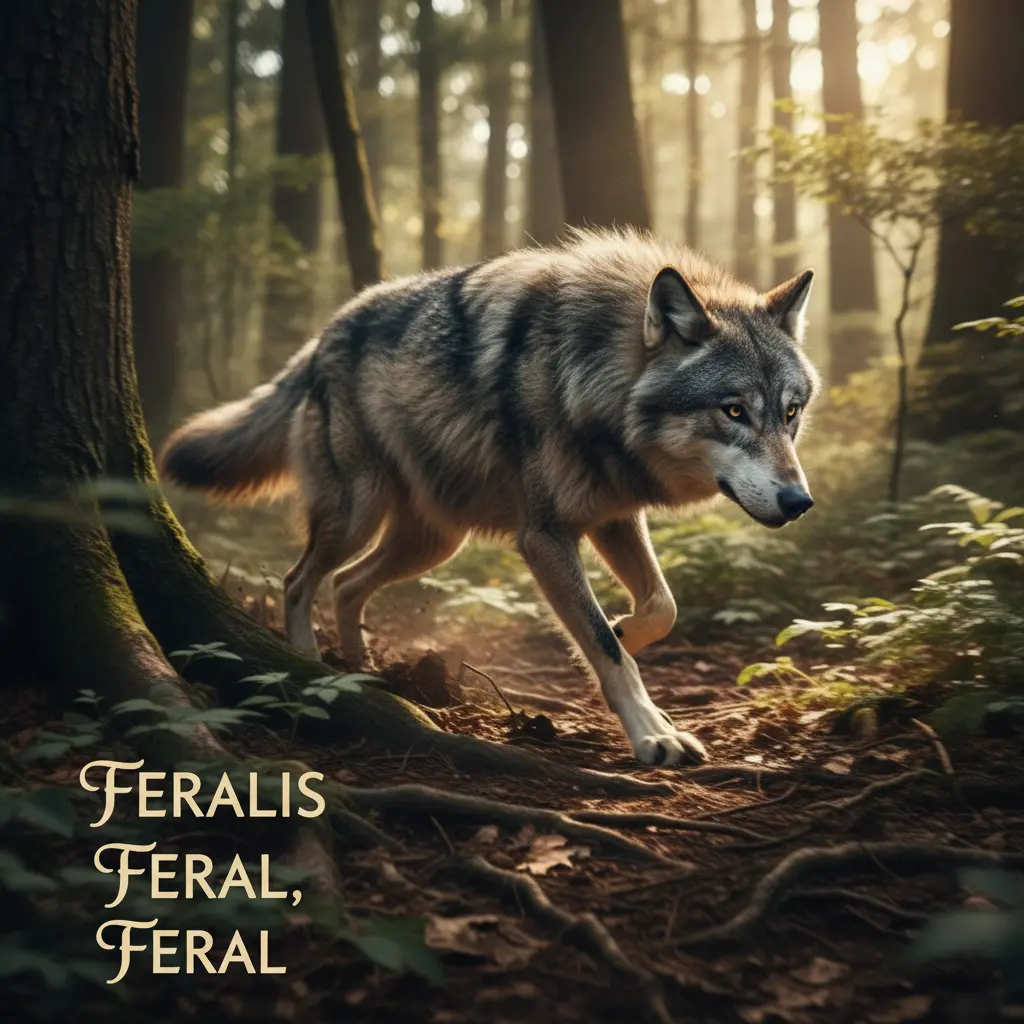
Root decomposition: 'fer' (wild) + suffix '-al'. Historical origin: from Latin 'feralis' through Old French 'feral' to English. Memory image: envision a wild, unruly animal running through a dense forest, embodying untamed nature.
Note 1: These definitions and etymologies are not standard dictionary definitions, but extended explanations provided to help with memorization and understanding of the actual application of words. Through this background information, we strive to make words more vivid and easier to understand, and help you remember their meanings in real life.
Note 2: LexiTalk designs the learning flow around the linguistics principle of “Comprehensible Input.” When learners encounter material that is slightly above their level but still understandable from context, the brain naturally absorbs the language. That’s why we keep every word inside authentic contexts, using examples and associations to help you understand it and use it flexibly.
Read the FAQ explanation of Comprehensible InputFeral describes animals that have escaped domestication and reverted to a wild state, or populations living entirely in nature with little or no human care. The word emphasizes untamed behavior, self-sufficiency, and survival skills that diverge from pets or farm animals. It can also be used metaphorically to describe a savage, brutal, or uncontrolled condition in a place, process, or system. In everyday speech, feral is common with cats, pigs, and horses that roam freely, and occasionally with urban wildlife. Learners should note that feral implies a return to natural independence after captivity, and it often carries a sharper or riskier connotation than simply 'wild'.
Explain to an English speaker that feral centers on a domestication reversal, not just general wildness. The phrase often carries sharper, sometimes dangerous or rebellious, overtones in news or critique contexts.
What does the word 'feral' mean?
Choose the correct usage of the word 'feral'.
Which word is most similar to 'feral'?
What is the opposite of 'feral'?
Can you think of a real-life context where the word 'feral' would be appropriate?
Download LexiTalk app for personalized learning experience
Download AppCookies
We use cookies for essential site functions, analytics, and ads. You can accept, reject, or manage preferences. Privacy Policy