finale - Master This Word
Master this word with our 5-step learning method – Learn English in English
Train English Through Brain Routes, Not Translation.
This page helps you stop memorizing isolated translations and start understanding a word through its shared mental image, native-style thinking, and practical training steps.
Master this word with our 5-step learning method – Learn English in English
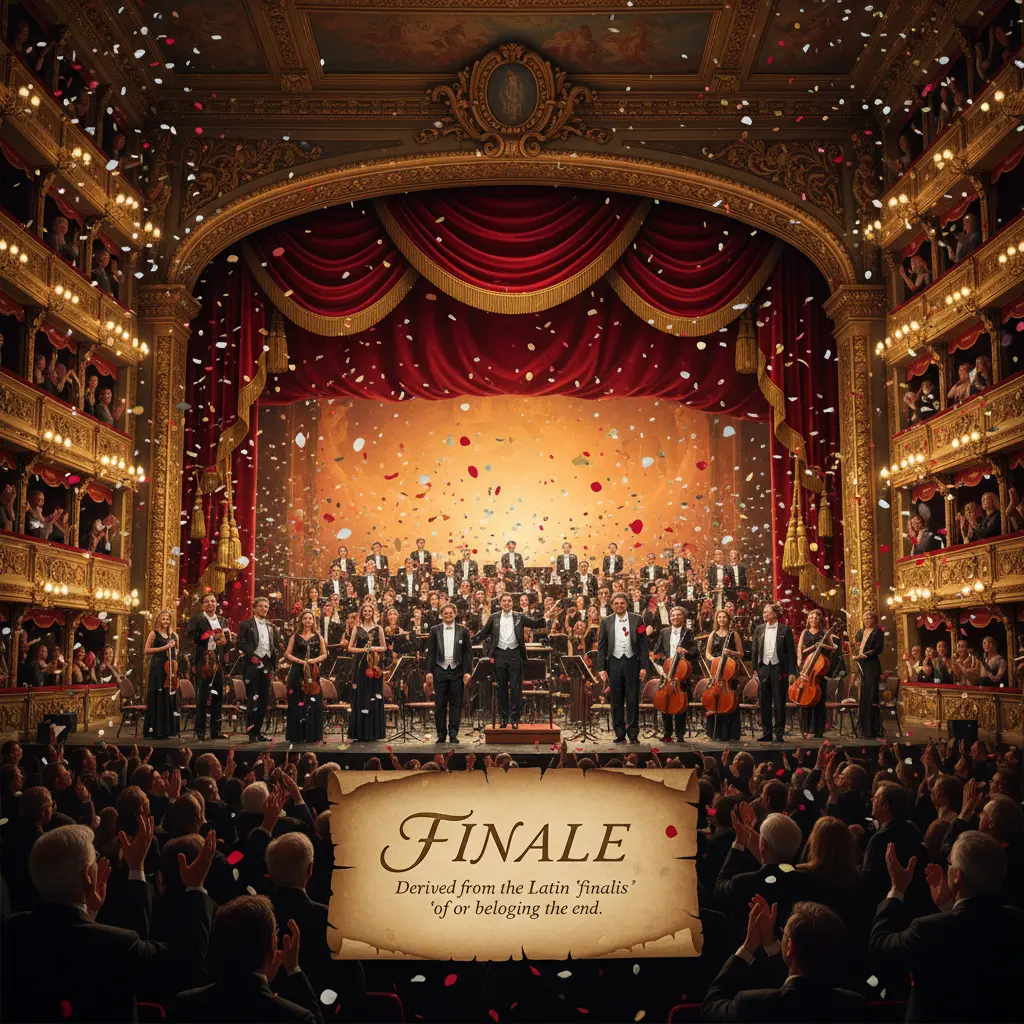
Example sentences are the start of understanding. Don't rush to memorize. First feel how the word works in a sentence.
finale is derived from the Latin 'finalis', meaning 'of or belonging to an end'. It evolved through Italian before entering English. Picture a spectacular final act in a play where musicians take a bow and the curtain falls.
Note 1: These definitions and etymologies are not standard dictionary definitions, but extended explanations provided to help with memorization and understanding of the actual application of words. Through this background information, we strive to make words more vivid and easier to understand, and help you remember their meanings in real life.
Note 2: LexiTalk designs the learning flow around the linguistics principle of “Comprehensible Input.” When learners encounter material that is slightly above their level but still understandable from context, the brain naturally absorbs the language. That’s why we keep every word inside authentic contexts, using examples and associations to help you understand it and use it flexibly.
Read the FAQ explanation of Comprehensible InputFinale is the noun for the last part of a performance or event. In music, it is often a vigorous, celebratory section that brings the piece to its peak and usually invites a bow or curtain call. In a television season or book series, the finale is the concluding episode or volume that resolves main storylines and raises one final emotional crest. The word comes from Latin finalis, through Italian, and evokes a spectacular, conclusive moment that audiences remember long after the lights go up. Learners should note that finale describes the end of something on stage, screen, or in a sequence, not merely any ending.
English tends to use finale for explicit climaxes and spectacle, especially in performance and serialized media; non-native speakers often default to 'end' or 'finish' for all endings.
In which of the following sentences is the word 'finale' used correctly?
Which word is most similar to 'finale'?
What is the opposite of 'finale'?
In what real-life context would you expect to see a 'finale'?
Download LexiTalk app for personalized learning experience
Download AppCookies
We use cookies for essential site functions, analytics, and ads. You can accept, reject, or manage preferences. Privacy Policy