
firearms - Master This Word
Master this word with our 5-step learning method – Learn English in English
Train English Through Brain Routes, Not Translation.
This page helps you stop memorizing isolated translations and start understanding a word through its shared mental image, native-style thinking, and practical training steps.
Master this word with our 5-step learning method – Learn English in English
Example sentences are the start of understanding. Don't rush to memorize. First feel how the word works in a sentence.
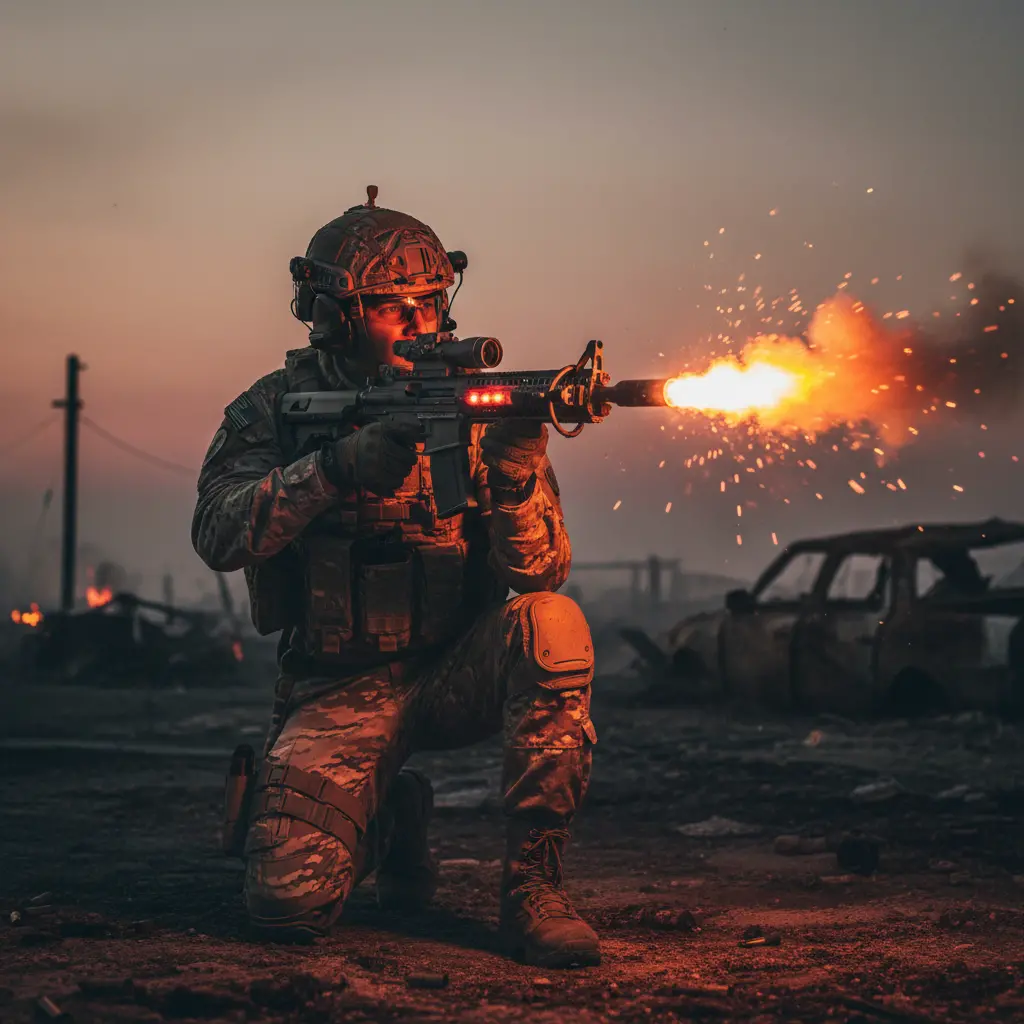
Fire - heat or combustion, Arm - weapon; Derives from Old French 'fire' and Middle English 'arme'. Imagine a soldier igniting a flare from a rifle, symbolizing the combined power of flame and weapon.
Note 1: These definitions and etymologies are not standard dictionary definitions, but extended explanations provided to help with memorization and understanding of the actual application of words. Through this background information, we strive to make words more vivid and easier to understand, and help you remember their meanings in real life.
Note 2: LexiTalk designs the learning flow around the linguistics principle of “Comprehensible Input.” When learners encounter material that is slightly above their level but still understandable from context, the brain naturally absorbs the language. That’s why we keep every word inside authentic contexts, using examples and associations to help you understand it and use it flexibly.
Read the FAQ explanation of Comprehensible InputI rest my hands on the cold firearm and take a steady breath. I shift my weight a little, turn the shoulders, and move my attention to the feel of the grip. The effort is quiet and precise, and I try to hold my focus steady, to place awareness where it belongs. Meaning grows from the body's small decisions in that moment, carried into real life by how I act.
Firearm is a formal term for a weapon that shoots bullets. It is commonly used in legal, academic, or policy contexts, while everyday speech often prefers gun. The word's etymology links to fire and arm, but it does not imply heat or flame in modern usage. Learners should distinguish firearms from other kinds of weapons and recognize that laws surrounding possession, licensing, and storage vary by country. When describing a firearm, using precise subcategories like pistol, rifle, shotgun, or machine gun helps avoid ambiguity. In translation, choose the appropriate legal category rather than a generic or colloquial term.
Firearm is a formal, legally oriented term; English learners often default to 'gun' in writing or informal speech. Remember register and legal nuance vary by country and context.
Download LexiTalk app for personalized learning experience
Download AppCookies
We use cookies for essential site functions, analytics, and ads. You can accept, reject, or manage preferences. Privacy Policy