folk - Master This Word
Master this word with our 5-step learning method – Learn English in English
Train English Through Brain Routes, Not Translation.
This page helps you stop memorizing isolated translations and start understanding a word through its shared mental image, native-style thinking, and practical training steps.
Master this word with our 5-step learning method – Learn English in English
Example sentences are the start of understanding. Don't rush to memorize. First feel how the word works in a sentence.
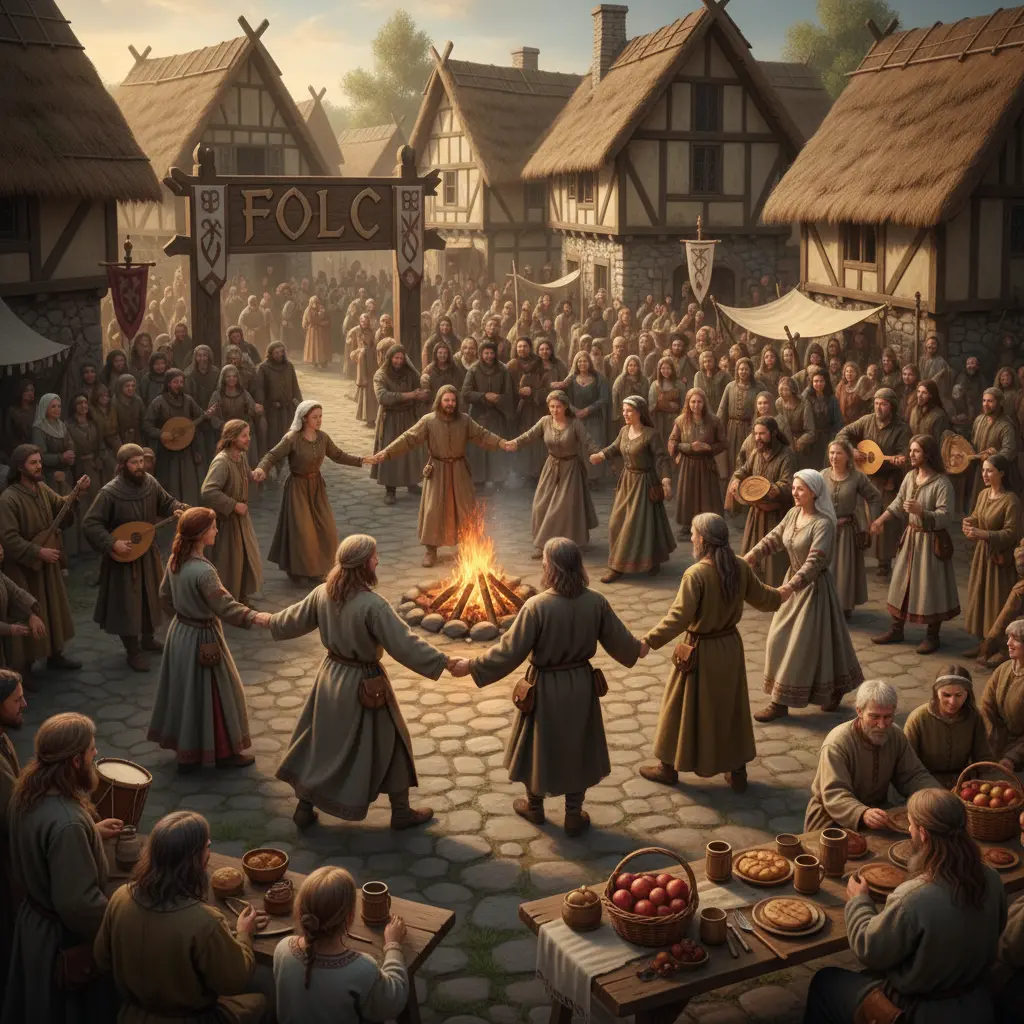
folk = 'people'; Historical origin: Old English 'folc' → Old Norse. Memory image: Picture a traditional village gathering where people come together to celebrate their shared customs and stories.
Note 1: These definitions and etymologies are not standard dictionary definitions, but extended explanations provided to help with memorization and understanding of the actual application of words. Through this background information, we strive to make words more vivid and easier to understand, and help you remember their meanings in real life.
Note 2: LexiTalk designs the learning flow around the linguistics principle of “Comprehensible Input.” When learners encounter material that is slightly above their level but still understandable from context, the brain naturally absorbs the language. That’s why we keep every word inside authentic contexts, using examples and associations to help you understand it and use it flexibly.
Read the FAQ explanation of Comprehensible InputMoving through the kitchen, I set down a cup and look around at the folk who fill this room. I shift my gaze from strangers to faces I recognize, and I feel the rhythm of a shared life. I adjust my smile, keep my talk simple, and lean a little into the conversation. In that small moment, the word folk stops feeling abstract and becomes us.
Folk is a plural noun that originally meant the people of a country or region, but in modern English it acts as a collective referring to a group of ordinary people or a culture-shared community. You may hear 'the folk' to describe local residents, especially in informal speech, or 'folk music' to denote traditional styles. Unlike the abstract 'people' or more formal 'the population', folk carries warmth, familiarity, and sometimes a sense of regional identity. It can contrast with the elite or official institutions in discussions of culture, politics, or storytelling. Learners sometimes confuse it with folklore, which is about traditional beliefs, stories, and customs, rather than the people themselves.
Explain to an English speaker (meta, keep short)
What is the meaning of the word 'folk'?
How is the word 'folk' commonly used in sentences?
Which word is similar to 'folk'?
What is the opposite of 'folk'?
In what real-life context would you hear the word 'folk'?
Download LexiTalk app for personalized learning experience
Download AppCookies
We use cookies for essential site functions, analytics, and ads. You can accept, reject, or manage preferences. Privacy Policy