friendly - Master This Word
Master this word with our 5-step learning method – Learn English in English
Train English Through Brain Routes, Not Translation.
This page helps you stop memorizing isolated translations and start understanding a word through its shared mental image, native-style thinking, and practical training steps.
Master this word with our 5-step learning method – Learn English in English
Example sentences are the start of understanding. Don't rush to memorize. First feel how the word works in a sentence.
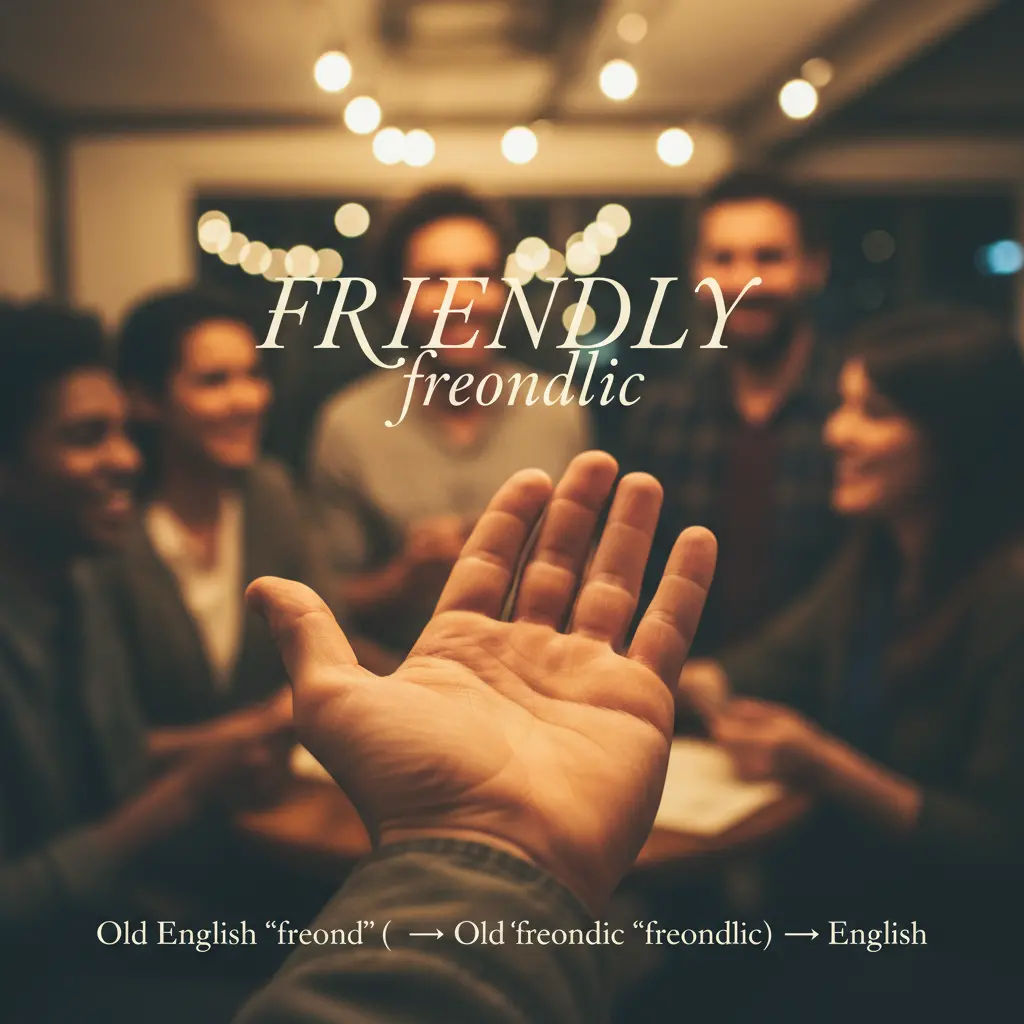
friendly = friend + -ly, from Old English 'freond' (friend) → Old English 'freondlic' (friendly) → English. Imagine a person extending their hand in friendship, offering warmth and kindness.
Note 1: These definitions and etymologies are not standard dictionary definitions, but extended explanations provided to help with memorization and understanding of the actual application of words. Through this background information, we strive to make words more vivid and easier to understand, and help you remember their meanings in real life.
Note 2: LexiTalk designs the learning flow around the linguistics principle of “Comprehensible Input.” When learners encounter material that is slightly above their level but still understandable from context, the brain naturally absorbs the language. That’s why we keep every word inside authentic contexts, using examples and associations to help you understand it and use it flexibly.
Read the FAQ explanation of Comprehensible InputFirst I move a step closer and offer a warm smile to a new neighbor. The space between us shifts as I hold eye contact and adjust my voice to be calm and open. It feels natural, like choosing a small decision under friendly control. In everyday talk, this friendly vibe shows itself when I listen, help, and share in a way that invites trust.
In English, friendly is an adjective describing behavior or atmosphere that is warm, approachable, and agreeable in social interactions. It can refer to a person’s disposition (a friendly person), a situational tone (a friendly environment), or an action toward others (a friendly gesture). Learners often confuse friendly with kind or nice, but friendly emphasizes outward conduct toward others rather than intrinsic goodness. Unlike boisterous or formal terms, friendly implies ease, openness, and willingness to help without demanding special closeness. Typical collocations include friendly to/with someone, be friendly with a stranger, or a friendly rivalry. Note that you say someone is friendly; you do not say the person is 'a friendly'.
English tends to frame friendliness as observable behavior and social ease in interactions; learners often assume it marks deep character or apply it to places, which can blur distinctions with kindness or sociability.
Which of the following sentences use 'friendly' correctly?
Which word is most similar to 'friendly'?
What is the opposite of 'friendly'?
Can you think of a real-life context for being 'friendly'?
Download LexiTalk app for personalized learning experience
Download AppCookies
We use cookies for essential site functions, analytics, and ads. You can accept, reject, or manage preferences. Privacy Policy