
fool - Master This Word
Master this word with our 5-step learning method – Learn English in English
Train English Through Brain Routes, Not Translation.
This page helps you stop memorizing isolated translations and start understanding a word through its shared mental image, native-style thinking, and practical training steps.
Master this word with our 5-step learning method – Learn English in English
Example sentences are the start of understanding. Don't rush to memorize. First feel how the word works in a sentence.
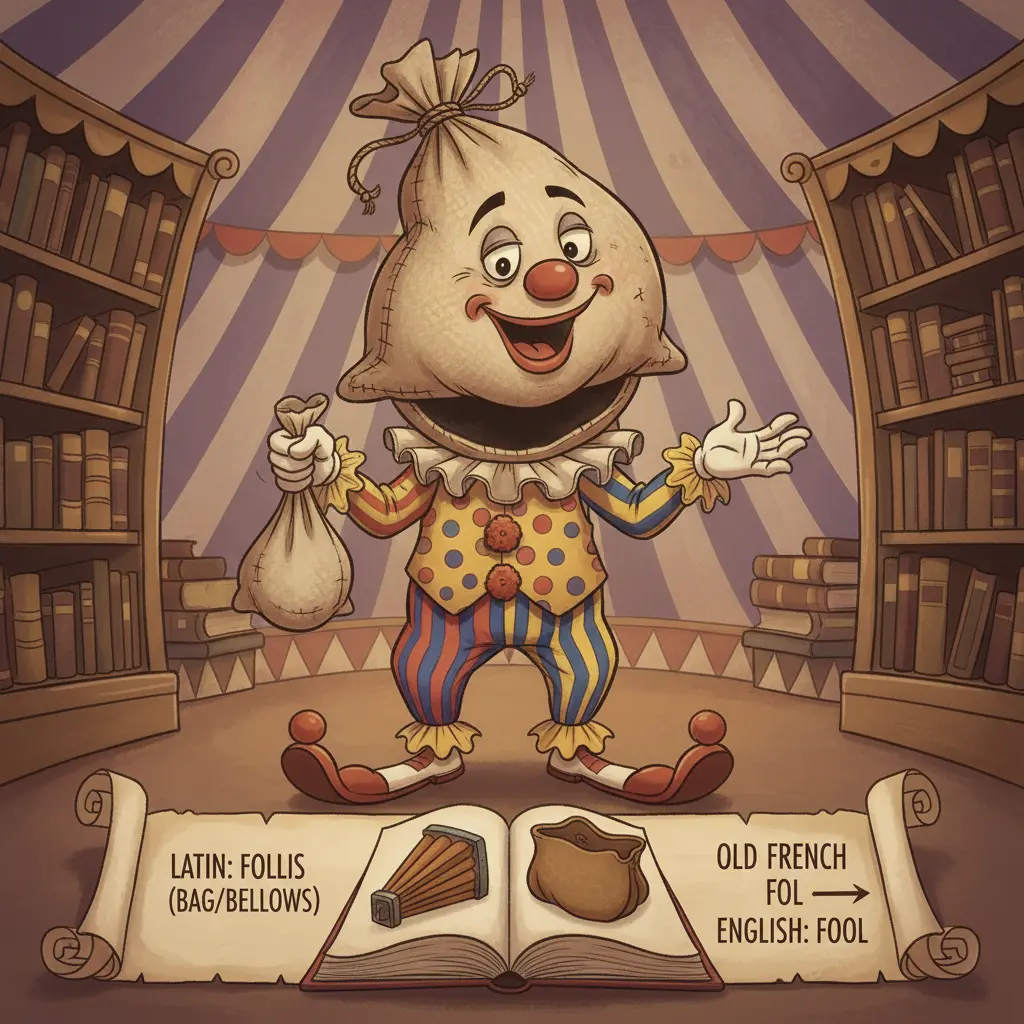
The word 'fool' comes from the Latin 'follis' (bag or bellows), meaning someone who is empty-headed. This evolved through Old French 'fol' into English. To remember, imagine a clown with a silly empty bag instead of a brain.
Note 1: These definitions and etymologies are not standard dictionary definitions, but extended explanations provided to help with memorization and understanding of the actual application of words. Through this background information, we strive to make words more vivid and easier to understand, and help you remember their meanings in real life.
Note 2: LexiTalk designs the learning flow around the linguistics principle of “Comprehensible Input.” When learners encounter material that is slightly above their level but still understandable from context, the brain naturally absorbs the language. That’s why we keep every word inside authentic contexts, using examples and associations to help you understand it and use it flexibly.
Read the FAQ explanation of Comprehensible InputI move a card across the table, then adjust my eyes to keep a straight face. I push a tiny hint of misdirection and watch the scene shift as their attention widens. I hold the smile, let the pause hang, and change my voice to keep the joke alive. When the truth lands and laughter follows, the moment makes clear who was fooled.
Fool is a versatile word in English. As a noun, it can mean a person who lacks good sense or judgment, sometimes kindly as a silly person. As a verb, to fool someone means to trick or deceive them, often playfully or seriously depending on the context. Historically, fool also referred to a jester or clown in a royal court. In modern usage, calling someone a fool is insulting but familiar among friends can be light. Be careful with tone, as 'fool' can be old-fashioned or harsh in formal settings.
English learners often treat fool as a fixed insult, but it also has historical and playful senses. Emphasize noun vs verb uses and the phrase fool around; beware tone in formal contexts.
In which sentence is the word 'fool' used correctly?
Which word is an antonym of 'fool'?
In what real-life context would someone be called a fool?
Reflect on a situation where calling someone a fool would be appropriate.
Download LexiTalk app for personalized learning experience
Download AppCookies
We use cookies for essential site functions, analytics, and ads. You can accept, reject, or manage preferences. Privacy Policy