
forfeiture - Master This Word
Master this word with our 5-step learning method – Learn English in English
Train English Through Brain Routes, Not Translation.
This page helps you stop memorizing isolated translations and start understanding a word through its shared mental image, native-style thinking, and practical training steps.
Master this word with our 5-step learning method – Learn English in English
Example sentences are the start of understanding. Don't rush to memorize. First feel how the word works in a sentence.
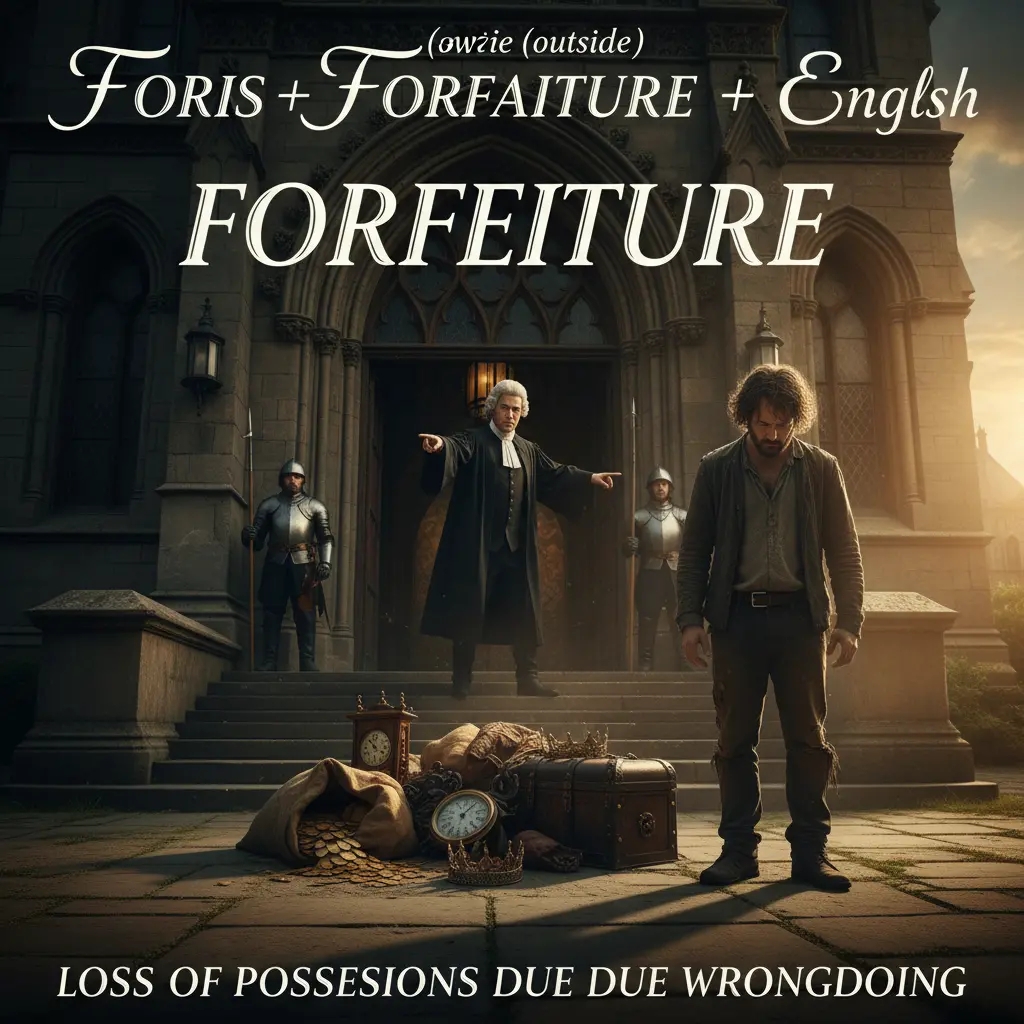
Root decomposition: for- (from) + feiture (to capture). Historical origin: Latin 'foris' (outside) + Old French 'forfaiture' + English. Memory image: Imagine a thief standing outside a court, losing their possessions as a consequence of their actions, representing the loss that comes with 'forfeiture'.
Note 1: These definitions and etymologies are not standard dictionary definitions, but extended explanations provided to help with memorization and understanding of the actual application of words. Through this background information, we strive to make words more vivid and easier to understand, and help you remember their meanings in real life.
Note 2: LexiTalk designs the learning flow around the linguistics principle of “Comprehensible Input.” When learners encounter material that is slightly above their level but still understandable from context, the brain naturally absorbs the language. That’s why we keep every word inside authentic contexts, using examples and associations to help you understand it and use it flexibly.
Read the FAQ explanation of Comprehensible InputForfeiture is the legal loss of property, rights, or privileges as a penalty or remedy for wrongdoing or breach of law. It can happen after a criminal conviction, a civil proceeding, or a contractual violation, and may involve seizing assets, removing licenses, or terminating a contract. Unlike a fine paid to the state, forfeiture often means the government takes ownership or control of the item itself. In many jurisdictions, it can be automatic upon proven wrongdoing or pursued as a separate remedy. The concept traces to Old French forfaiture and Medieval Latin roots, and a simple image—losing something under law—helps learners remember the core idea: you lose a thing because the law says so.
English speakers often separate penalties into fines (monetary) and forfeiture (loss of property or rights), so learners may overgeneralize between paying a fee and losing assets.
What is the definition of the word 'forfeiture'?
Which sentence uses 'forfeiture' correctly?
Which word is most similar to 'forfeiture'?
What is the opposite of 'forfeiture'?
Can you think of a real-life context where someone might experience forfeiture?
Download LexiTalk app for personalized learning experience
Download AppCookies
We use cookies for essential site functions, analytics, and ads. You can accept, reject, or manage preferences. Privacy Policy