fourth - Master This Word
Master this word with our 5-step learning method – Learn English in English
Train English Through Brain Routes, Not Translation.
This page helps you stop memorizing isolated translations and start understanding a word through its shared mental image, native-style thinking, and practical training steps.
Master this word with our 5-step learning method – Learn English in English
Example sentences are the start of understanding. Don't rush to memorize. First feel how the word works in a sentence.
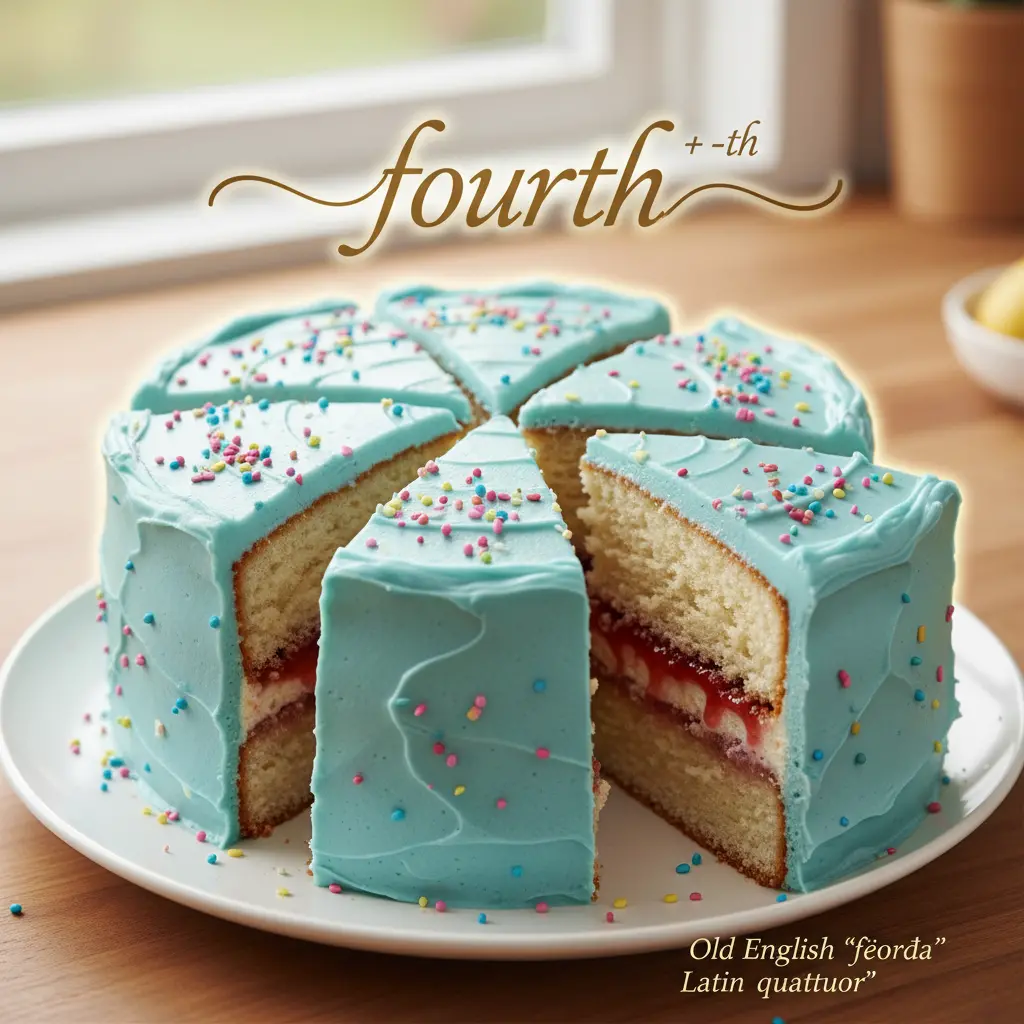
fourth = four + -th (denotes ordinal number), Origin: Old English 'fēorða' from Proto-Germanic *fedwô + related to Latin 'quattuor', Memory image: Imagine a cake cut into four equal pieces, with one piece highlighted as the 'fourth' slice.
Note 1: These definitions and etymologies are not standard dictionary definitions, but extended explanations provided to help with memorization and understanding of the actual application of words. Through this background information, we strive to make words more vivid and easier to understand, and help you remember their meanings in real life.
Note 2: LexiTalk designs the learning flow around the linguistics principle of “Comprehensible Input.” When learners encounter material that is slightly above their level but still understandable from context, the brain naturally absorbs the language. That’s why we keep every word inside authentic contexts, using examples and associations to help you understand it and use it flexibly.
Read the FAQ explanation of Comprehensible InputI pick up a small stack, push one card forward, keeping the stack steady as I slide a marker along the line. I move my attention to the row and adjust its place until it sits right after the third. A breath, a small turn of the wrist, and I let the next spot settle under my finger. Sorting things this way makes the rhythm feel real, and the fourth position simply comes into view as I go.
Fourth is the ordinal form of the number four. It marks the position after the third item in a sequence, such as first, second, third, and then fourth. It also refers to one of four equal parts of a whole, for example a cake divided into four equal pieces and the fourth piece is the one you take. In everyday usage, fourth can describe an order in a list, a place in a competition, or a segment of time like the fourth quarter. The spelling and pronunciation are straightforward: add -th to four, yielding fourth. Remember that irregular ordinal forms exist in English, but fourth follows the regular pattern in this case. Memory image: imagine the fourth slice highlighted.
English encodes order with explicit ordinal endings (first, second, third, fourth), which learners often memorize as a fixed pattern, but must watch for irregulars like 'fifth' or 'fifth' vs 'five' in compounds. Learners tend to overgeneralize or misplace -th, and confuse cardinal vs ordinal usage in lists or time references.
What is the meaning of the word 'fourth'?
In which position is 'fourth' used?
Which word is similar to 'fourth'?
What is the opposite of 'fourth'?
In a race, if you finish in 'fourth' place, what position did you come in?
Download LexiTalk app for personalized learning experience
Download AppCookies
We use cookies for essential site functions, analytics, and ads. You can accept, reject, or manage preferences. Privacy Policy