
gibbering - Master This Word
Master this word with our 5-step learning method – Learn English in English
Train English Through Brain Routes, Not Translation.
This page helps you stop memorizing isolated translations and start understanding a word through its shared mental image, native-style thinking, and practical training steps.
Master this word with our 5-step learning method – Learn English in English
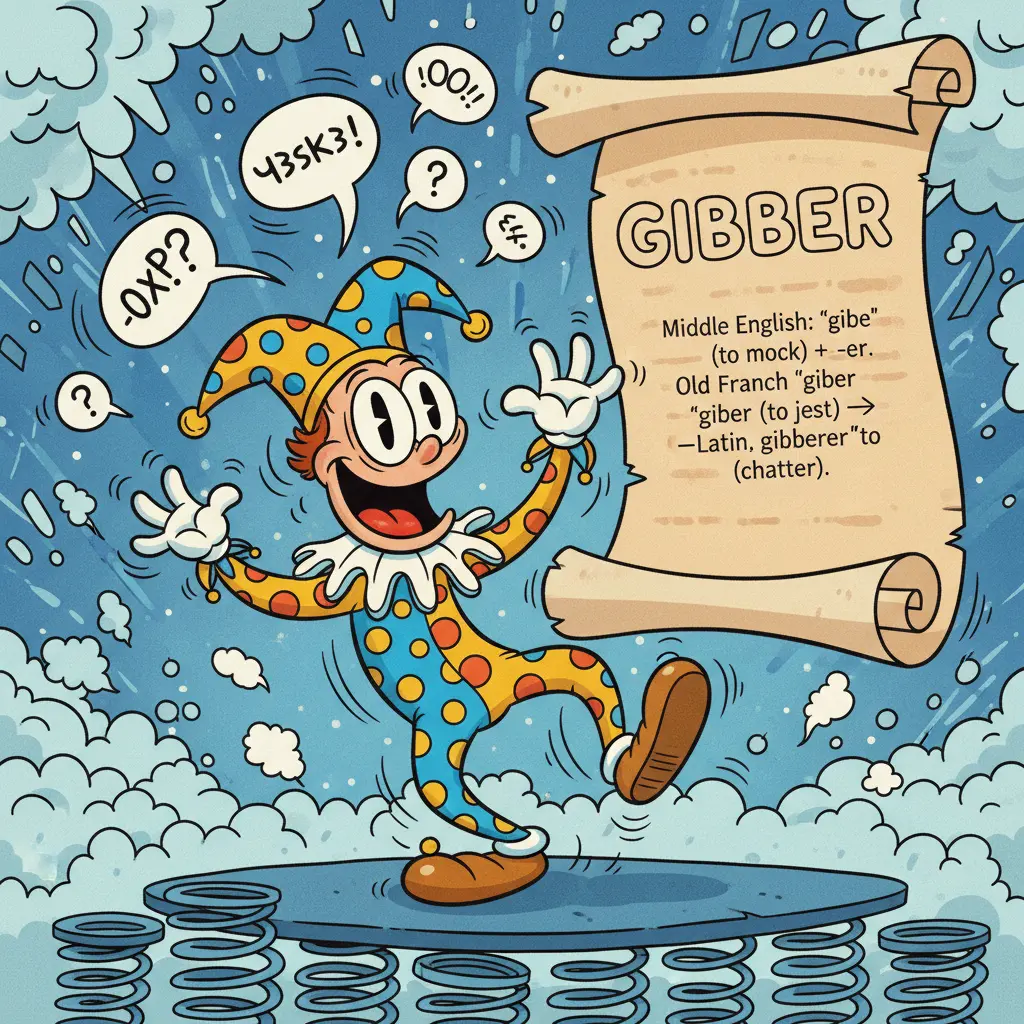
Example sentences are the start of understanding. Don't rush to memorize. First feel how the word works in a sentence.
(gibber) – Root: 'gibber' (Middle English) from ‘gibe’ (to mock) + suffix -er. Historical origin: Middle English influenced by Old French 'giber' (to jest) which is a blend of Latin 'gibberer' (to chatter). Memory image: Imagine a cartoon character frantically chattering away while jiggling, creating a scene that's both silly and chaotic.
Note 1: These definitions and etymologies are not standard dictionary definitions, but extended explanations provided to help with memorization and understanding of the actual application of words. Through this background information, we strive to make words more vivid and easier to understand, and help you remember their meanings in real life.
Note 2: LexiTalk designs the learning flow around the linguistics principle of “Comprehensible Input.” When learners encounter material that is slightly above their level but still understandable from context, the brain naturally absorbs the language. That’s why we keep every word inside authentic contexts, using examples and associations to help you understand it and use it flexibly.
Read the FAQ explanation of Comprehensible InputGibber is a verb meaning to speak quickly and unintelligibly, to chatter nonsensically, or to make meaningless sounds. It describes speech that seems jumbled, as if words are flung out faster than the mind can form them, or lines of babble that lack clear meaning. People may gibber when they're nervous, excited, or exhausted, and you might hear a friend try to explain something but only spit out a string of syllables. It is informal and a bit playful; use it when the goal is to emphasize confusing or rapid verbal noise rather than precise content. Although related to gibberish, gibber is a verb, not a noun.
Explain to native English speakers that gibber is informal and emphasizes rapid, unclear speech; learners often confuse it with gibberish or gab, so practice noting the verb form and typical contexts.
Download LexiTalk app for personalized learning experience
Download AppCookies
We use cookies for essential site functions, analytics, and ads. You can accept, reject, or manage preferences. Privacy Policy