green - Master This Word
Master this word with our 5-step learning method – Learn English in English
Train English Through Brain Routes, Not Translation.
This page helps you stop memorizing isolated translations and start understanding a word through its shared mental image, native-style thinking, and practical training steps.
Master this word with our 5-step learning method – Learn English in English
Example sentences are the start of understanding. Don't rush to memorize. First feel how the word works in a sentence.
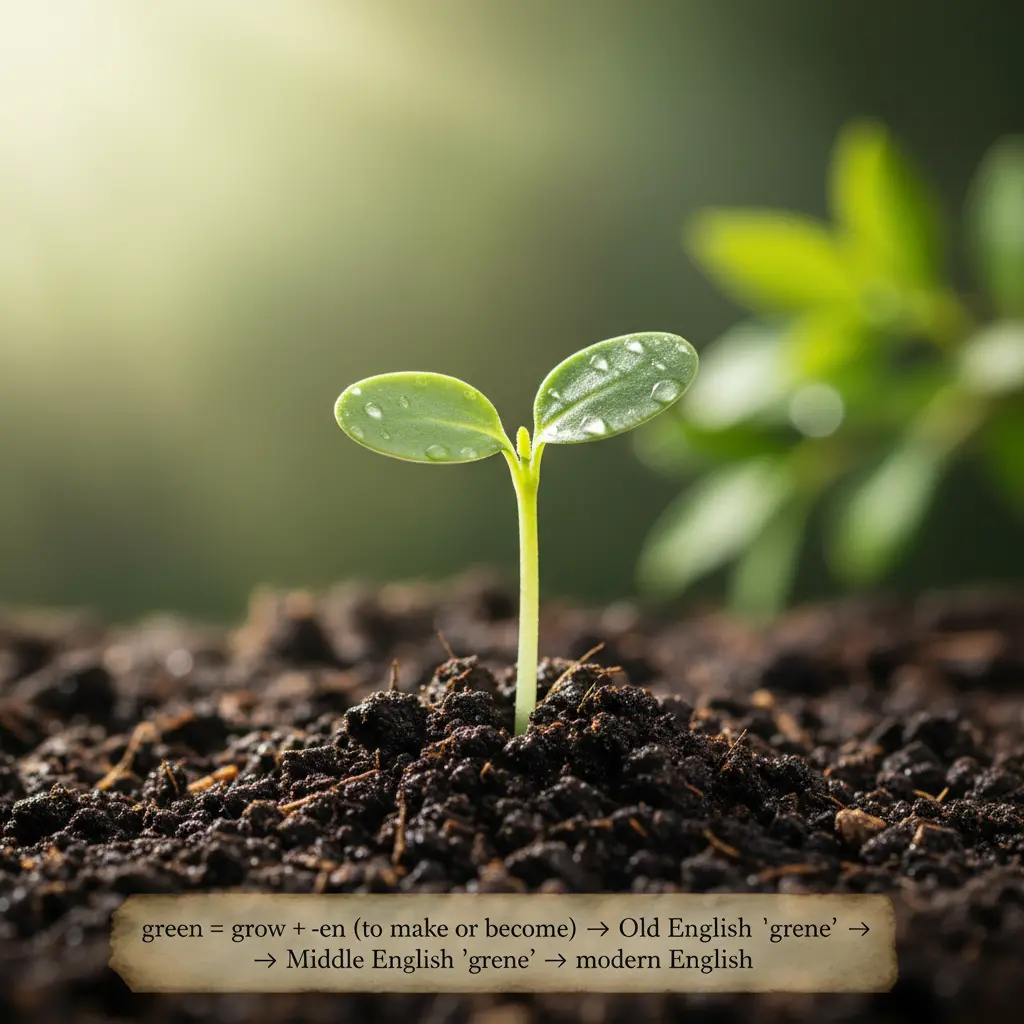
green = grow + -en (to make or become) → Old English 'grene' → Middle English 'grene' → modern English. Imagine a fresh green sprout emerging from the soil, symbolizing new life and growth.
Note 1: These definitions and etymologies are not standard dictionary definitions, but extended explanations provided to help with memorization and understanding of the actual application of words. Through this background information, we strive to make words more vivid and easier to understand, and help you remember their meanings in real life.
Note 2: LexiTalk designs the learning flow around the linguistics principle of “Comprehensible Input.” When learners encounter material that is slightly above their level but still understandable from context, the brain naturally absorbs the language. That’s why we keep every word inside authentic contexts, using examples and associations to help you understand it and use it flexibly.
Read the FAQ explanation of Comprehensible InputMove your hand to push a color chip across the screen, and watch green appear as you tilt the monitor. The shade shifts as you turn the dial in your mind, and you pull your attention toward calm and balance. You feel the effort to hold the line between vivid and easy, adjusting the tone until the color sits soft on the page. In that moment, green stops being a label and becomes a mood—the sense of growth, newness, and care for the world you’re protecting.
Green is a versatile word in English that covers a color, a state of being inexperienced, and a broad sense of environmental concern. The color sense refers to the segment between blue and yellow, often used with leaves, grass, and traffic signals. The inexperienced sense appears in phrases like green behind the ears, while the eco friendly sense is found in go green, green energy, and green products. Etymology links green to grow and en, tracing back to Old English grene through Middle English grene to modern English. Learners should be aware that context determines whether green means color, naiveté, or environmental ideas, and that metaphors can shift in business or political talking points.
Green is a compact polyseme for color, naivety, and ecology in English; learners should rely on surrounding nouns and verbs to parse meaning and note culturally loaded phrases.
How is the word 'green' used in a sentence?
Which of the following words is similar to 'green'?
What is the opposite of the word 'green'?
In what real-life context would you see the color green?
Download LexiTalk app for personalized learning experience
Download AppCookies
We use cookies for essential site functions, analytics, and ads. You can accept, reject, or manage preferences. Privacy Policy