grip - Master This Word
Master this word with our 5-step learning method – Learn English in English
Train English Through Brain Routes, Not Translation.
This page helps you stop memorizing isolated translations and start understanding a word through its shared mental image, native-style thinking, and practical training steps.
Master this word with our 5-step learning method – Learn English in English
Example sentences are the start of understanding. Don't rush to memorize. First feel how the word works in a sentence.
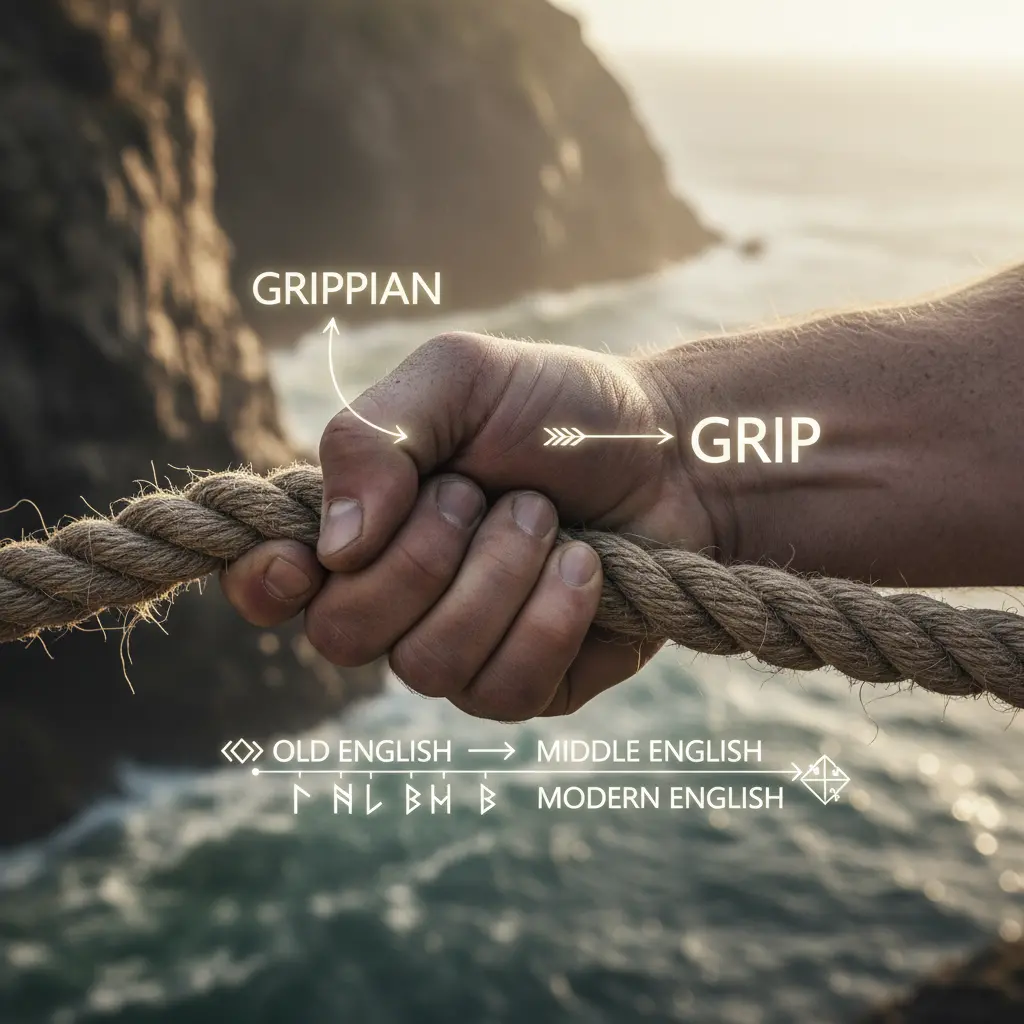
Grip: from Old English 'grippian' (to seize) + 'grip' (firm hold). Historical origin: Old English → Middle English → Modern English. Memory image: Imagine a strong hand grabbing tightly onto a rope, never letting go, representing a firm grasp or control.
Note 1: These definitions and etymologies are not standard dictionary definitions, but extended explanations provided to help with memorization and understanding of the actual application of words. Through this background information, we strive to make words more vivid and easier to understand, and help you remember their meanings in real life.
Note 2: LexiTalk designs the learning flow around the linguistics principle of “Comprehensible Input.” When learners encounter material that is slightly above their level but still understandable from context, the brain naturally absorbs the language. That’s why we keep every word inside authentic contexts, using examples and associations to help you understand it and use it flexibly.
Read the FAQ explanation of Comprehensible InputI wrap my fingers around the mug and feel the grip warm as the steam rises. When the cup wobbles, I shift and tighten, adjusting my grip to keep it from slipping. The effort is quiet but real, a moment of control in a simple lift. From hold to place, the grip carries the task forward.
Grip means to seize and hold something tightly with your hand, and it also describes a firm hold that gives you control over an object, a situation, or a process. As a verb, you grip a rope, a handle, or someone’s shoulder in a steady, careful way. As a noun, a grip is the quality of that hold—firm, confident, and secure—and can be used metaphorically to mean influence or command over a problem, a market, or a project. In everyday usage you might talk about having a good grip on the steering wheel, keeping a grip on your emotions, or maintaining a secure grip while lifting a heavy box. The mental image is a strong, unyielding grasp that won’t let go.
Explain to an English speaker: English uses grip to cover both physical holding and metaphorical control, so learners should notice collocations (grip on, grip of, get a grip) and immutable phrases like 'a firm grip' vs 'grasp' which can shift nuance.
What is the meaning of the word 'grip'?
In which sentence is 'grip' used correctly?
Which word is a synonym of 'grip'?
What is the opposite of 'grip'?
Where might you need a strong grip in real life?
Download LexiTalk app for personalized learning experience
Download AppCookies
We use cookies for essential site functions, analytics, and ads. You can accept, reject, or manage preferences. Privacy Policy