
hatred - Master This Word
Master this word with our 5-step learning method – Learn English in English
Train English Through Brain Routes, Not Translation.
This page helps you stop memorizing isolated translations and start understanding a word through its shared mental image, native-style thinking, and practical training steps.
Master this word with our 5-step learning method – Learn English in English
Example sentences are the start of understanding. Don't rush to memorize. First feel how the word works in a sentence.
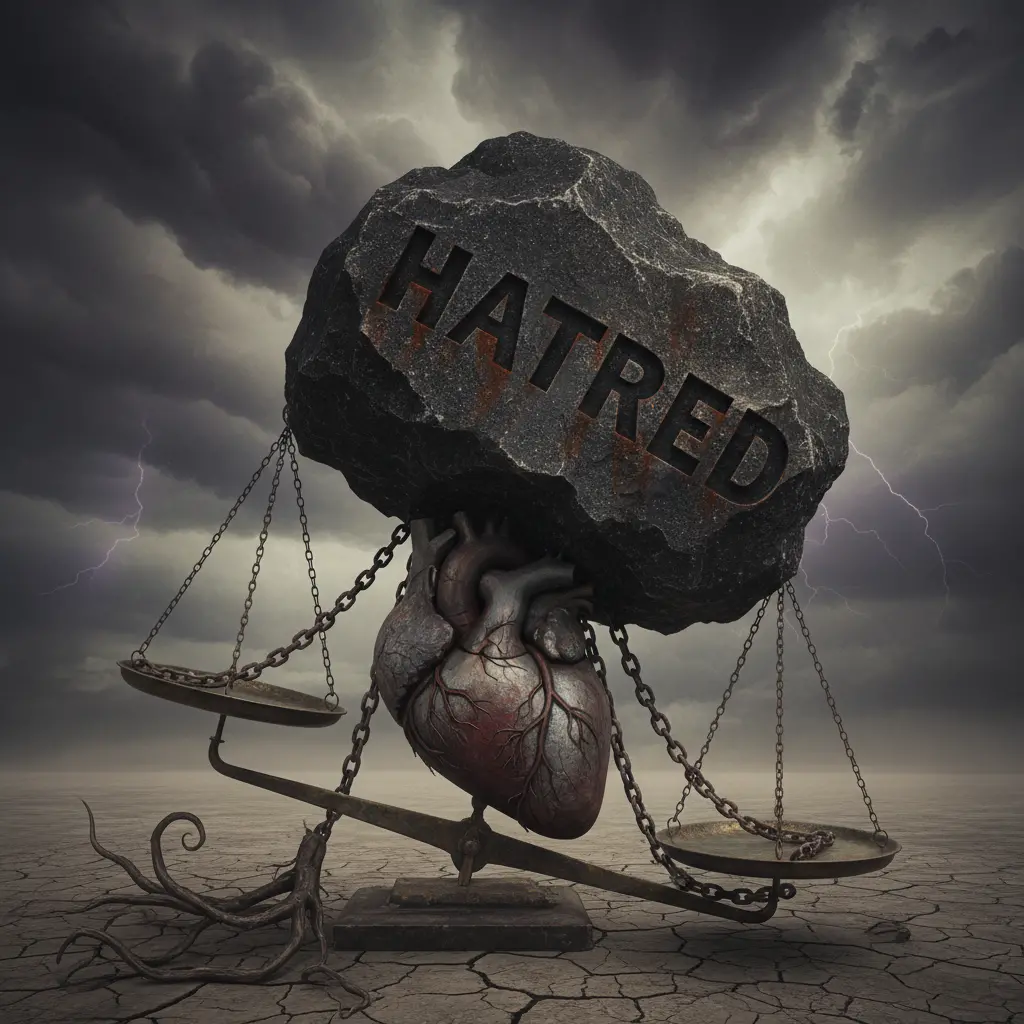
Root decomposition: hate (intense dislike) + -red (a suffix forming nouns). Historical origin: Old English hættre → Middle English hatrede → English. Memory image: imagine a heart being crushed by a heavy stone labeled 'hatred', symbolizing how deep disdain can weigh us down.
Note 1: These definitions and etymologies are not standard dictionary definitions, but extended explanations provided to help with memorization and understanding of the actual application of words. Through this background information, we strive to make words more vivid and easier to understand, and help you remember their meanings in real life.
Note 2: LexiTalk designs the learning flow around the linguistics principle of “Comprehensible Input.” When learners encounter material that is slightly above their level but still understandable from context, the brain naturally absorbs the language. That’s why we keep every word inside authentic contexts, using examples and associations to help you understand it and use it flexibly.
Read the FAQ explanation of Comprehensible InputI shift my attention and push the troubling thought away. A tight knot of anger rises in my chest, a hot edge of hostility I can feel. I hold my breath for a moment, then adjust my posture and keep my voice steady. That pull can turn into hatred toward someone, a real test of how I respond rather than let it own me.
Hatred is a powerful, often irrational feeling of intense dislike toward someone or something. It can grow from fear, past hurts, or deep bias, and it can push people toward exclusion, aggression, or even violence. Unlike a simple dislike, hatred tends to be durable, lurks in judgments, and colors many actions and decisions. In conversations about conflict, ethics, or history, you may hear about hatred toward a group, a rival, or an idea. The word carries strong moral weight, so speakers choose precise expressions such as antipathy, hostility, or contempt in softer contexts. Learners benefit from distinguishing hatred from anger, dislike, and resentment to avoid overstatement.
English speakers often see hatred as a strong, morally loaded emotion directed at people or groups; beware milder tones like dislike when discussing everyday topics.
What is the meaning of 'hatred'?
Which of the following sentences uses 'hatred' correctly?
What is a synonym for 'hatred'?
What is an opposite (antonym) for 'hatred'?
In what real-life context might someone experience 'hatred'?
Download LexiTalk app for personalized learning experience
Download AppCookies
We use cookies for essential site functions, analytics, and ads. You can accept, reject, or manage preferences. Privacy Policy