hopeful - Master This Word
Master this word with our 5-step learning method – Learn English in English
Train English Through Brain Routes, Not Translation.
This page helps you stop memorizing isolated translations and start understanding a word through its shared mental image, native-style thinking, and practical training steps.
Master this word with our 5-step learning method – Learn English in English
Example sentences are the start of understanding. Don't rush to memorize. First feel how the word works in a sentence.
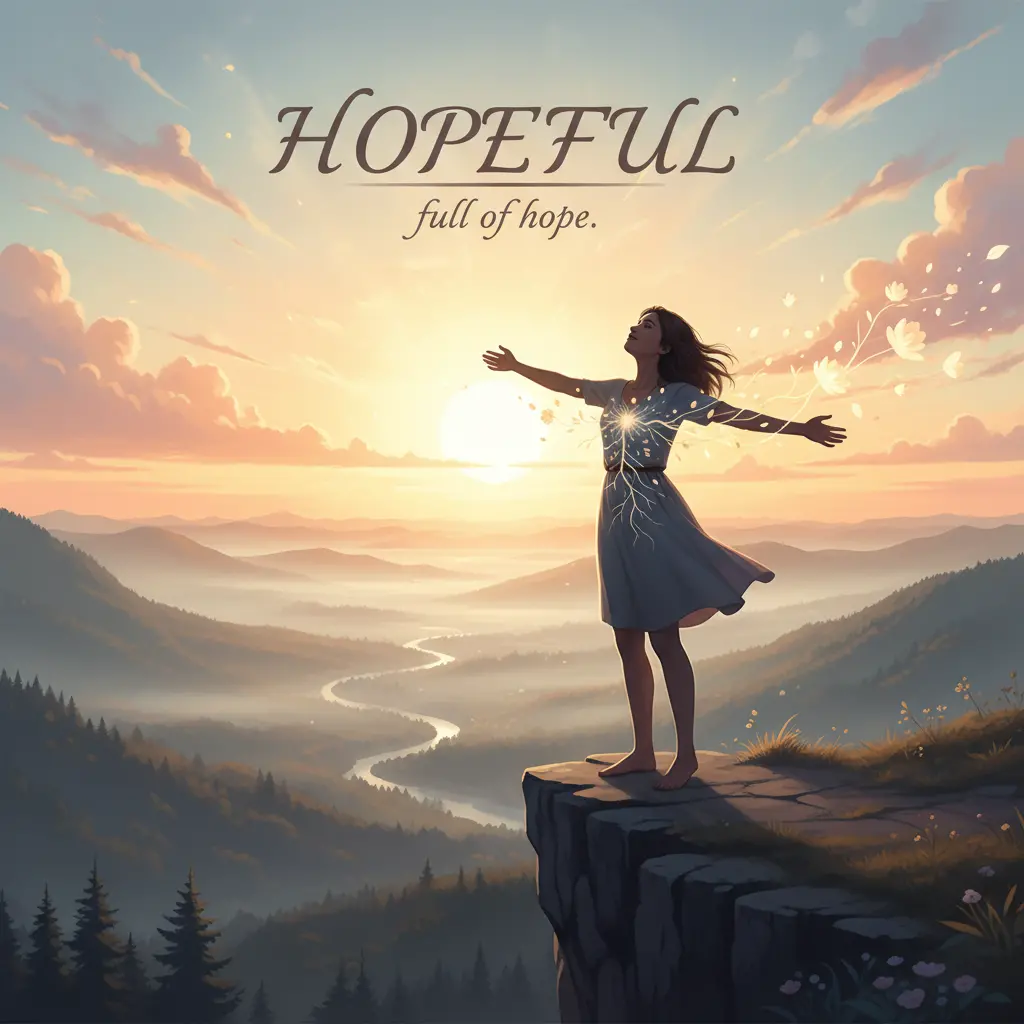
hopeful: hope (root) + ful (suffix = full of). Origin: Old English → Middle English → Modern English. Memory image: Imagine a person looking out at a sunrise, full of hopes for a new day.
Note 1: These definitions and etymologies are not standard dictionary definitions, but extended explanations provided to help with memorization and understanding of the actual application of words. Through this background information, we strive to make words more vivid and easier to understand, and help you remember their meanings in real life.
Note 2: LexiTalk designs the learning flow around the linguistics principle of “Comprehensible Input.” When learners encounter material that is slightly above their level but still understandable from context, the brain naturally absorbs the language. That’s why we keep every word inside authentic contexts, using examples and associations to help you understand it and use it flexibly.
Read the FAQ explanation of Comprehensible InputI tilt my shoulders, take a steady breath, and set my eyes on the day ahead. I watch my plan on the desk begin to move—one task shifts, a deadline changes, and I adjust along the way. The effort feels warm and real, like keeping a small lamp lit as doubts rise and fall. By the end I feel hopeful, ready to move into the next moment.
Hopeful is an adjective that describes a person who feels positive about future events and expects that something good will happen. It captures a mood or attitude rather than a certainty, and it is often used with about or for: hopeful about the future, hopeful for good news. You can describe people, plans, or outcomes as hopeful, or say that you feel hopeful about a decision or a result. The tone tends to be warmer and less formal than optimistic, and learners should watch for collocations with about/for and nuances that vary by context. Remember that being hopeful does not guarantee success, only a hopeful outlook.
In English, hopeful often carries warmth and a personal touch, implying emotional optimism about a specific upcoming event; learners should be aware it is not a guarantee and differs from merely being optimistic.
What is the meaning of 'hopeful'?
Which sentence uses 'hopeful' correctly?
What is a synonym for 'hopeful'?
What is an antonym for 'hopeful'?
In what situation would someone feel 'hopeful'?
Download LexiTalk app for personalized learning experience
Download AppCookies
We use cookies for essential site functions, analytics, and ads. You can accept, reject, or manage preferences. Privacy Policy