
identical - Master This Word
Master this word with our 5-step learning method – Learn English in English
Train English Through Brain Routes, Not Translation.
This page helps you stop memorizing isolated translations and start understanding a word through its shared mental image, native-style thinking, and practical training steps.
Master this word with our 5-step learning method – Learn English in English
Example sentences are the start of understanding. Don't rush to memorize. First feel how the word works in a sentence.
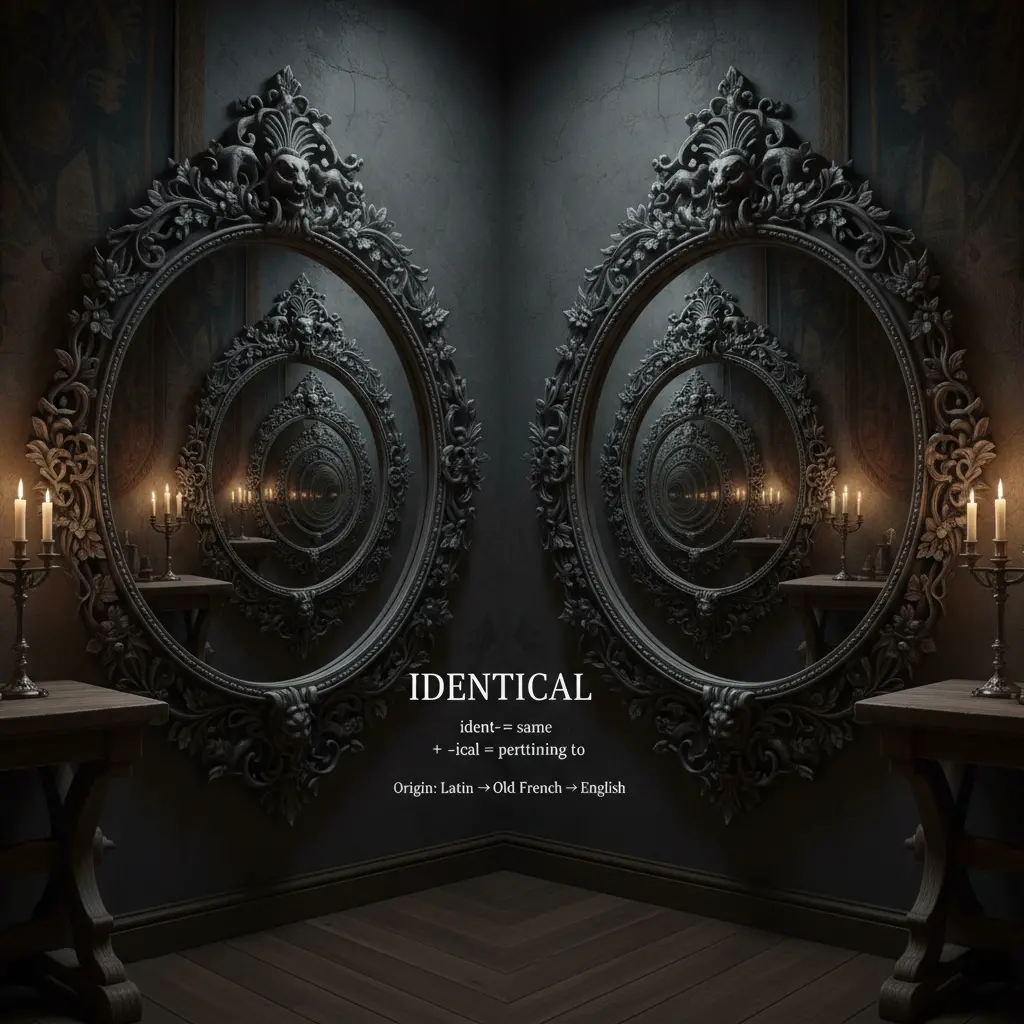
identical: ident- = same + -ical = pertaining to. Origin: Latin → Old French → English. Picture two mirrors reflecting each other perfectly, representing identical images.
Note 1: These definitions and etymologies are not standard dictionary definitions, but extended explanations provided to help with memorization and understanding of the actual application of words. Through this background information, we strive to make words more vivid and easier to understand, and help you remember their meanings in real life.
Note 2: LexiTalk designs the learning flow around the linguistics principle of “Comprehensible Input.” When learners encounter material that is slightly above their level but still understandable from context, the brain naturally absorbs the language. That’s why we keep every word inside authentic contexts, using examples and associations to help you understand it and use it flexibly.
Read the FAQ explanation of Comprehensible InputI hold two cards in my hands and move them side by side, nudging one to align. I push, pull, and adjust until the tops and bottoms match, and I turn my head a little to test the sight lines. When they sit perfectly even, a calm relief runs through me, like a small mirror held up to the room. In daily life, that same balance shows up when things fit with no difference in every detail, and I keep that feeling as I place things back and set them down.
Identical describes two or more things that are exactly the same in every respect. It goes beyond 'very similar' and means there is no difference you could detect in appearance, measurements, function, or identity. You might say two twins are identical, or two copies of a document are identical if every character matches. In everyday speech you can use identical to emphasize certainty: These two keys are identical; they open the same lock. Keep in mind that 'identical' implies a perfect match, not just close resemblance. When comparing opinions or outcomes, 'identical' can sound formal; 'same' often fits more natural speech.
English tends to reserve identical for a perfect match; learners often over-generalize it to mean very similar. Think of it as a strict standard: only zero differences qualify.
In which of the following sentences is the word 'identical' used correctly?
Which word is a synonym of 'identical'?
Which word is an antonym of 'identical'?
When would you describe two objects as 'identical'?
Download LexiTalk app for personalized learning experience
Download AppCookies
We use cookies for essential site functions, analytics, and ads. You can accept, reject, or manage preferences. Privacy Policy