
india - Master This Word
Master this word with our 5-step learning method – Learn English in English
Train English Through Brain Routes, Not Translation.
This page helps you stop memorizing isolated translations and start understanding a word through its shared mental image, native-style thinking, and practical training steps.
Master this word with our 5-step learning method – Learn English in English
Example sentences are the start of understanding. Don't rush to memorize. First feel how the word works in a sentence.
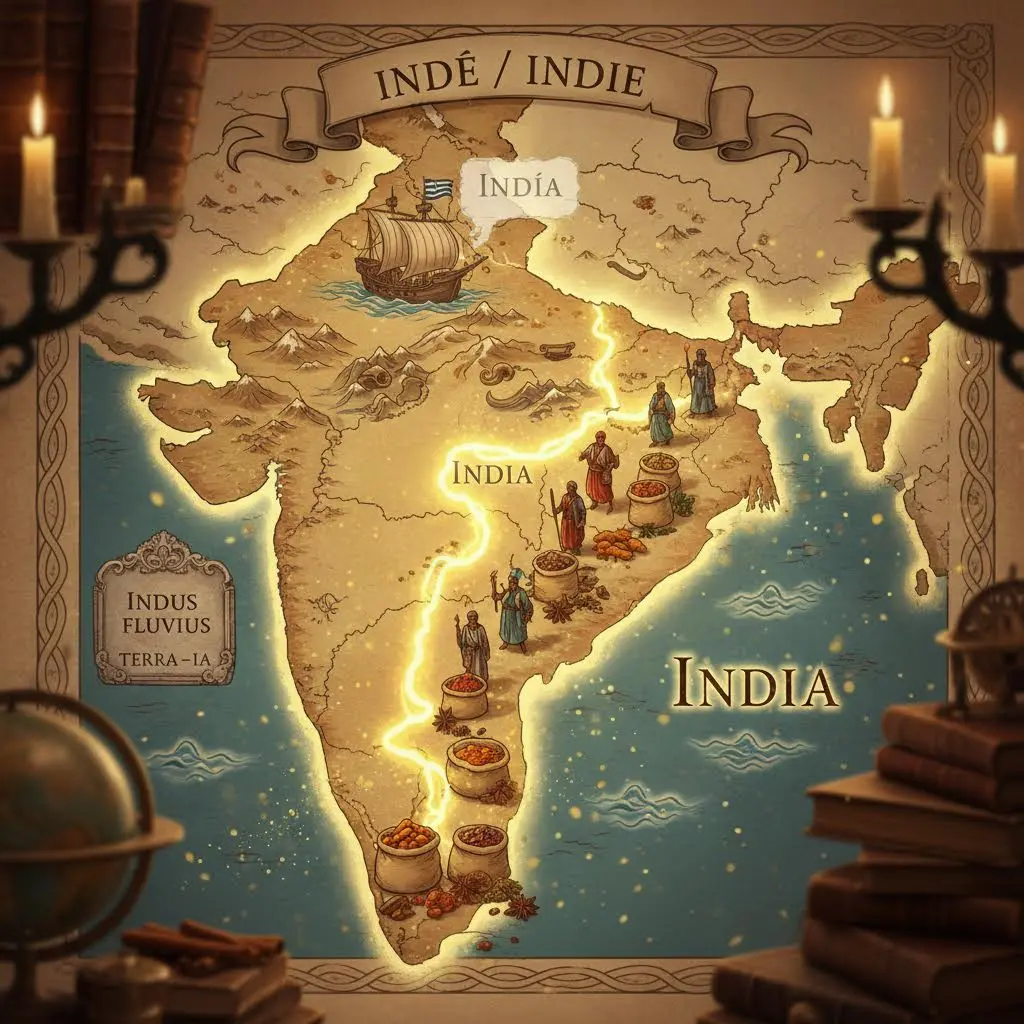
Root decomposition: Ind- + -ia; Ind- derives from the Indus river region and the Latin suffix -ia denotes a land or region. Historical origin: The name India comes from Latin India, which itself reflects Greek Indía, referring to the land around the Indus River; the Old French form was Inde/Indie, and English adopted India. Memory image: A map glows along the Indus valley with spices and travelers entering the land of India.
Note 1: These definitions and etymologies are not standard dictionary definitions, but extended explanations provided to help with memorization and understanding of the actual application of words. Through this background information, we strive to make words more vivid and easier to understand, and help you remember their meanings in real life.
Note 2: LexiTalk designs the learning flow around the linguistics principle of “Comprehensible Input.” When learners encounter material that is slightly above their level but still understandable from context, the brain naturally absorbs the language. That’s why we keep every word inside authentic contexts, using examples and associations to help you understand it and use it flexibly.
Read the FAQ explanation of Comprehensible InputIndia is a country in South Asia, bordered by Pakistan, China, Nepal, Bhutan, and Bangladesh, with the Indian Ocean to its south. In broader historical usage, the term India can refer to the Indian subcontinent as a geographical and cultural region. In cultural or literary contexts, India evokes a mosaic of traditions, landscapes, cinema, music, and ancient civilizations that influence many people worldwide. Learners often mix up India with Indians (the people) or forget to capitalize the proper noun in English when writing. When used in travel, geography, or politics, India denotes a specific nation; in historical or cultural discussions it can imply the broader regional identity.
Native English tends to treat India as a single, well-defined country name with clear capitalization; learners may overlook the broader historical notion of the Indian subcontinent and confuse the country with its people.
What is the meaning of the word 'india'?
Which sentence uses the word 'india' correctly?
What is a synonym for 'india'?
What is an opposite concept of 'india'?
Can you think of a real-life scenario of countries working together?
Download LexiTalk app for personalized learning experience
Download AppCookies
We use cookies for essential site functions, analytics, and ads. You can accept, reject, or manage preferences. Privacy Policy