industrial - Master This Word
Master this word with our 5-step learning method – Learn English in English
Train English Through Brain Routes, Not Translation.
This page helps you stop memorizing isolated translations and start understanding a word through its shared mental image, native-style thinking, and practical training steps.
Master this word with our 5-step learning method – Learn English in English
Example sentences are the start of understanding. Don't rush to memorize. First feel how the word works in a sentence.
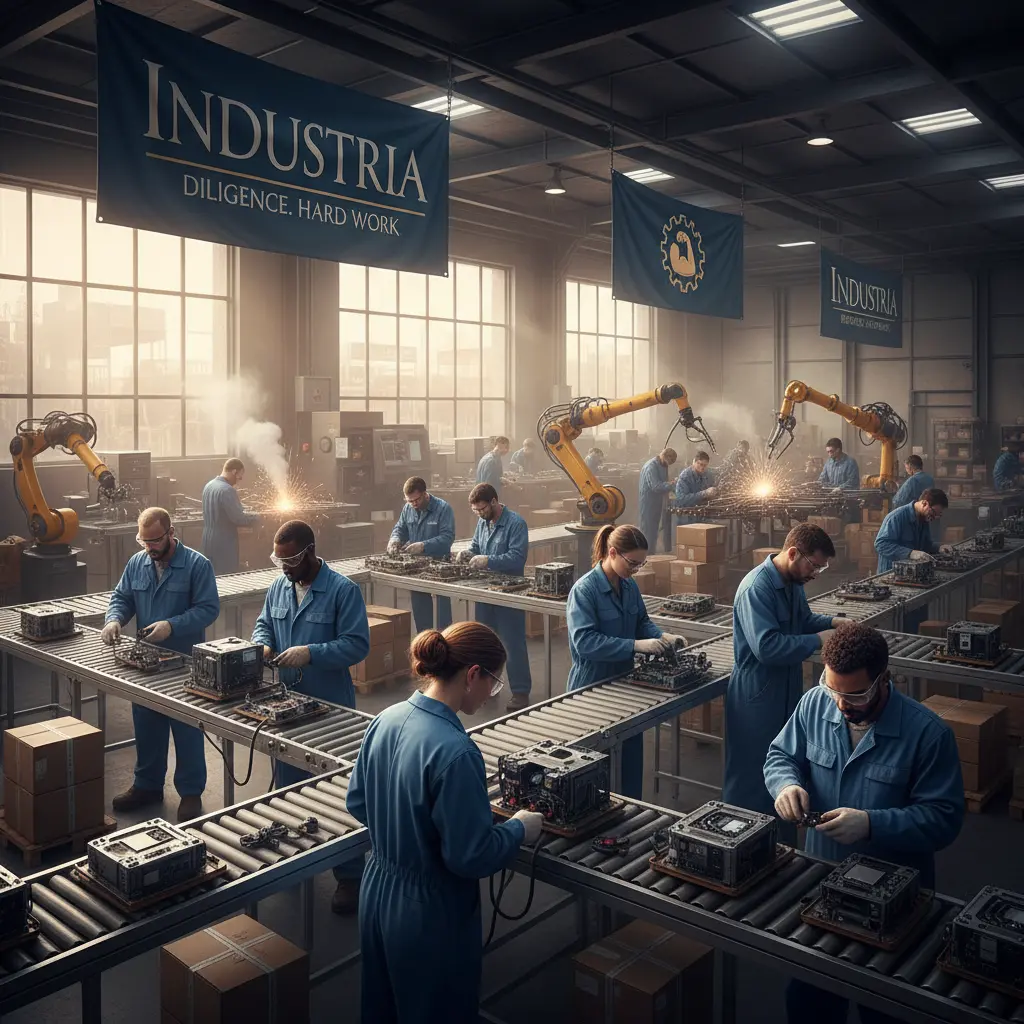
The word comes from 'industria' meaning 'diligence' or 'hard work' (Latin), evolving through Old French into English. Visualize a factory with workers diligently assembling products, symbolizing industriousness in every step.
Note 1: These definitions and etymologies are not standard dictionary definitions, but extended explanations provided to help with memorization and understanding of the actual application of words. Through this background information, we strive to make words more vivid and easier to understand, and help you remember their meanings in real life.
Note 2: LexiTalk designs the learning flow around the linguistics principle of “Comprehensible Input.” When learners encounter material that is slightly above their level but still understandable from context, the brain naturally absorbs the language. That’s why we keep every word inside authentic contexts, using examples and associations to help you understand it and use it flexibly.
Read the FAQ explanation of Comprehensible InputI push a heavy door open and step into a warm, humming space. I pull a lever and watch the gears begin to move, belts tightening and gauges climbing. I adjust the flow of materials, keeping a steady eye as the numbers rise, the effort settling into a focused rhythm. In this small shift of control, the scene feels like a doorway to industry—where choice, pace, and set-ups fuse into real work in the world.
Industrial is an adjective that relates to industry, manufacturing, and the activities of factories. It describes things connected with heavy production, machinery, and the economic sectors that rely on industrial processes. In everyday English, you might talk about industrial design, industrial policy, or industrial growth, noting a sense of scale, efficiency, and sometimes impersonal pace. The term can also refer to characteristic features of a place, such as an industrial town with warehouses and smokestacks, or to a style that emphasizes functionality over ornament. When teaching, emphasize the contrast with agricultural or service industry contexts and the nuance of sectoral activity.
English tends to treat industrial as a broad, sector-focused descriptor used across many collocations (growth, policy, design, park); learners often assume it automatically equals 'factory' and misuse it with people or places that aren’t industrialized.
What is the meaning of the word 'industrial'?
Which sentence uses 'industrial' correctly?
Which word is most similar to 'industrial'?
What is the opposite of 'industrial'?
Can you think of a real-life scenario of 'industrial'?
Download LexiTalk app for personalized learning experience
Download AppCookies
We use cookies for essential site functions, analytics, and ads. You can accept, reject, or manage preferences. Privacy Policy