
industrialise - Master This Word
Master this word with our 5-step learning method – Learn English in English
Train English Through Brain Routes, Not Translation.
This page helps you stop memorizing isolated translations and start understanding a word through its shared mental image, native-style thinking, and practical training steps.
Master this word with our 5-step learning method – Learn English in English
Example sentences are the start of understanding. Don't rush to memorize. First feel how the word works in a sentence.
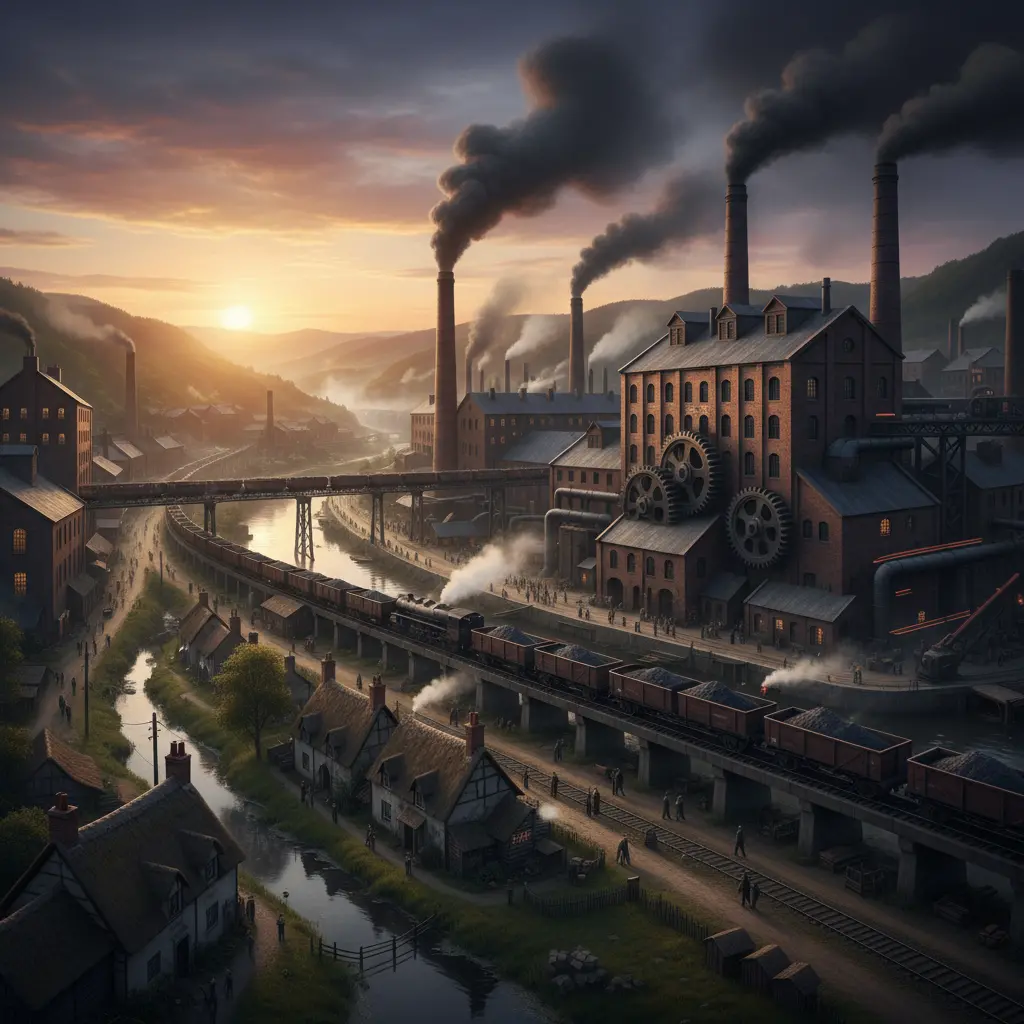
Root decomposition: 'industri-' (from Latin 'industria') + '-alise' (suffix to form verbs). Historical origin: Latin 'industria' → Old French 'industrial' → English 'industrialise'. Memory image: Picture a once quiet village transforming into a bustling factory town, where smoke rises from chimneys and machines hum with activity, symbolizing progress and modernization.
Note 1: These definitions and etymologies are not standard dictionary definitions, but extended explanations provided to help with memorization and understanding of the actual application of words. Through this background information, we strive to make words more vivid and easier to understand, and help you remember their meanings in real life.
Note 2: LexiTalk designs the learning flow around the linguistics principle of “Comprehensible Input.” When learners encounter material that is slightly above their level but still understandable from context, the brain naturally absorbs the language. That’s why we keep every word inside authentic contexts, using examples and associations to help you understand it and use it flexibly.
Read the FAQ explanation of Comprehensible InputTo industrialise a region means encouraging the growth of factories, services, and related infrastructure so manufacturing becomes a major part of the local economy. It also describes modernizing processes, adopting new machinery, and upgrading skills across workplaces. The term implies deliberate policy and investment to shift away from agriculture or small crafts toward larger, organized production and value chains. It is closely linked to economic development, urbanization, and globalization, as regions seek jobs, competitiveness, and higher standards of living. In British English the verb ends with -ise and the noun is industrialisation. Memory image: a quiet village transforming into a bustling factory town, with chimneys and the hum of machines.
English speakers often view industrialise as a deliberate, policy-driven shift with long-term economic planning; mistakes include assuming it only means factories, confusing -ise with -ize, and mixing up with industrial as an adjective.
What is the meaning of the word 'industrialise'?
Which sentence uses 'industrialise' correctly?
Which word is most similar to 'industrialise'?
What is the opposite of 'industrialise'?
Can you think of a real-life context where 'industrialise' would be appropriate?
Download LexiTalk app for personalized learning experience
Download AppCookies
We use cookies for essential site functions, analytics, and ads. You can accept, reject, or manage preferences. Privacy Policy