infection - Master This Word
Master this word with our 5-step learning method – Learn English in English
Train English Through Brain Routes, Not Translation.
This page helps you stop memorizing isolated translations and start understanding a word through its shared mental image, native-style thinking, and practical training steps.
Master this word with our 5-step learning method – Learn English in English
Example sentences are the start of understanding. Don't rush to memorize. First feel how the word works in a sentence.
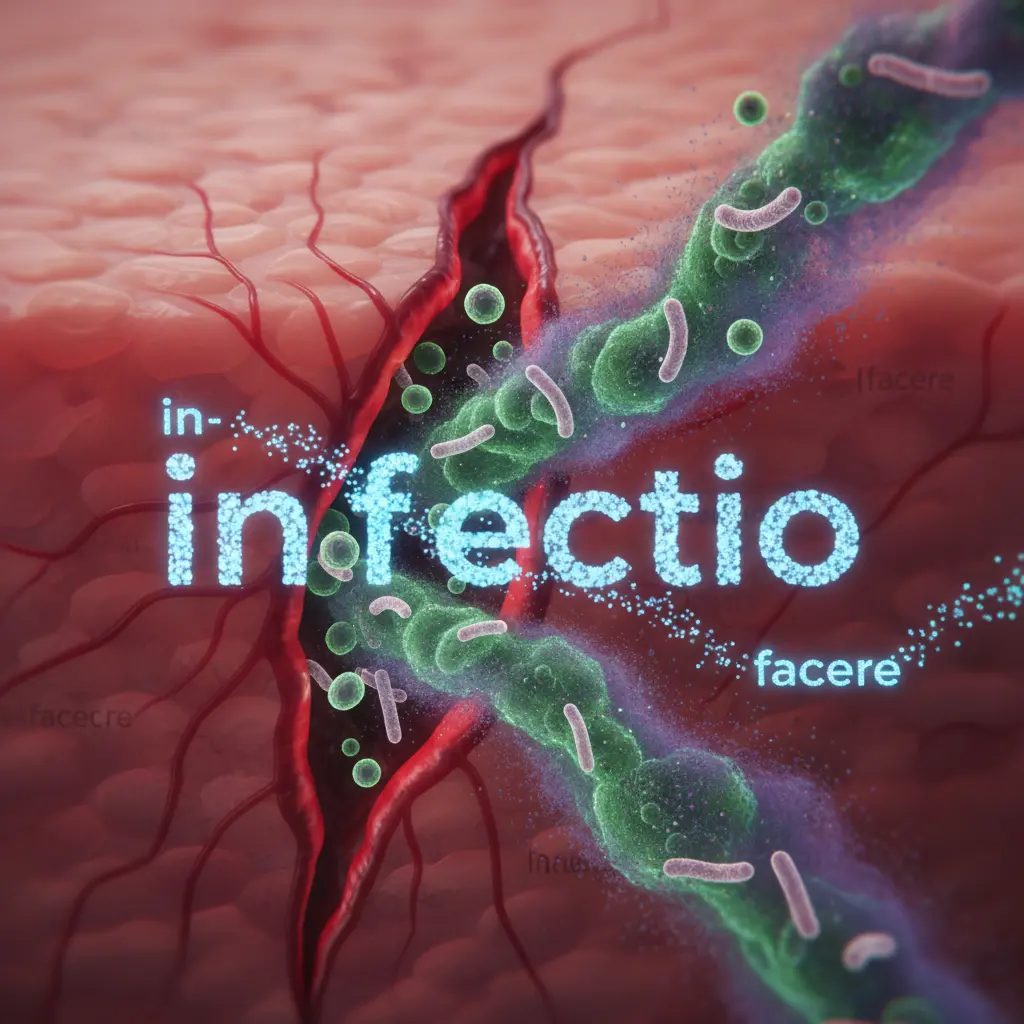
The word 'infection' comes from the Latin root 'infectio', from 'in-' (into) + 'facere' (to make) - meaning to make into something harmful. This historical path shows how a simple process can lead to serious consequences, much like a small cut can become infected. Imagine a tiny wound that spreads germs, turning from a small injury into a serious illness.
Note 1: These definitions and etymologies are not standard dictionary definitions, but extended explanations provided to help with memorization and understanding of the actual application of words. Through this background information, we strive to make words more vivid and easier to understand, and help you remember their meanings in real life.
Note 2: LexiTalk designs the learning flow around the linguistics principle of “Comprehensible Input.” When learners encounter material that is slightly above their level but still understandable from context, the brain naturally absorbs the language. That’s why we keep every word inside authentic contexts, using examples and associations to help you understand it and use it flexibly.
Read the FAQ explanation of Comprehensible InputI press a finger to my wrist and feel the pulse, imagining a tiny intruder slipping in. In my head, the scene move unfolds: a door opens, air shifts, and an unseen crowd presses inside. I breathe a little heavier, adjust my posture, and keep watching how a small change can ripple through a day. It’s through this feeling of effort and control that I sense what infection might mean in real life, not as words, but as a lived moment to notice and respond.
In everyday English, infection refers to the invasion of the body by germs that multiply and disrupt normal function. It can describe a condition caused by bacteria, viruses, fungi, or parasites, and you may hear about a skin infection, a lung infection, or a systemic infection. The act of infecting is about the process by which a host is exposed to pathogens and the pathogen establishes itself. The word traces back to Latin infectio, from in- (into) + facere (to make), giving a sense of turning something into harm. Learn to distinguish infection from inflammation, contamination, or contagion, and note how medical contexts tailor the term to particular organs and severities.
Learners of English often treat infection as a single event; English prefers to talk about organ-specific infections (lung infection) and contrasts infection with inflammation or contamination.
What is the meaning of the word 'infection'?
Which sentence uses 'infection' correctly?
What is a similar word to 'infection'?
What is the opposite of 'infection'?
Can you give an example of a real-life scenario of 'infection'?
Download LexiTalk app for personalized learning experience
Download AppCookies
We use cookies for essential site functions, analytics, and ads. You can accept, reject, or manage preferences. Privacy Policy