
injustice - Master This Word
Master this word with our 5-step learning method – Learn English in English
Train English Through Brain Routes, Not Translation.
This page helps you stop memorizing isolated translations and start understanding a word through its shared mental image, native-style thinking, and practical training steps.
Master this word with our 5-step learning method – Learn English in English
Example sentences are the start of understanding. Don't rush to memorize. First feel how the word works in a sentence.
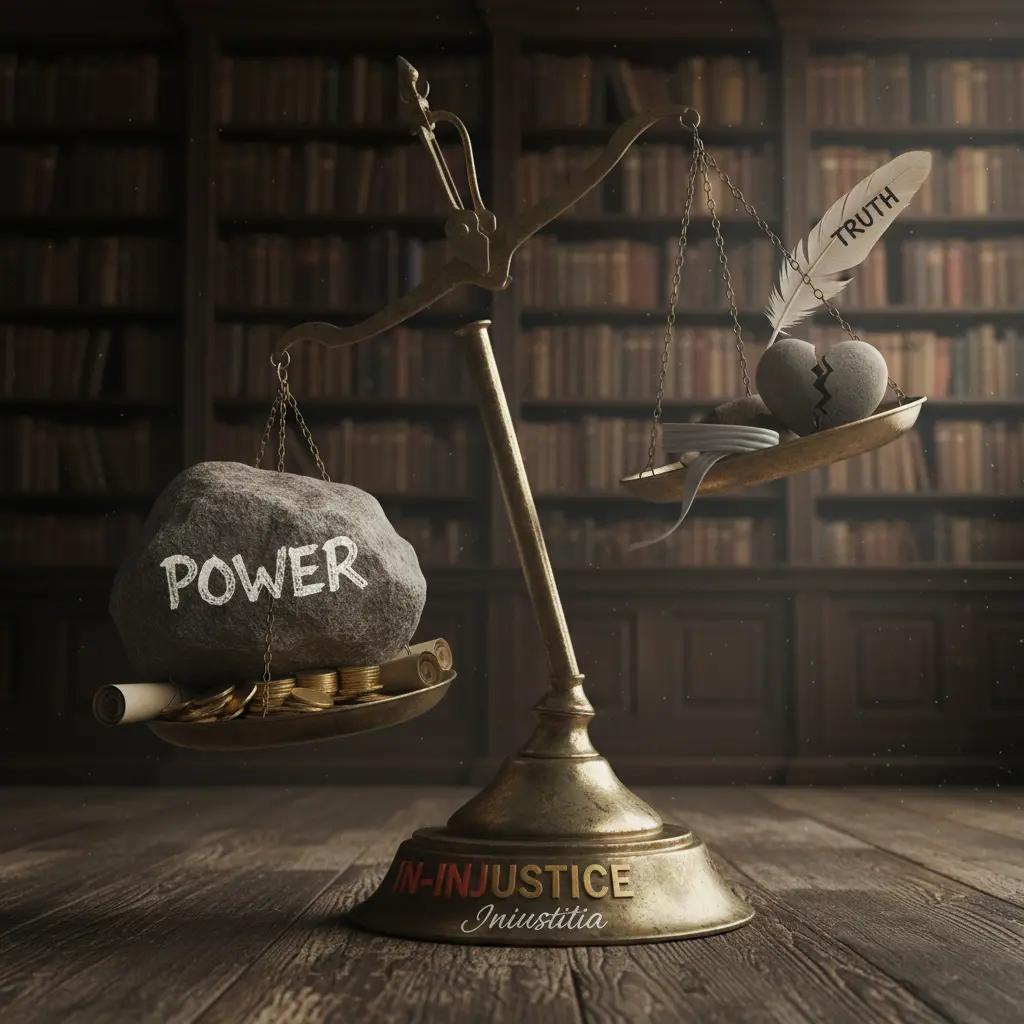
in- = not, justice = fairness and moral rightness; Origin: Latin → Old French → English. Imagine a scale unbalanced, with one side unjustly weighed down.
Note 1: These definitions and etymologies are not standard dictionary definitions, but extended explanations provided to help with memorization and understanding of the actual application of words. Through this background information, we strive to make words more vivid and easier to understand, and help you remember their meanings in real life.
Note 2: LexiTalk designs the learning flow around the linguistics principle of “Comprehensible Input.” When learners encounter material that is slightly above their level but still understandable from context, the brain naturally absorbs the language. That’s why we keep every word inside authentic contexts, using examples and associations to help you understand it and use it flexibly.
Read the FAQ explanation of Comprehensible InputI move through a crowded bus, gripping the rail to stay balanced. A moment later, someone cuts in front and the space shifts away for them, a small sting of unfairness. I adjust my stance, keep my voice low, and decide whether to push back or simply breathe and wait. In these tiny, concrete moments, injustice becomes a feeling you carry about how people are treated, nudging you to act with fairness toward others.
Injustice is the state or act of treating people unfairly or denying them rights. It can refer to personal experiences of bias, or to wide, systemic problems that affect whole groups. In legal or moral discussions, injustice points to outcomes that do not meet standards of fairness, due process, or basic human rights. The word is often paired with descriptors like systemic, gross, or widespread to emphasize scale and impact, and with verbs such as confront, expose, or remedy. Its etymology traces to the prefix in- (not) and justice, crossing Latin and Old French before entering English, like a balance tipped toward one side when fairness is ignored.
Native English speakers often link injustice with rights violations and due process; learners should connect it to fairness across people, institutions, and systems.
What is the meaning of 'injustice'?
Which sentence uses 'injustice' correctly?
What is a synonym for 'injustice'?
What is an opposite of 'injustice'?
How does the concept of 'injustice' apply in society?
Download LexiTalk app for personalized learning experience
Download AppCookies
We use cookies for essential site functions, analytics, and ads. You can accept, reject, or manage preferences. Privacy Policy