
innate - Master This Word
Master this word with our 5-step learning method – Learn English in English
Train English Through Brain Routes, Not Translation.
This page helps you stop memorizing isolated translations and start understanding a word through its shared mental image, native-style thinking, and practical training steps.
Master this word with our 5-step learning method – Learn English in English
Example sentences are the start of understanding. Don't rush to memorize. First feel how the word works in a sentence.
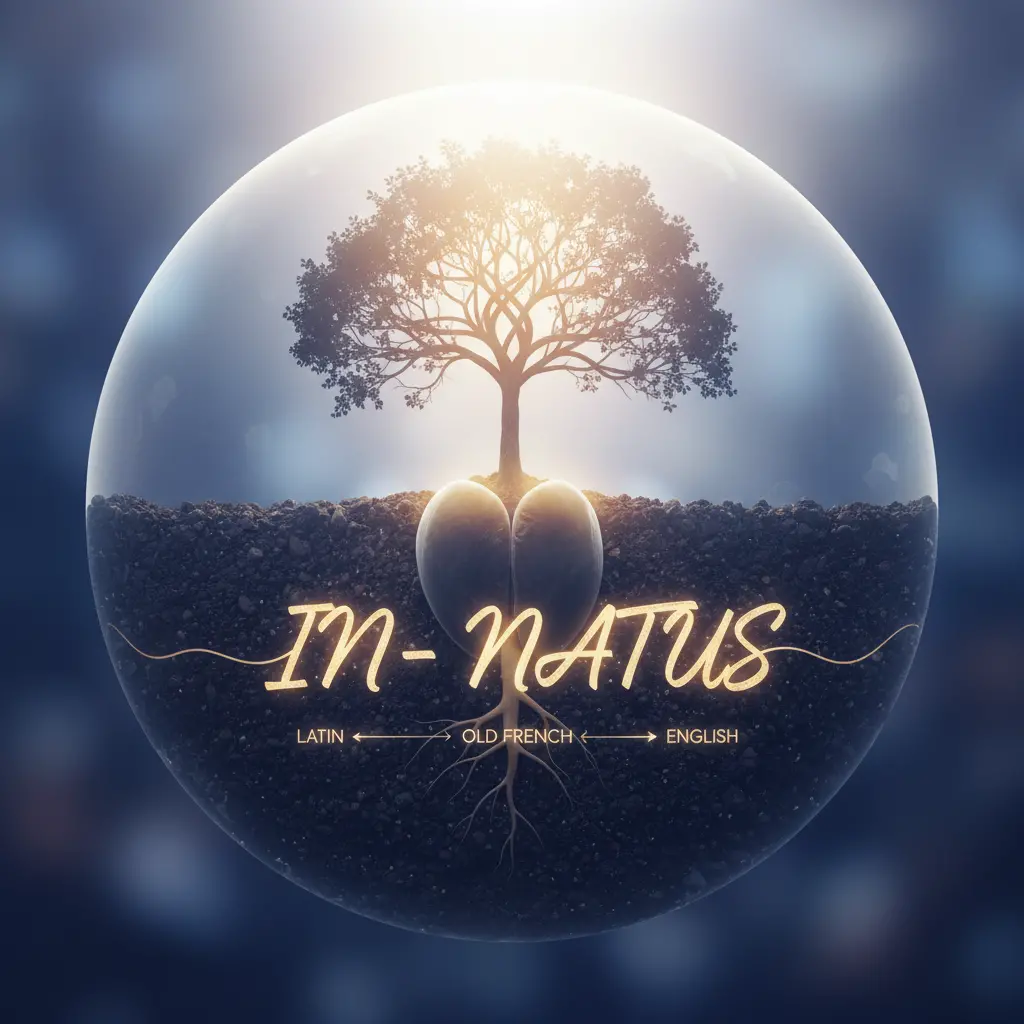
innate = in- (within) + natus (born). Origin: Latin → Old French → English. Memory Image: Imagine a seed planted deep in the Earth that will grow into a tree, symbolizing innate qualities that are born within us.
Note 1: These definitions and etymologies are not standard dictionary definitions, but extended explanations provided to help with memorization and understanding of the actual application of words. Through this background information, we strive to make words more vivid and easier to understand, and help you remember their meanings in real life.
Note 2: LexiTalk designs the learning flow around the linguistics principle of “Comprehensible Input.” When learners encounter material that is slightly above their level but still understandable from context, the brain naturally absorbs the language. That’s why we keep every word inside authentic contexts, using examples and associations to help you understand it and use it flexibly.
Read the FAQ explanation of Comprehensible InputInnate describes qualities or abilities that exist from birth rather than acquired through experience. It emphasizes a natural, internal origin rather than training or habit. You can talk about innate traits such as a general tendency toward empathy in some people, or an innate reflex in infants, like rooting or grasping. In everyday use, innate often contrasts with learned or cultivated skills, suggesting a kind of potential that needs nurture to become evident. It's not about universal inevitability, but about a default set of dispositions that feel part of who we are. Some scientists caveat that many so-called innate traits result from biology and environment interacting from early development.
Native English speakers often treat innate as a stable, inner property that may not be easily changed by experience, whereas many other languages emphasize a blend of biology and environment or use separate terms for nature vs nurture.
What is the meaning of 'innate'?
In which of the following sentences is 'innate' used correctly?
Which word is an antonym of 'innate'?
In what real-life context would the term 'innate' be used?
Reflect on a situation where recognizing innate abilities is important.
Download LexiTalk app for personalized learning experience
Download AppCookies
We use cookies for essential site functions, analytics, and ads. You can accept, reject, or manage preferences. Privacy Policy